
Sri Lanka Labour Force Statistics for 2025 Q1 indicate that we have an economically active population of 8.5 million, while the Labour Force Participation Rate (LFPR as a percentage of the population 15 years and older) is 65% for men and 35% for women.
The global women’s workforce participation rate is approximately 55%, with higher rates of 77% found in countries like Australia and Japan (World Economic Forum – Global Gender Gap Report 2025). Hence, Sri Lanka’s women LFPR is lagging far behind world average.
In fact, women lead the labour force in tourism and hospitality with 52% of the sector in Asia and the Pacific, and over 55% in many other regions. Unfortunately, in Sri Lanka, less than 10% of the hospitality work force are women.
By statistical definitions, a woman who does not receive a wage is labelled ‘unemployed’. This is quite correct as a definition, and more relevant in a western context where women’s rights and emancipation has reached dizzy heights, demanding that they are a part of the active workforce.
In a Sri Lankan (and more in the rural Asian context), the woman is still the nucleus of the family unit. Family ties are very strong, and she is the ‘glue’ that keeps it all together.
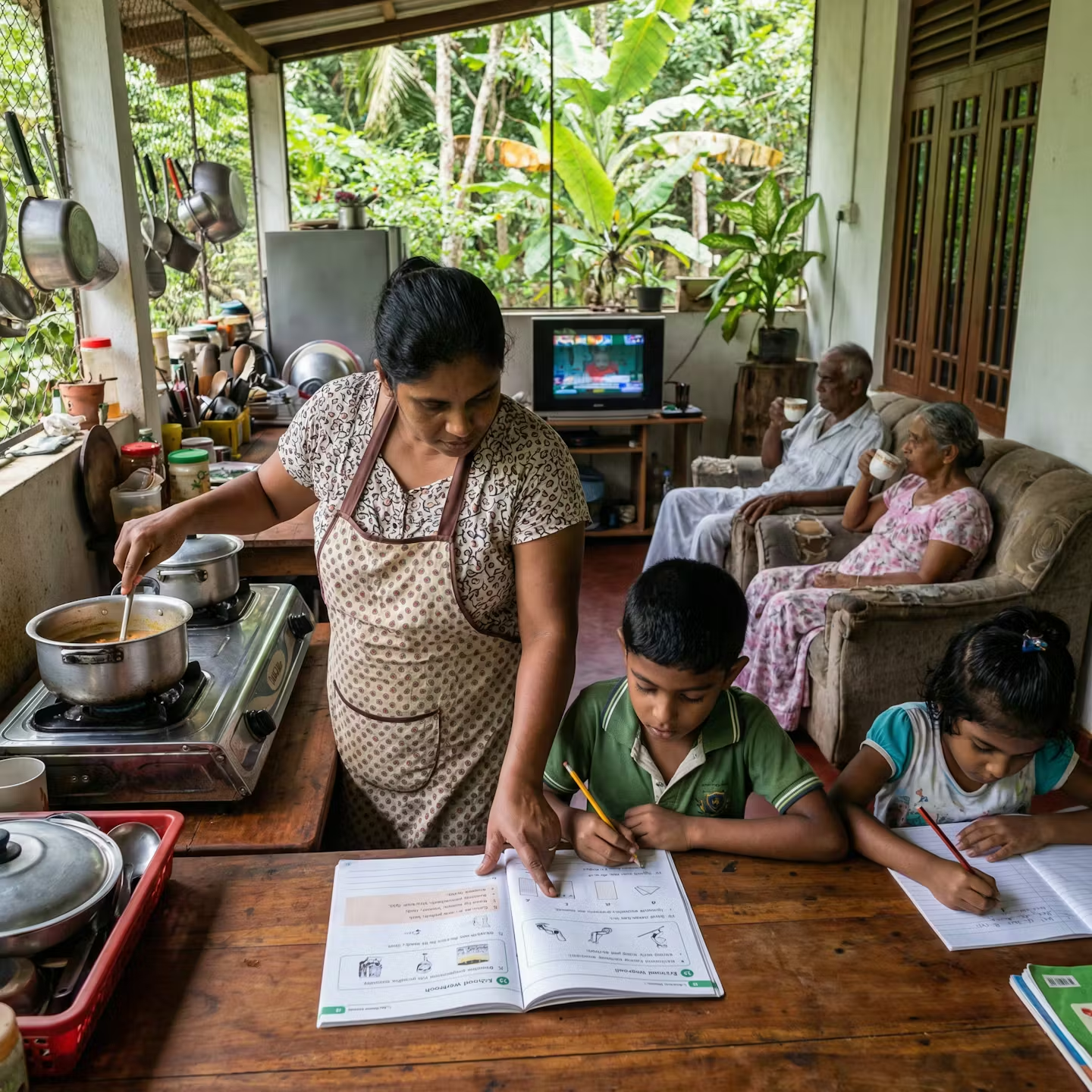
The woman who stays at home, cooks, cleans, manages the household and limited income, cares for children and elders, preserves the cultural values, and holds the family together is not idle. She is working, often 16 hours a day, seven days a week, with no weekends, no sick leave, and no retirement plan.
She nurtures the next generation, shapes behaviour, instils discipline, empathy, and resilience. Long before schools, companies, or governments enter a child’s life, it is this unpaid labour that builds human capital. When families fracture, society pays the price later. And most often, the root cause points to the absence of the mother at home.
More importantly, her work is not merely economic. It is societal and humanistic. If this labour could be valued and monetised, the national accounts would certainly look very different. This ‘unemployed’ woman is, in fact the bedrock of social continuity.
The irony is that a GDP-centric worldview values a paid job that helps generate profits more than that unpaid work that shapes future society. We applaud market output but ignore social reproduction.
The real question Sri Lanka should ask is not ‘Why don’t more women work?’ but, ‘Why do we refuse to acknowledge the work that already sustains us?’ Until that changes, our development statistics will remain technically correct, but morally incomplete
In reality, in Sri Lanka, that label hides the largest invisible workforce in the country.
Source: https://www.linkedin.com/feed/update/urn:li:activity:7423682029113876480/