
A balanced assessment of the Budget’s proposals, gaps and obligations
Parliamentary Budget Debate, November 13, 2026
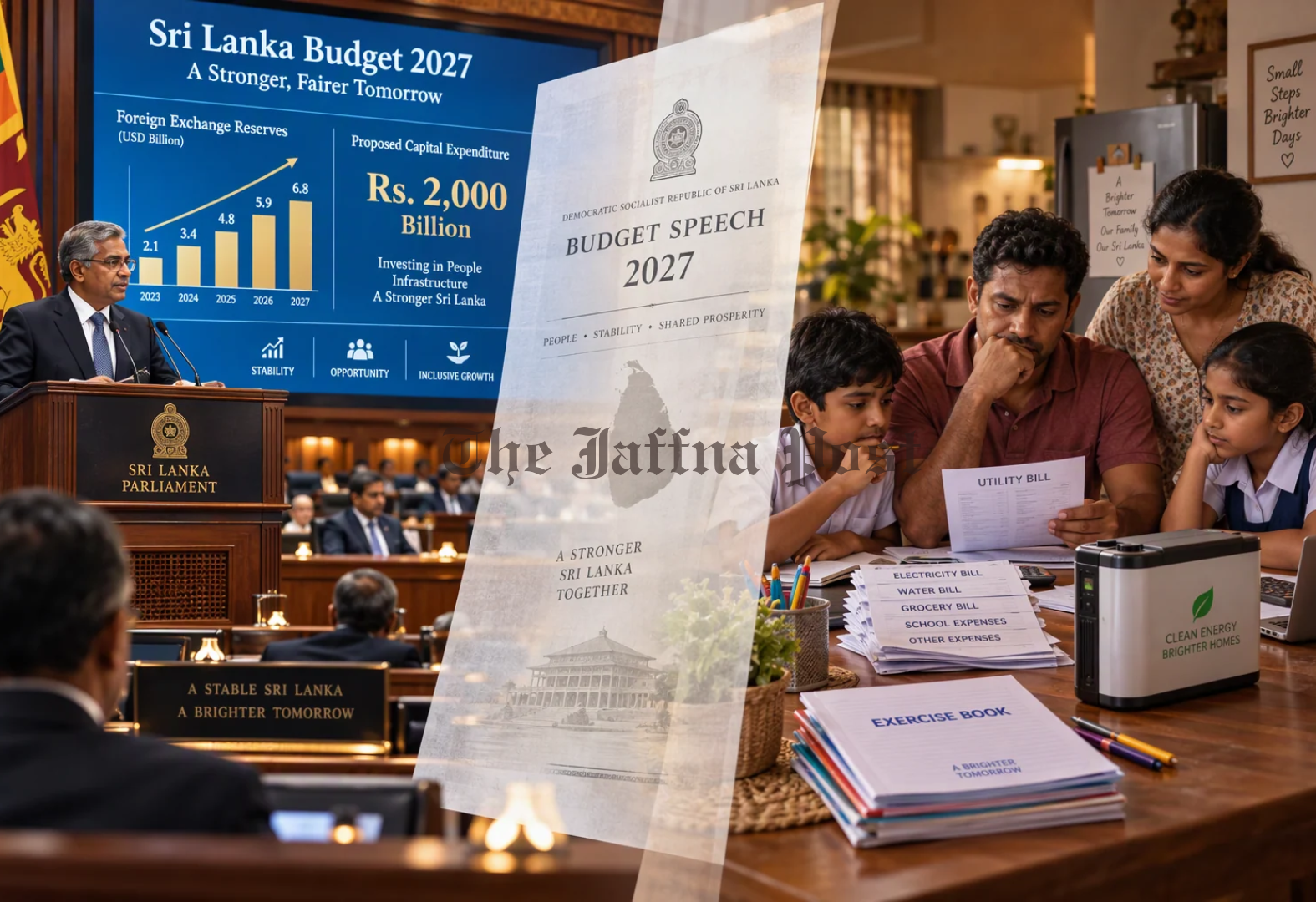
Sri Lanka’s 2027 Budget arrives at a moment when the Government can point to stronger public finances and rising foreign exchange reserves. Those indicators matter after the country’s economic crisis. But they do not, by themselves, tell families whether life is becoming more affordable.
The central test of this Budget is therefore practical: will its proposals improve household incomes, reduce the pressure of essential costs and create opportunities across all regions? Or will people be asked to wait for promised benefits while continuing to struggle?
The Budget was presented to Parliament on November 12, with the debate beginning the following day. The Government has set out a substantial public investment programme, including Rs. 2,000 billion in capital expenditure, alongside proposed support for health services, renewable energy and education. These are significant commitments on paper.
Promising measures, with delivery still to be proven
The proposed VAT exemption for exercise books and a range of printed educational materials is a welcome step. It recognises that the cost of learning materials weighs on families and that access to books matters. The Budget also proposes investment in health services and new community wellness centres. If these measures are funded, implemented fairly and monitored, they could make a meaningful difference.
The proposed subsidy for household batteries linked to rooftop solar systems also responds to the need for a more stable electricity supply and greater use of renewable energy. The Budget allocates Rs. 3.5 billion, with a subsidy of Rs. 25,000 per kilowatt of battery storage, up to a maximum of Rs. 250,000 per household. The reach of the scheme will depend on how many households qualify and how much each receives; an allocation alone does not guarantee broad access.
The Government’s investment plans could support growth and jobs if projects are completed on time and produce lasting public benefits. Yet Sri Lanka has often announced allocations that were not fully spent. The Government should publish clear progress reports showing how much of the 2026 Budget was actually used, what outcomes resulted and why projects fell behind.
Stabilisation is not the same as relief
The Budget’s weaknesses are most visible in the gap between macroeconomic progress and the daily experience of households. Parliamentary criticism has questioned the absence of immediate, broadly felt relief as food, fuel and other living costs remain high. It has also raised concern that some public-sector allowances will only take effect from July 2027, leaving workers to wait for benefits announced in the Budget.
A stronger Treasury position may help the country manage debt and economic shocks. But families cannot use foreign reserves to pay for groceries. Recovery must eventually show up in real incomes, essential prices and secure employment.
The debate also raised questions about currency depreciation, citing a movement in the rupee from about Rs. 283 to Rs. 330 against the US dollar. Exchange rates are affected by many forces, but the concern is clear: when the currency weakens, imported goods and essential inputs can become more expensive. The Government should explain how its economic programme will protect households from that pressure.
Tax changes and targeted schemes may help some groups, but their impact should be assessed against the number of people who need support. Relief that is delayed, narrow in reach or difficult to claim will not answer the immediate concerns of struggling families.
A national Budget should address the country’s political realities
A Budget is also a statement of priorities. It can show whether the Government intends to address long-standing political and regional concerns, as well as allocate money.
The debate drew attention to the absence of commitments on Provincial Council elections, a new Constitution, the Executive Presidency, the release of Tamil lands and a clear policy on repealing the Prevention of Terrorism Act. It also questioned whether the Budget offered a credible path on truth-seeking, accountability and justice for families affected by the conflict.
The proposed transfer of several district hospitals from provincial to central administration has prompted a further question: what does devolution mean if powers already exercised at provincial level are brought back to the centre while elected Provincial Councils remain absent? The Budget should explain how this proposal fits with the constitutional framework and how local communities will be consulted.
Development must protect land and livelihoods
The Budget’s development proposals also need to be assessed for their effects on land and communities. Concerns were raised about the Kivul Oya project and the possible consequences for agricultural land and livelihoods in Vavuniya. There are also unresolved disputes in Mayilathamadu–Mathavanai, where Tamil dairy farmers’ access to traditional grazing land remains contested, and continuing questions about access to land administered by the Mahaweli Authority.
Infrastructure and irrigation investment can support economic growth. But development cannot be measured only by the size of an allocation or the number of structures built. Projects must protect existing land rights, provide transparent information and involve affected communities before decisions are made.
The same principle applies to plantation workers. Concerns about EPF and ETF contributions, alleged deductions and the proposed extension of plantation leases beyond 2042 raise questions about workers’ long-term security and their ability to gain land ownership. Any extension should be accompanied by clear safeguards and a credible pathway to address workers’ rights.
The Budget’s promise depends on accountability
The 2027 Budget has positive elements: an education-related tax exemption, investment proposals, renewable energy support and plans to strengthen health services. But these measures do not settle the larger questions of affordability, regional fairness, devolution, land rights and justice.
A budget is more than a list of allocations. Its credibility depends on whether money is spent as promised, whether the public can see the results and whether those results improve people’s lives. The Government should publish regular implementation updates, explain delays and measure who benefits from each major programme.
Economic stability matters. So does making its benefits visible to ordinary people. The real measure of this Budget will be whether families feel relief, communities see fair development and citizens can hold the Government accountable for the commitments it has made.