“There are no permanent enemies or friends in politics. Only permanent interests.”
By Ananth Palakidnar
President Anura Kumara Dissanayake has embarked on his first official foreign visit to India. He has been accorded a grand reception at the official residence of Indian President Draupadi Murmu, the Rashtrapati Bhavan.
Rashtrapati Bhavan, built during the British colonial period, remains the largest official residence of a Head of State in the world, even surpassing the White House, Buckingham Palace, and the residences of other major world leaders. Spanning 321 acres, the building was constructed on land acquired from two villages in New Delhi by the British to house the Governor Generals of India. The last Governor General of Independent India was Rajagopalachariar popularly known as Rajaji. He was a Tamil and after his period since India becoming a Republic, Rashtrapathi Bawan became the official residence of Indian Presidents.
Indian Prime Minister Narendra Modi, alongside President Murmu and other cabinet colleagues, was present at Rashtrapati Bhavan to welcome President Dissanayake and his entourage, which included Sri Lankan Foreign Minister Vijitha Herath.
Fifty years ago. in support of late Sri Lankan Prime Minister Sirimavo Bandaranaike, her erstwhile counterpart Indian Prime Minister Indira Gandhi provided the logistic support to crush the armed rebellion of the Janatha Vimukthi Peramuna (JVP) led by Rohana Wijeweera the late leader of President Anura kumara Dissanayake. When the rebellion occurred in 1971, President Anura kumara Dissanayake would have been a very young school goer in his village Thambuththegama in the North Central Province in the Island.
It was during the mid-1980s that President Dissanayake became actively involved in the political activities of the National People’s Power (NPP), the political wing of the JVP, participating in its political activities at the grassroots level throughout the Island.
Being an active member of the JVP, Anura kumara Dissanayake even campaigned to boycott goods from India. When Rajiv Gandhi came to sign the Indo-Lanka Accord in 1987, a Naval rating who was one of the sailors in the guard of honor lined up to greet the visiting premier even attacked Gandhi with his rifle. The Naval rating later identified himself as a sympathizer of the JVP.
In the mid-eighties, the Governments led by President J.R.Jeyawardene and Ranasinghe Premadasa went all out to crush the JVP and finally R.Premadasa’s regime captured JVP leader Rohana Wijeweera and killed him. With such tough measures in place to wipe out the JVP in that time period, President Dissanayake who was then an up and coming member in the outfit had to go into hiding to evade arrest. Several of his colleagues were brutally massacred by the Armed Forces in their quest to crush the JVP in the 1980s.
However, in a remarkable shift, the National People’s Power (NPP), the political arm of the JVP, has now risen to power, winning landslide victories in both the Presidential and Parliamentary elections this year.
As the saying goes, “There are no permanent enemies or permanent friends in politics, only permanent interests.” This sentiment seems to guide the current political approach of the NPP.
While the party once vehemently opposed Indian involvement in Sri Lankan affairs, it now recognizes the importance of maintaining strong ties with India. President Dissanayake’s recent statement in India, where he assured their leaders that Sri Lanka will not allow room to undermine India’s national security, highlights that President Dissanayake is well aware of the concerns of India with regard to its regional security.
In the early 1970s, India was still in the early stages of economic and military development. Today however, it has emerged as a regional superpower in South Asia and a reliable neighbor to Sri Lanka by helping out generously when Sri Lanka faced a terrible economic crisis a few years ago.
President Dissanayake didn’t fail to express the gratitude of the Island nation to India over this, when he addressed the Indian leadership.
As Sri Lanka continues to struggle with stabilizing its economy and addressing its political issues in the North and East, it remains dependent on India. President Dissanayake’s visit to India highlighted this reality, as he assured the Indian leadership that Sri Lanka would not permit its land to pose a threat to India’s national security.
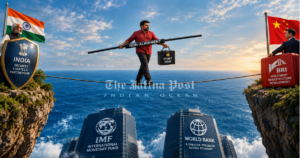
Following his successful visit to India, President Dissanayake is expected to travel to China in 2025. While both India and China are engaged in a superpower rivalry, Sri Lanka’s strategic location in South Asia necessitates a careful diplomatic balancing act. Maintaining healthy relations with both countries will be crucial for Sri Lanka’s future development.
President Dissanayake’s visit to India marks the beginning of a new era in Sri Lanka’s foreign relations, one focused on building stronger, constructive ties with its neighbors to support the country’s development.