Why the North and East must rethink political leadership before the next Provincial Council elections
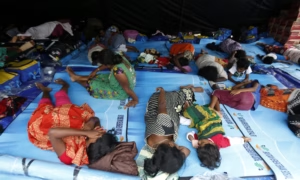
For decades, the Tamil people of Sri Lanka have endured war, displacement, political betrayal, economic neglect, and repeated cycles of disappointment. Yet, despite these hardships, the aspirations of the Tamil people have remained remarkably consistent: dignity, equality, meaningful power sharing, economic opportunity, cultural protection, and a secure future for the next generation.
Today, however, a new and deeply important question is emerging across the North, East, and the global Tamil diaspora. Who is truly capable of leading the Tamil people into the future?
This question is becoming increasingly urgent as Sri Lanka moves closer towards Provincial Council elections after years of delays and political uncertainty. The frustration among ordinary Tamil people is no longer directed only towards Sinhala dominated central governments in Colombo. Increasingly, many Tamils are also questioning the effectiveness, vision, and credibility of their own political leadership.
The concern is simple but painful.
After nearly four decades of Provincial Council politics, what have the Tamil people in the North and East genuinely achieved through their provincial leadership structures?
The answer, unfortunately, is deeply disappointing.
The Historical Burden of Failed Expectations
The Tamil political struggle has always been rooted in genuine grievances. Discrimination, language inequality, centralisation of power, militarisation, and the erosion of Tamil political autonomy created the foundation for decades of conflict.
The Indo-Lanka Accord of 1987 and the 13th Amendment introduced the Provincial Council system as a political compromise aimed at devolving limited powers to the provinces, particularly to address Tamil demands in the North and East.
In 1988, the merged North Eastern Provincial Council became operational under Chief Minister Varatharaja Perumal. At the time, many Tamils believed this would become the beginning of meaningful self-administration. However, the experiment quickly collapsed.
The provincial administration lacked genuine powers. The political environment was militarised. The LTTE rejected the process. Colombo remained distrustful. India’s involvement complicated local legitimacy. Within a short period, the North Eastern Provincial Council disintegrated completely, and the Tamil people were left once again with shattered expectations.
Years later, following the end of the civil war in 2009, another opportunity emerged with the Northern Provincial Council elections in 2013. The election of former Supreme Court Judge C. V. Wigneswaran generated enormous public enthusiasm. His legal background, intellectual image, and independent reputation gave many Tamils hope that a new style of leadership had finally arrived. But that optimism gradually faded.
While Wigneswaran succeeded in articulating Tamil grievances internationally, many people felt the Northern Provincial Council failed to produce meaningful administrative progress, economic transformation, or practical governance outcomes.
Internal conflicts, lack of coordination, weak implementation, and constant confrontation with the central government weakened the administration. The ordinary people saw speeches, resolutions, and symbolic politics, but very little visible transformation in their daily lives.
In the Eastern Province, the situation was even more complex. The East has historically faced ethnic fragmentation, militarisation, competing political interests, and security-related politics. The leadership associated with Pillayan became controversial from the beginning. While some viewed him as a pragmatic actor who understood local realities, others saw the administration as heavily tied to militarised political culture rather than democratic governance.
Today, with Pillayan facing legal troubles and detention under the Prevention of Terrorism Act, the Eastern political landscape once again faces uncertainty and mistrust.
A Dangerous Leadership Vacuum
The reality facing the Tamil people today is uncomfortable but unavoidable. There is a growing leadership vacuum in the North and East.
Many traditional Tamil political parties remain divided, personality-driven, and trapped in old political rivalries. Internal power struggles have weakened public trust. Younger generations increasingly feel disconnected from conventional Tamil political culture.
At the same time, the Tamil diaspora, despite contributing billions of rupees to rebuilding homes, schools, temples, businesses, and social institutions, has also become frustrated with the absence of strategic political direction.
Across the North and East, ordinary people are asking difficult questions:
Why are Tamil political parties constantly divided?
Why do politicians spend more time attacking each other than solving public problems?
Why has unemployment continued to rise?
Why are thousands of educated young people leaving the country?
Why are there no major industrial zones, technology parks, export industries, or globally connected economic hubs in the North and East?
Why has political leadership failed to convert international sympathy into sustainable economic progress?
Most importantly, people are asking whether Tamil politics itself needs a generational transformation.
The Vijay Factor and the Rise of New Political Thinking
The political rise of Vijay in Tamil Nadu has created significant discussion among Tamils across the world. Regardless of individual political opinions, one important reality cannot be ignored. Vijay’s emergence represents a larger global trend towards generational change, professionalism, modern communication, youth engagement, and pragmatic politics.
His movement successfully attracted educated youth, professionals, first-time voters, women, and people frustrated with traditional political structures. The key lesson is not about cinema popularity alone. The real lesson is that modern voters increasingly want leaders who appear accessible, energetic, educated, development-oriented, and future-focused. This trend is visible globally.
Young generations are no longer satisfied with emotional slogans alone. They want practical governance, employment opportunities, technological advancement, global connectivity, transparency, and efficient administration. The Tamil people in Sri Lanka are no different.
The next generation of Tamil leadership cannot survive solely on historic emotional narratives without presenting practical solutions for economic development, education, investment, healthcare, digital transformation, and employment creation.
The North and East Need a Leadership Revolution
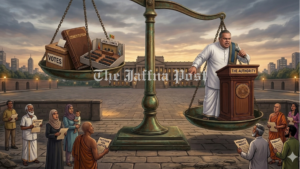
The future Provincial Council elections must not become another competition between weakened traditional personalities. Instead, the elections should become a leadership transformation process. The Tamil people must begin demanding a completely new standard for political candidates.
A future Chief Minister should not simply be a lawyer, activist, or public speaker. The North and East require leadership teams that include:
• Economists
• Engineers
• Education specialists
• Business leaders
• Technology professionals
• Agricultural experts
• Tourism developers
• Environmental planners
• Investment strategists
• Healthcare administrators
• Vocational education experts
• Women leaders
• Youth representatives
• Diaspora professionals
The future of Tamil politics cannot depend entirely on courtroom speeches or emotional nationalism. It must be built on governance capacity.
The Importance of Tri-lingual Leadership
One of the biggest weaknesses in Tamil political leadership has been communication limitations. Future leaders of the North and East must be fluent in Tamil, Sinhala, and English. This is not optional.
A modern Chief Minister must negotiate with Colombo, engage international diplomats, speak to investors, work with India, communicate with the diaspora, and connect with younger generations globally. Language ability is directly connected to political effectiveness. A leader who cannot communicate confidently across all major platforms becomes isolated and ineffective.
Why Professional Governance Matters
The Provincial Council system has many limitations. However, even within limited powers, much more could have been achieved through efficient governance. Consider the untapped opportunities in the North and East:
• Tourism development
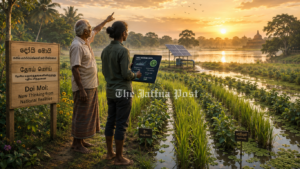
• Renewable energy projects
• Fisheries modernisation
• Agricultural processing industries
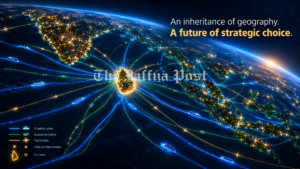
• Aviation connectivity
• Port-based trade
• Information technology outsourcing
• Vocational training centres
• Diaspora investment platforms
• Smart education systems
• Regional healthcare hubs
• Climate resilience projects
Many of these sectors require professional planning, international networking, and administrative efficiency more than emotional political rhetoric. The North and East require leaders capable of creating jobs, attracting investment, improving infrastructure, and building economic confidence.
A New Model for Selecting Tamil Political Leaders
Perhaps the most important reform must happen before the elections themselves. Tamil political leadership should no longer be decided entirely through closed-door party politics.
Instead, civil society, professionals, academics, religious leaders, diaspora members, women’s groups, youth organisations, and business chambers should collectively establish an independent public leadership selection mechanism. Potential candidates should be publicly evaluated based on:
• Educational qualifications
• Professional achievements
• Integrity and corruption record
• Public service history
• Administrative competence
• Language skills
• Economic vision
• Commitment to democratic values
• Understanding of devolution and constitutional issues
• Ability to work across ethnic communities
This process would increase transparency and restore public confidence.
The Need for Tamil Political Unity
One of the greatest frustrations among ordinary Tamil people is the endless fragmentation of Tamil politics. Political competition is healthy in a democracy, but destructive internal warfare weakens the Tamil negotiating position nationally and internationally.
The North and East cannot move forward if Tamil parties remain trapped in ego-driven rivalries and personal attacks. The Tamil people deserve mature political leadership capable of cooperation, coalition building, and long-term strategic thinking. Unity does not mean eliminating differences. It means placing the collective interests of the people above individual political ambitions.
The Diaspora Must Also Evolve
The Tamil diaspora also has a responsibility. For years, diaspora politics has often focused heavily on emotional symbolism while neglecting structured economic transformation. The next phase of Tamil progress requires diaspora engagement in:
• Investment
• Skills transfer
• Education partnerships
• Entrepreneurship development
• Digital innovation
• International lobbying
• Tourism promotion
• Aviation and port connectivity
• Youth empowerment
• Research and policy development
The diaspora must help build institutions, not just reactions.
A Final Warning and Opportunity
The next Provincial Council elections may become one of the most important political turning points for Tamils in post-war Sri Lanka. If the same leadership culture continues, the North and East risk deeper political irrelevance, economic decline, youth migration, and public frustration.
But if the Tamil people choose a new generation of educated, multilingual, corruption-free, development-focused leadership, the Provincial Council system could still become a platform for meaningful regional transformation.
The future Chief Minister of the North or East must not simply become another symbolic political figure. The people now need builders of institutions, economic opportunity, political credibility, and modern Tamil leadership.
The future of the Tamil people cannot depend only on remembering the past. It must also depend on intelligently preparing for the future. The next generation is watching carefully. And history may not give the Tamil people another opportunity to correct this leadership crisis.