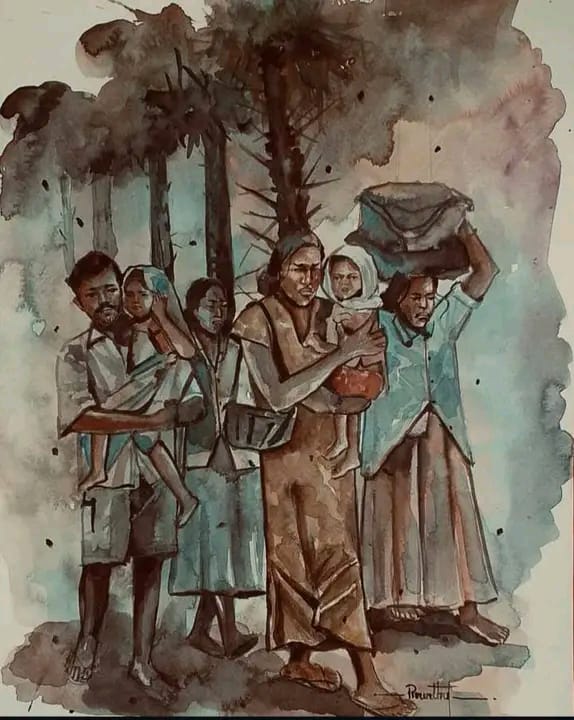
The Remembrance Day on May 18 in Sri Lanka is commemorated to remember those who perished in a lengthy civil war that lasted for nearly three decades, making Sri Lanka a haunted island.
The people of the North and East suffered immensely, trapped between the devil and the deep blue sea, faced with untold misery. The north and east provinces were considered peaceful provinces, yet the ruthless civil war led to human suffering on a mass scale.
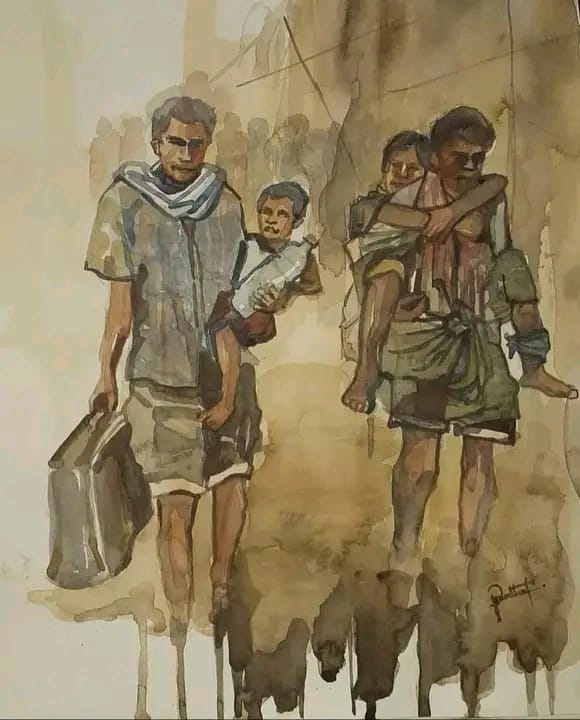
When the last lap of the war was in progress, Sri Lankan armed forces were all out to corner the LTTE in their stronghold, Mullaitivu. Innocent civilians in their thousands were trapped when the fierce battle reached its peak in a manner without any consideration for the civilians.
When the war machine of the Lankan armed forces was targeting the LTTE positions, civilians were trapped when they were attempting to take cover from the areas where the pitched battles were taking place.
Aerial bombings and artillery shelling thwarted the civilians, and they were in a horrifying state without food, shelter, or even taking cover to escape in the places where venomous reptiles and creatures moved around.
18 May 2009 could be considered as an year which had brought an end to an era of hopelessness to the innocent people who strived for peace in the country.
Sri Lanka’s internal armed conflict, which came to an end on 18 May 2009, culminated in the brutal Mullivaikkal offensive, where countless civilian lives were lost.
The 16th anniversary of the end of the civil war is a grim reminder of the collective failure of the Sri Lankan authorities and the international community to deliver justice to the many victims of Sri Lanka’s three-decade-long internal armed conflict.
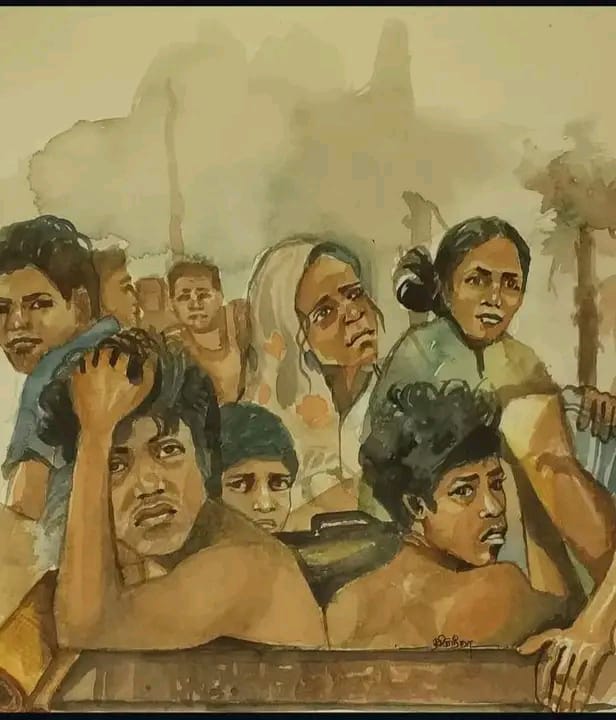
UN investigations have found credible evidence of crimes under international law and other violations of international human rights and humanitarian law committed by those on both sides of the conflict, yet there has been little in the way of an independent or impartial inquiry into such serious crimes. Meanwhile, the families of those who were forcibly disappeared during the conflict have been left to search desperately for their loved ones. It is truly heartbreaking to hear from victims how long they have been demanding justice in vain.
The Sri Lankan government is best placed to provide answers to the victims; however, numerous domestic mechanisms to establish accountability in the last 16 years have been mere window dressing.
The report by the UN Office of the High Commissioner for Human Rights reiterates the gaping deficits in Sri Lanka’s accountability initiatives that have contributed to impunity remaining deeply entrenched.
Tens of thousands of victims and their families continue to suffer in anguish as they await truth, justice, and reparations. We stand in solidarity with them here in Mullivaikkal today.
During the internal armed conflict from 1983 to 2009, Sri Lankan government forces and their armed political affiliates committed extrajudicial killings, enforced disappearances, and acts of torture against Tamils suspected of links to the Liberation Tigers of Tamil Eelam (LTTE). The LTTE also launched indiscriminate suicide attacks on civilian targets like buses and railway stations, assassinated politicians and critics, and forcibly recruited children as fighters.
Violations of international human rights and humanitarian law peaked in the final months of the conflict, most notably in May 2009 when some 300,000 displaced civilians were trapped between the warring parties. It was at Mullivaikkal, a small village in Mullaitivu district in the Northern Province of Sri Lanka, where the final offensive between the Sri Lankan forces and the LTTE took place, killing at least 40,000 civilians, according to UN estimates.
Each year, on 18 May, a memorial event at Mullivaikkal brings together thousands of war-affected Tamils to commemorate those lost to the war and demand justice and accountability.
From the time the war came to an end, victims of war have been agitating for justice and to find their beloved ones who disappeared when the war was in progress.
However their call for justice and accountability still remains a distant dream and it is likely to continue even for the years to come in the future.