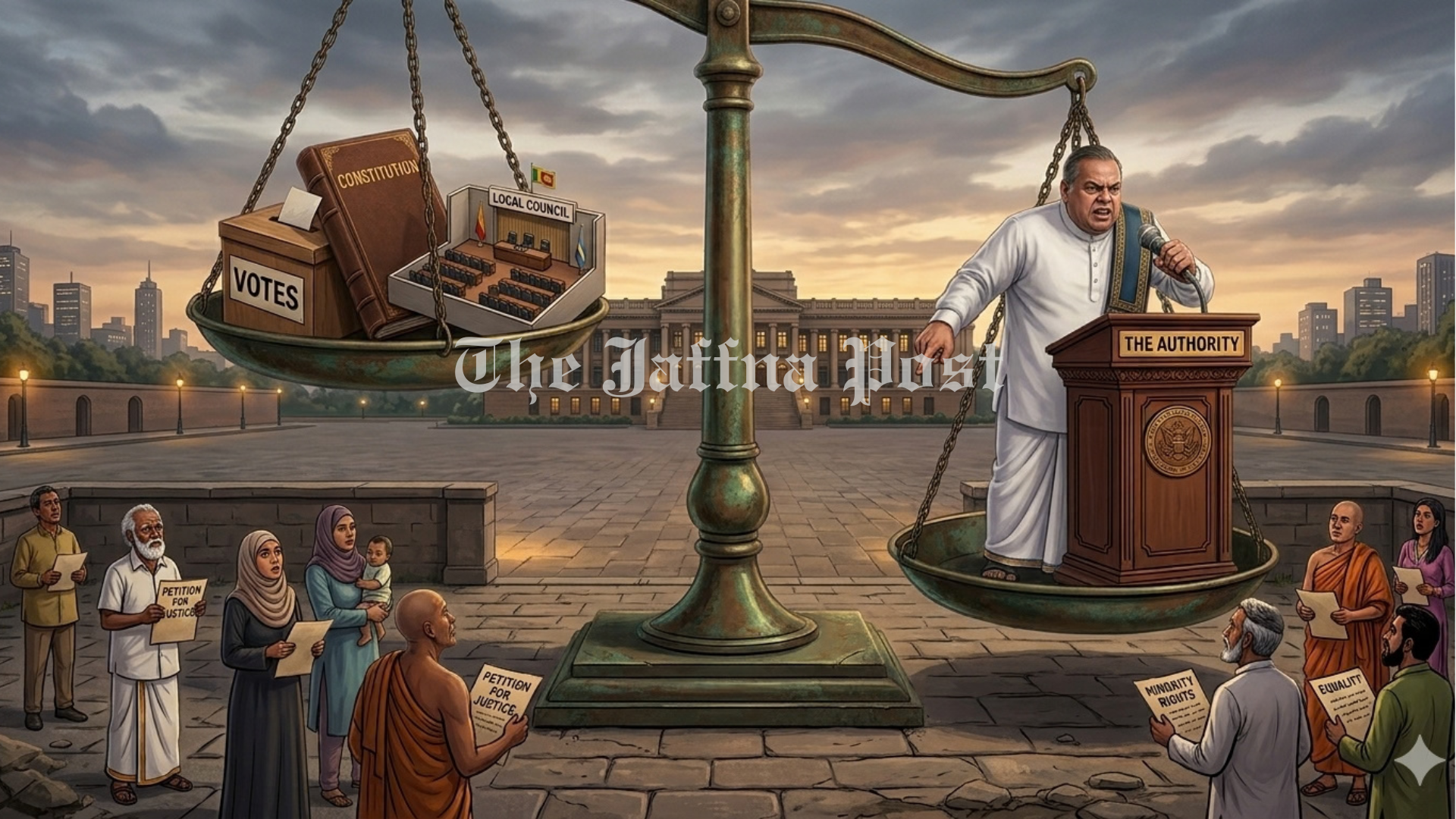

As the NPP government completes two years in office, the question before Sri Lanka is not merely whether it has governed differently from previous regimes, but whether it has changed the deeper political culture of the country. A successful democracy is not measured only by elections, parliamentary numbers, or popular slogans. It is measured by whether the state protects the equal rights, dignity, land, language and political voice of minorities, even when the majority may not consider those issues urgent.
Countries such as Australia, Canada, New Zealand, the United Kingdom and the United States are not perfect societies. They have their own histories of exclusion, racism and inequality. Yet their modern constitutional and political cultures are built around an important civic principle: citizenship should not depend on belonging to a particular race, religion, language or ethnic majority. People of different backgrounds are expected to belong to the same nation as equal citizens.
This, in my view, is one of the fundamental tests of a successful democracy. Democracy is not merely the right to vote once every few years. It is the ability of every community to live with dignity, security and equal recognition under the law. If minorities must constantly plead for their land, language, political rights and basic dignity, then democracy becomes only a numbers game.
Sri Lanka’s Unfinished Question
Sri Lanka has held elections for decades. Governments have changed, parties have risen and fallen, and leaders have promised new eras of politics. Yet the deeper problem has remained: the state has too often functioned as though the majority community has a superior claim over the country. Tamils, Muslims and other minorities have repeatedly been asked to trust governments that speak of unity, while the structures of power remain centralised and majoritarian.
The NPP came to power promising system change, anti-corruption, equality, transparency and a new political culture. Many people, including minorities, wanted to believe that this government would move Sri Lanka away from the failures of previous regimes. After two years, however, the real test is no longer the language of change. The real test is whether the NPP has made Sri Lanka a more equal civic democracy. On that test, serious questions remain.
Provincial Democracy and Devolution
Provincial Council elections have still not been restored. The 13th Amendment remains in the Constitution, but its practical implementation continues to be delayed, weakened or avoided. For the Tamil people, devolution is not a symbolic matter. It is part of the constitutional framework of the country and a minimum political mechanism through which communities can participate in decisions affecting their land, education, development, agriculture, culture and local governance.
If the government is sincere about democracy, it cannot indefinitely postpone Provincial Council elections while claiming to respect the will of the people. Democracy cannot be selective.
If national elections are important, provincial democracy is also important. The people of the North and East should not be asked to wait endlessly for rights already recognised within the constitutional structure of Sri Lanka.
Land Release and Real Access
Land is another major test. Government announcements about land release must be examined carefully. In recent discussions, former MP M.A. Sumanthiran has claimed that much of what is presented as land release is not genuinely new release, but the re-listing or re-release of land previously identified, with some areas still not practically returned to the people. If land is announced but people cannot access it, use it, cultivate it, live on it or rebuild their lives, then it is not meaningful justice.
For displaced and affected Tamil families, land is not only property. It is memory, livelihood, identity and survival. A government committed to equality must provide clear details: how many acres were newly released, where they are located, whether people have actual access, and whether military or state restrictions remain. Without transparency, land release becomes a political slogan rather than a democratic remedy.
Development Beyond Foundation Ceremonies
The same problem can be seen in development. The North and East have witnessed many announcements, foundation ceremonies and promises, but too few completed outcomes. KKS harbour, Palaly and Jaffna airport, industrial zones, BOI-related initiatives, fisheries development, tourism infrastructure and other economic projects continue to move slowly or remain stalled. In some cases, the people see ceremonies, banners and speeches, but no practical transformation on the ground.
This has created a growing frustration that the government is more interested in symbolic development than actual delivery. The North and East do not need ceremonial politics. They need functioning ports, proper airports, export pathways, industrial facilities, investment zones, tourism infrastructure, local employment and meaningful economic connectivity. Without these, equality remains theoretical.
The NPP government often speaks of treating all provinces equally. That is a welcome principle. But equality cannot mean ignoring historical disadvantage. The North and East were deeply affected by war, displacement, militarisation, land loss and economic isolation. A genuinely equal policy must recognise these realities and provide targeted recovery, not simply repeat general national slogans.
The Structure of Power
There are also unresolved issues relating to the Prevention of Terrorism Act, political prisoners, language equality, militarisation and the treatment of minority grievances. These are not old issues to be forgotten. They are continuing tests of whether Sri Lanka is willing to become a civic democracy. A government cannot claim to represent a new political culture while avoiding the hardest questions of justice and power-sharing.
The central question after two years is therefore clear: has the NPP changed the structure of power, or only the language of politics?
Changing leaders is not the same as changing the state. Changing slogans is not the same as changing policy. Changing the ruling party is not the same as changing the experience of minorities. If Tamil and Muslim citizens still feel that their rights depend on the goodwill of a central government dominated by majority politics, then Sri Lanka has not yet become a mature democracy.
A Civic Nation or a Majoritarian State
A successful democracy protects minorities even when their demands are unpopular with the majority. It respects constitutional obligations even when they are politically inconvenient. It returns land not as charity, but as justice. It holds elections not when convenient, but because people have a right to representation. It develops neglected regions not for publicity, but because citizens there are equal owners of the country.
The NPP still has time to prove that its promise of system change is genuine. But it must move beyond speeches. It must restore Provincial Council elections, implement meaningful devolution, provide transparent land release details, complete development projects in the North and East, reform oppressive laws, respect language equality and treat minority concerns as central democratic issues. Sri Lanka’s future depends on whether it can become a civic nation where all citizens belong equally, or whether it will remain a majoritarian state where minorities are tolerated but not fully empowered. After two years of the NPP government, that remains the unfinished test.