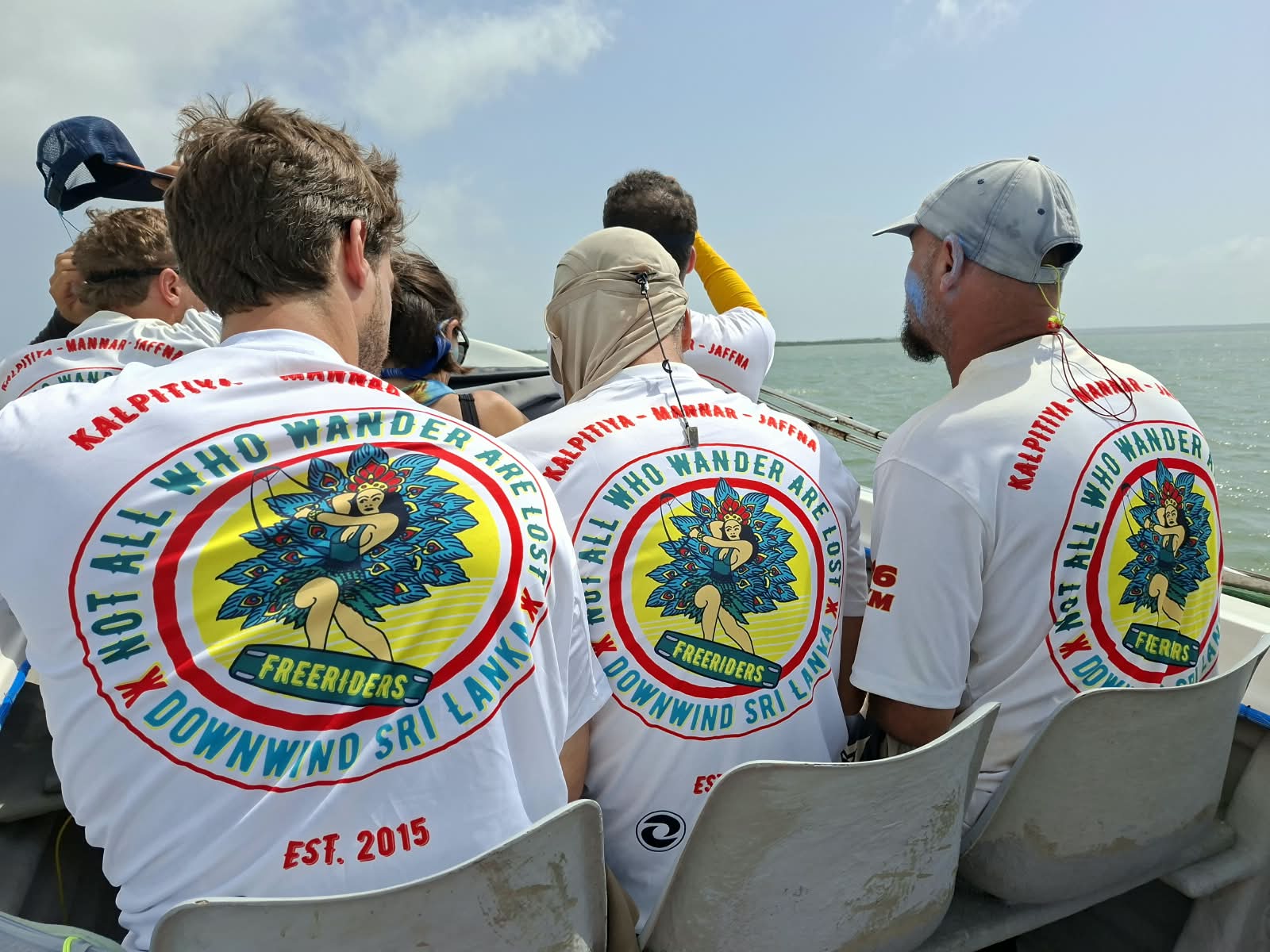

In August 2026, while parts of Sri Lanka were being battered by rain and floods, and others were enduring scorching heat, a group of intrepid wind chasers rolled up in Kalpitiya seeking just one thing – perfect wind conditions for a kitesurfing adventure.
Sri Lanka’s north west coast, particularly the Kalpitiya peninsular, boasts some of the best wind conditions for around nine months a year and attracts kitesurfers from around the world. Typically, mid-May to mid-October offers strong consistent wind while mid-December to mid-March is a time of lighter wind conditions.
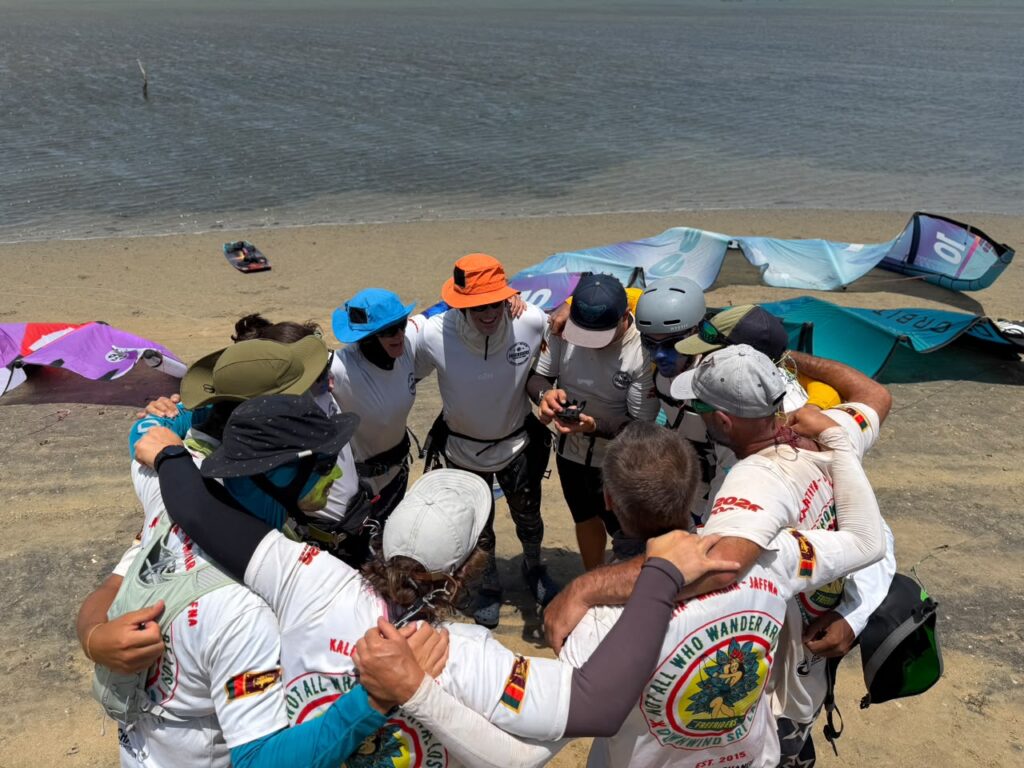
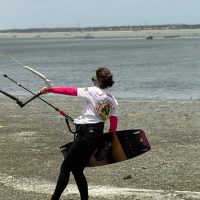
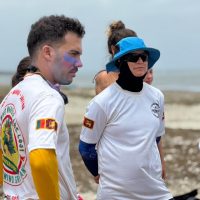
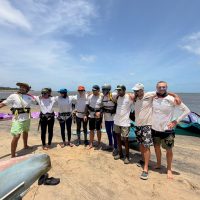
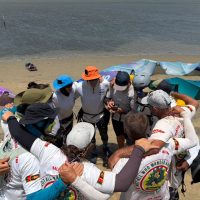
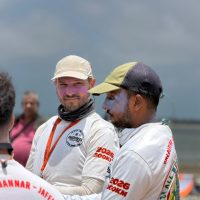
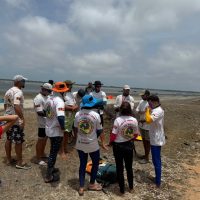
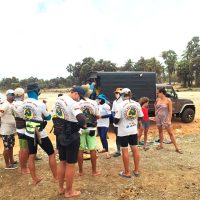
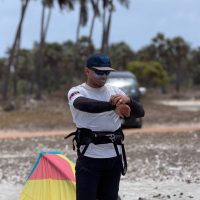
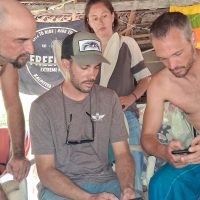
The group of ten kiters, part of a select international community, arrived in Sri Lanka to undertake a 300km Downwinder from Kalpitiya to Jaffna, organised by FreeRiders Kite Tours run by Keira Perera of Kite House, Kappallady.
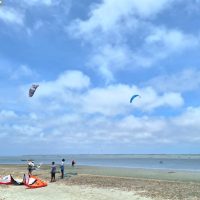
A Downwinder is defined as a one-way trip where a person launches their kite at one location and rides along with the wind down the coast to land at a different destination kilometers away.
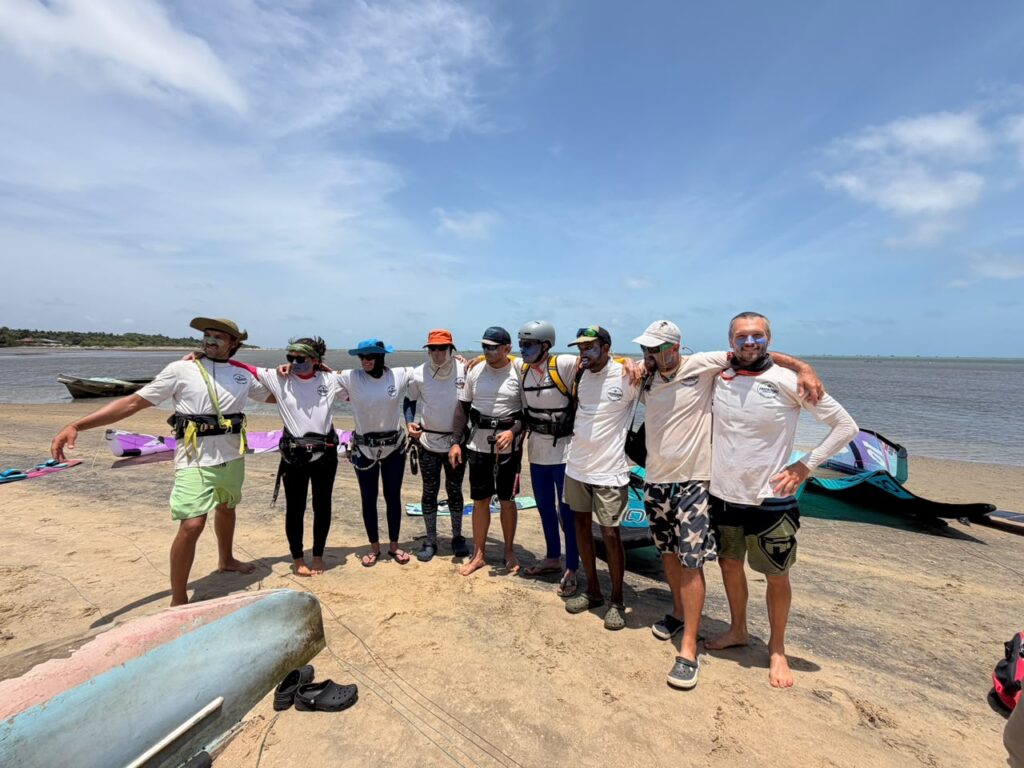
The group consisted of Matt and Ashley Faus (USA), Lindsey Doe (USA), Bryce Doherty
(Australia, currently living in Switzerland), Christian Rieg (Germany), Mattias Windhagauer (Austria), Paul Fischer (Austria), Juan Rebolledo (Austria), Alexander Salvador (Netherlands, currently living in Mexico), Elvis Halilović (Slovenia) and tour organiser Keira Perera (Sri Lanka, currently living in Slovenia.
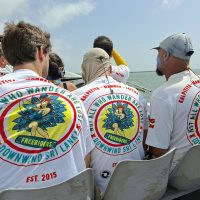
Formed in 2015 the original FreeRiders team consisted of two Germans, Chris Reig and Michael Lerch, and Keira. Over the years they amassed deep knowledge of the coastline from Kalpitiya to Jaffna, since they were the first people to it navigate it.
Having relocated to Sri Lanka from the US in 2014, and choosing to base himself in Kalpitiya, Keira, already an adventure sports practitioner in the US, (mountaineering, paragliding, diving instructor, kitesurfing instructor) became of part of the pioneering kitesurfing efforts in the peninsular.
He recalls how, “In 2016, our team was the first to undertake and complete this epic journey and our story was picked up by two top end kite magazines. During that time, FreeRiders Kite Tours became the only downwind company permitted and supported by the Sri Lanka military to operate in the wild North West. Unfortunately, the 2019 Easter bombings followed by COVID adversely affected tourism in general and Kalpitiya’s kitesurfing scene in particular, and I left the country.”
Planning, Participation and Logistics
For Keira, planning this five-day tour started one year earlier in Europe. The logistics of accommodation along the way proved hardest, as this stretch of Sri Lanka’s coast is still underdeveloped and remote.
It is no easy task to plan a trip that is totally dependent on the wind factor, particularly in this current El Niño scenario of weather uncertainty. As Keira recalls, “One week before we started, the forecast predicted no wind and we were worried. The first day we had enough wind to cross Wilpattu. The next day it became stronger and by the time we reached Jaffna it was the strongest.”
The tour was designed to span four to six hours of kiting per day with regular breaks and full rest every other day. The top priority was making sure everyone was fit and capable of undertaking the trip and that the kiters were capable of travelling in strong wind conditions, which not all can endure unless they are well experienced.
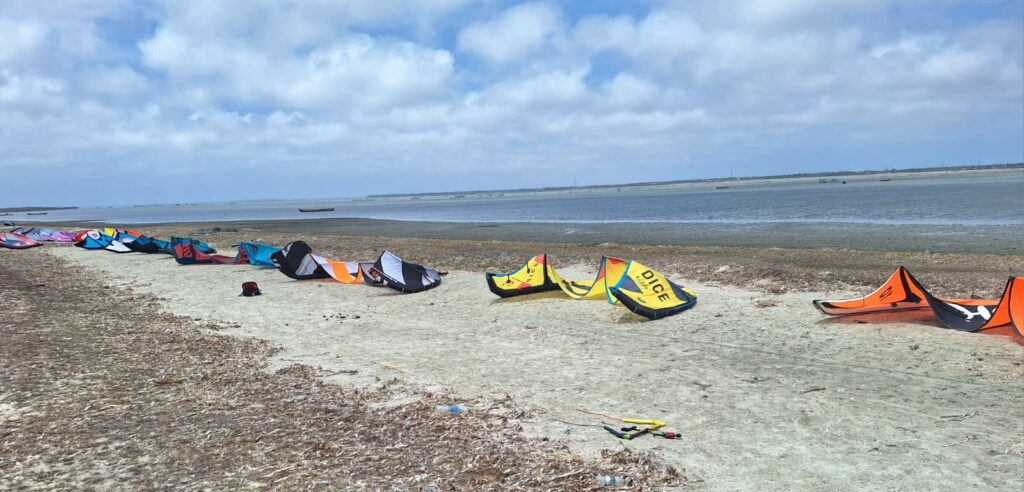
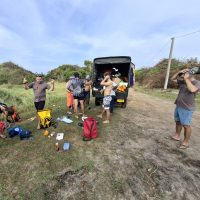
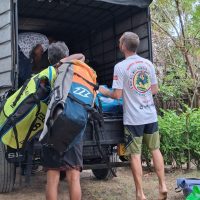
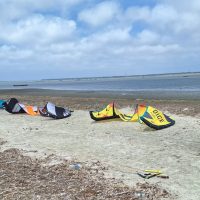
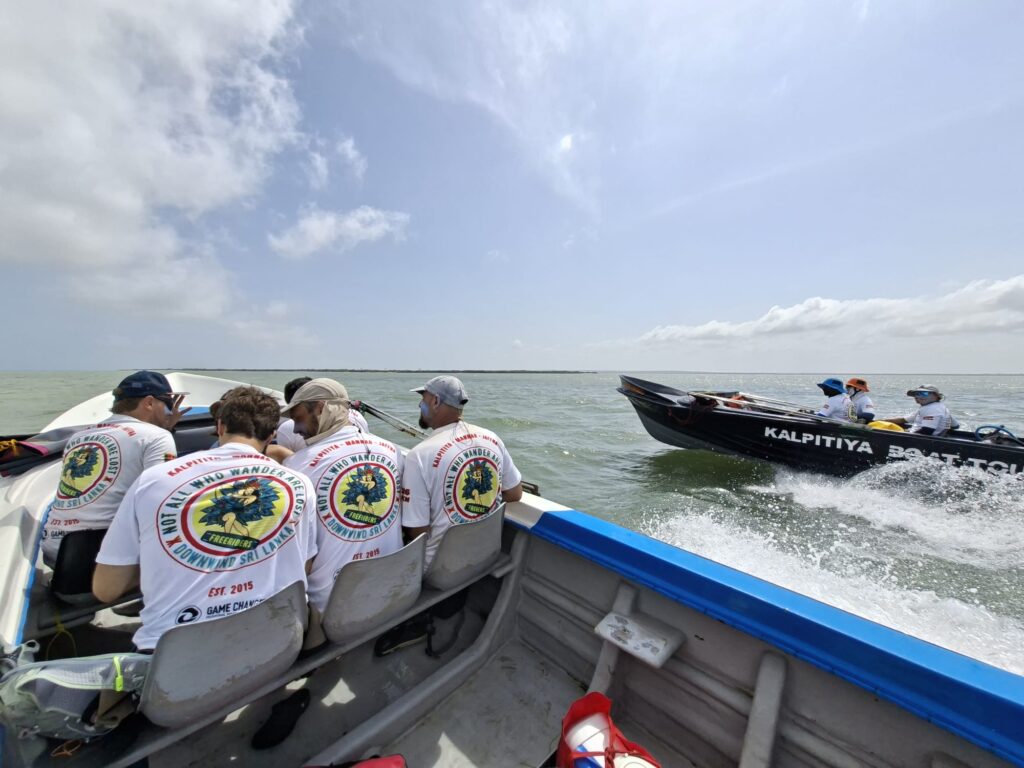
All participants brought their own kites and were allowed one backup kite on the boat where there was boat support, otherwise in the truck which followed the group on land.
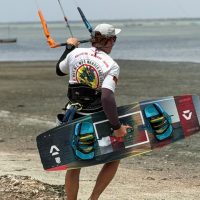
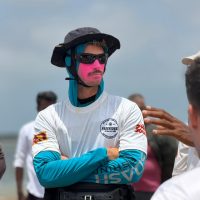
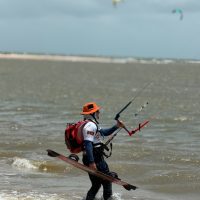
Kiters travel with the bare minimum, and their personal needs are few. They carry a small backpack with basic medical supplies and drinking water. The backpack which is totally waterproof acts like a lifejacket too, since even if there is boat support, often it can’t reach them instantly. Some kiters have tracking devices on their phones. Strong sunscreen, now available in bright colours is essential as the face and ears can get very burnt. A hat or cap too is an absolute requirement.
Flexibility is a key factor during a trip of this nature. For instance, due to climate change, one of the beaches Keira was accustomed to taking a break at was washed out, so even though everyone was tired at that point, he had to instruct them to keep kiting to the next possible landing place.
There was also an incident where one of the kites crashed directly on the beach due to a broken rubber pipe, but the presence of the truck with backup equipment led to minimal delay and inconvenience.
At the end of a grueling day, a good shower, a comfortable bed and AC where possible, are highly valued. The choice of accommodation booked along the route was therefore highly appreciated.
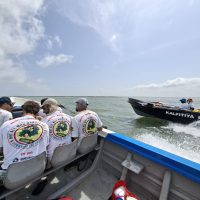
Having boatsmen and drivers from the area and support from the Sri Lanka Navy is a plus point, particularly when crossing Wilpattu, since there is no road access within the park and in most of the north too, there is no coastal road access. The Navy has many camps along this stretch, so staying in communication with them is wise and beneficial, all of which were possible through Keira’s vast network. As part of the logistical planning, Keira had obtained Navy approval for the
trip all the way to Jaffna.
Chris now an adoptive Sri Lankan
Chris Reig recalled how, “In 2016, my friend Michael Lerch and I, together with Keira and some Russians, were the first to attempt the trip to Mannar and Jaffna. Our first night, we stopped after the Wilpattu coast, and the next slept in an old abandoned church in Mannar. We had a van following Michael, and we had a GPS tracker.”
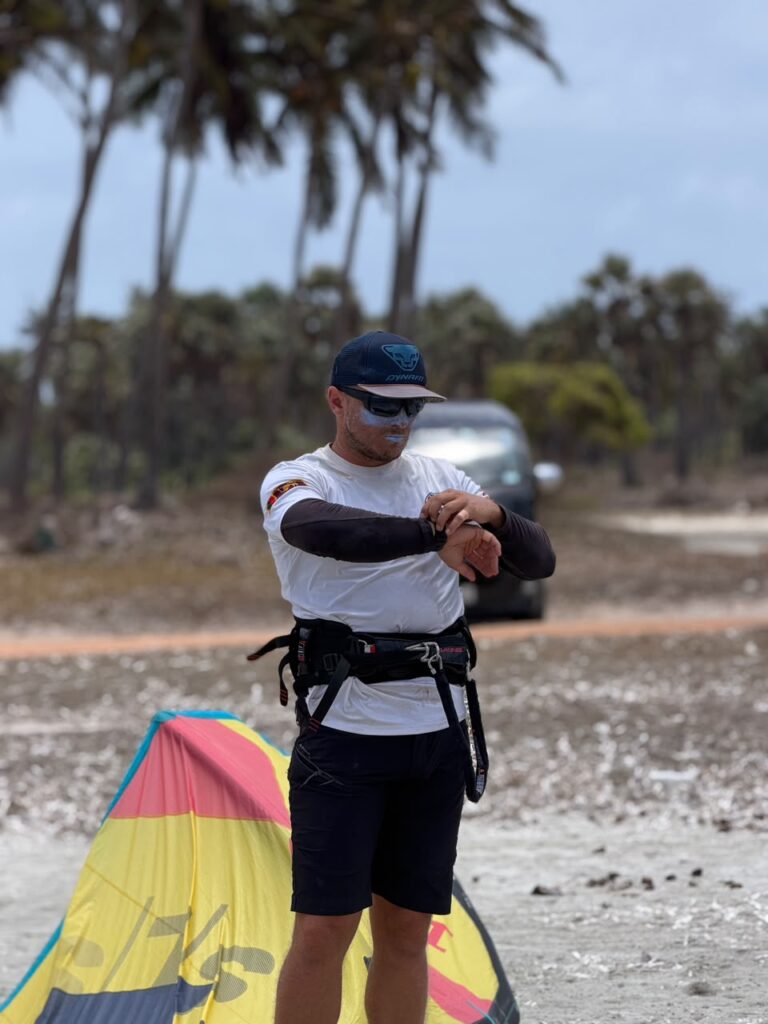
Chris first tried kitesurfing in Java, Indonesia, then Sri Lanka and subsequently across Europe. Inevitably, European spots are now crowded and regulated. Since Kalpitiya is ranked as one of the top kitesurfing spots in the world, he’d rather come here where it feels like his second home too. Getting his daily dose of rice and curry, wearing a sarong, going to the local barber for a fraction of the cost in Germany, are the added perks of the laid back Kalpitiya lifestyle.
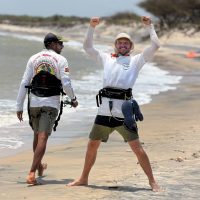
Chris was the most senior member of this downwinder group. “Most of the time I was at the front of the group because my skill level is more advanced. But I was also the oldest in the group, and I have knee problems, so I always made the shortest line. If you take care of your body, however, there’s no age limit for this sport.”
Ask Chris why he undertook this downwinder? “You get to experience places where others don’t. For instance, who gets to see Wilpattu from the ocean side? Very few apart from the fishermen. Crossing Wilpattu is special, as well as the many rivers and lagoons before and after Mannar. There’s a sense of adventure and the unknown. And beautiful views always.”
After a decade of collaboration and friendship, Chris wholeheartedly recommends this trip for experienced riders, with Keira at the helm, of course.
Aussie-man Bryce
Bryce Doherty’s introduction to Sri Lanka began in 2013 when he and his brother Aaron first met Keira on their travels around the island. He participated in FreeRiders’ second downwinder in 2017 back when there was no boat support. It was about freestyling on the water, and everything was a little riskier, and definitely more adventurous.
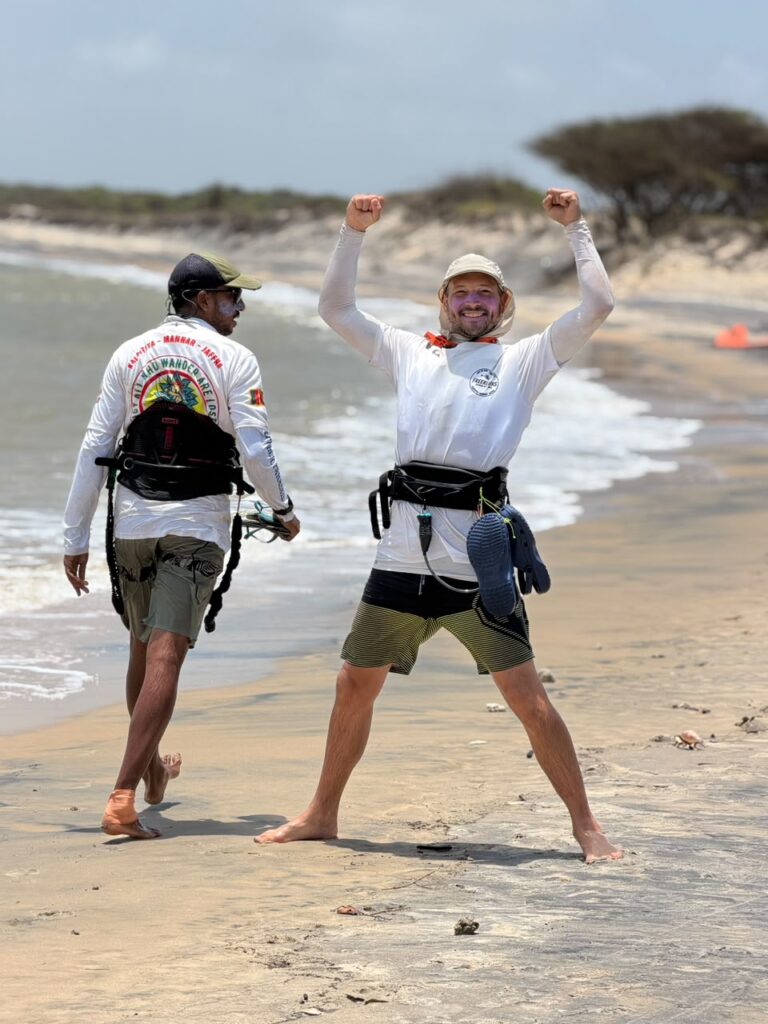
Bryce reminisces how, “At that time less than ten people had ever done this trip. We camped on the beach in Talaimannar, and in the ruins of The Doric Bungalow, the residence of the first British Governor of Ceylon in Arippu East, Mannar. One night in a refugee village, they invited us to sleep in an empty house and they brought us food.”
A hardcore global adventurer, Bryce appreciates how Kalpitiya offers world class stable wind, flat water lagoons as well as ocean riding right beside each other. When bored with the limitations of the lagoon, he literally flies across the beach onto the ocean.
Alex Salvador – an ancestral connection with Sri Lanka
It is perhaps Alex Slavador’s unique Portuguese and Dutch ancestry that makes him feel at home in Sri Lanka, once a colony of both countries. Alex first met Keira in Kalpitiya in 2017. He had heard wind conditions were good and as he confesses, “We are some form of addicts; we look at forecasts all the time.”
For Alex, “The most important thing was having a place to rest at the end of the day since we were doing between four to six hours of heavy riding per day. The first day with six hours on the water was really challenging for the body.”
As tour organiser and well-versed in expectation management, Keira had briefed the group before departure. Let’s get the toughest and longest part out of the way at the outset!
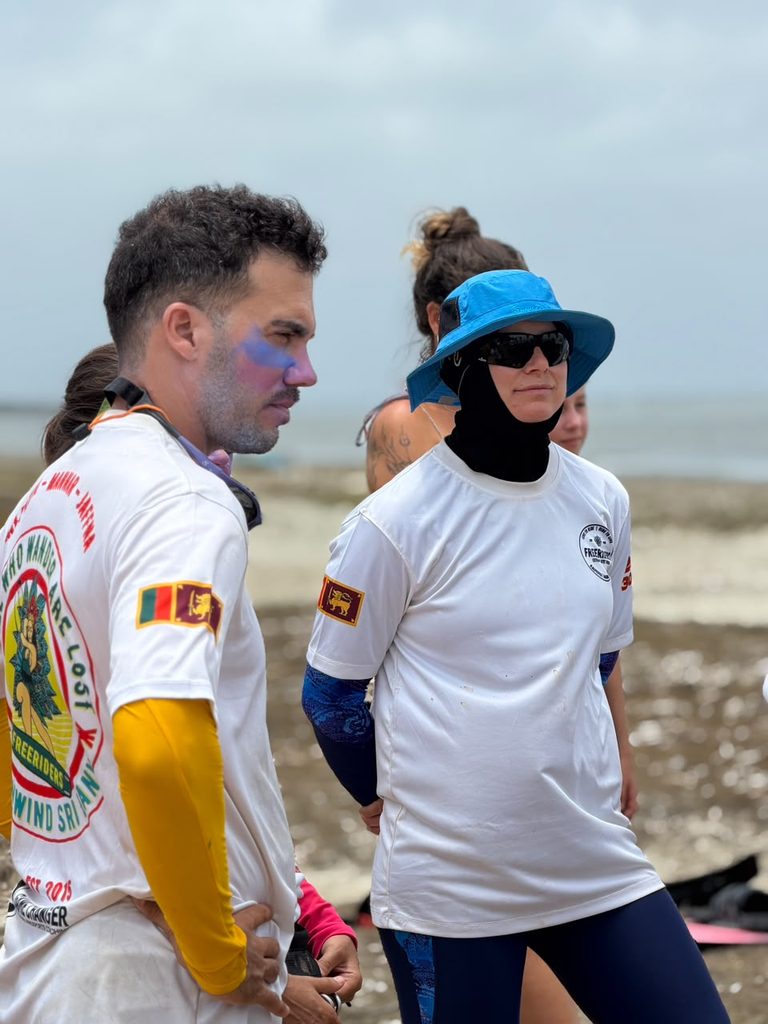
Alex admitted, “This kitesurfing trip was the most challenging thing I’ve done by far and I would do it again in a year or two. My most cherished memory from the trip was overcoming difficulties and seeing it through to the end. I would recommend this downwinder one hundred percent. We are a very small community globally, so word of mouth is the most important marketing tool.”
At the conclusion of the kite trip, Alex and his partner Lindsey toured Jaffna, Anuradhapura and Nuwara Eliya, enjoying the variety of culturally different experiences that Sri Lanka offers in a condensed space.
Lindsey Doe Pushing Her Limits
For Lindsey Doe, an American living in Mexico, the trip to Sri Lanka itself was long and tiring. Describing the downwind experience as “The hardest thing I’ve physically done in my whole life!”, she used ‘powerful’, ‘intense’, ‘magnificent’, and ‘grueling’ to describe the experience.
For her, beyond the physical strain, the toughest part was the mental strength it required to talk herself through wanting to shut down and run away at times. She was grateful for the boat support, which allowed her to take regular breaks yet stay with the group when she found the riding overwhelming.
“This tour would have been impossible if Keira was not at the helm”, she stressed. “It requires a strong leader to jostle all the moments of change and having someone who understands what can come up is vital.”
A Search Mission Within the Adventure
Austrian kiter Paul Fischer’s GoPro, a high endurance camera widely used for adventure sports, got lost near the mangrove jungle 40 km north of Mannar. When they landed on the beach, Keira called on some local village boys to solicit help. Paul was willing to pay a reward, but since no one in the kite group spoke Tamil, they wrote ‘40,000’ in the sand and exchanged phone numbers. Two days later, the boys sent photos of the camera they had found in the water. The lads were very happy with the reward, and Paul of course was delighted and relieved to get his camera back in one piece.
Why do Kitesurfers Undertake Such Grueling Adventures?
The answer is simple according to Keira. “Some are just motivated to see how far they can travel on their kites, because people normally kite in one small location. Others want to do it as an endurance challenge like running or mountain climbing. Some do it as a personal challenge to see if they are capable of such an extreme undertaking. And then there are those for whom it is just another way of travelling like sailing or riding a bike.”
“Our participants were extremely happy with the trip. One person was crying on the last day because he didn’t want it to end. It’s a once in a lifetime experience.”
Proved and Tested Unique Adventure Package
With over ten years of experience behind him, Keira anticipates organising these downwinders every two years or so. “Sri Lanka tourism can promote this offering, but from a logistics and organisation point, you need a very special kind of person to organise this trip. People have tried and barely got to grips with it. Our first concern is safety. We don’t want people getting stuck in the middle of nowhere and running into problems which could easily have a negative impact on those of us who are running such trips properly. The coastal terrain is extremely remote and can be dangerous, which is why people need to understand the huge risk they are
taking if they try to do it alone without local expertise.”
For Keira as organiser, the feel-good factor at the conclusion of this trip was the direct impact it had on local communities. “We employed over twelve families and counting accommodation, where we usually booked the entire property, we provided business to around 30 locals.”
The FreeRiders group ended their trip in Jaffna, coinciding with the Nallur Temple Festival which gave them the opportunity to participate in a pooja and witness northern culture at its best. For Chris, experiencing such a festival for the first time was beyond description. The highlight for him was breaking a coconut at the temple, a ritual which symbolises the surrender of the human ego and pride to the gods.
Kalpitiya’s Success is Organic Growth
A little over a decade ago, the Kalpitiya peninsula was still fairly remote and cut off. A handful of passionate local adventure sports enthusiasts built and put Kalpitiya on the global kitesurfing map without any outside assistance.
Back then, there were few tarred roads leading off the main road, just a handful of hotels and guest houses, and no wine stores or supermarkets in Norochcholai or Kalpitiya town. Today, there is more of everything, and better bus transport too plying the entire stretch of the peninsular.
In terms of kitesurfing, what does the future hold for Kalpitiya with its unique location and wind patterns? Nature provides the most crucial ingredient, the wind, and despite climate change, Sri Lanka’s north western coast will most likely continue to be blessed with this commodity.
However, should kitesurfing remain an under-the-radar offering, known only to die hard enthusiasts around the world? Or should Sri Lanka Tourism authorities promote the area and its adventure tourism potential, in addition to diving, whale and dolphin watching?
According to Alex Salvador, “There is an interesting energy field between wanting things to grow versus remain the same. As things become more commercial and more interests particularly financial are involved, it might change the whole concept of an adventure like this.”
The general consensus is that kitesurfing should continue to grow organically while retaining its allure as a well-kept secret. For those seeking a taste of wild adventure, the FreeRiders downwind offering is one of the greatest kite adventures in the world at the moment, though the least known.