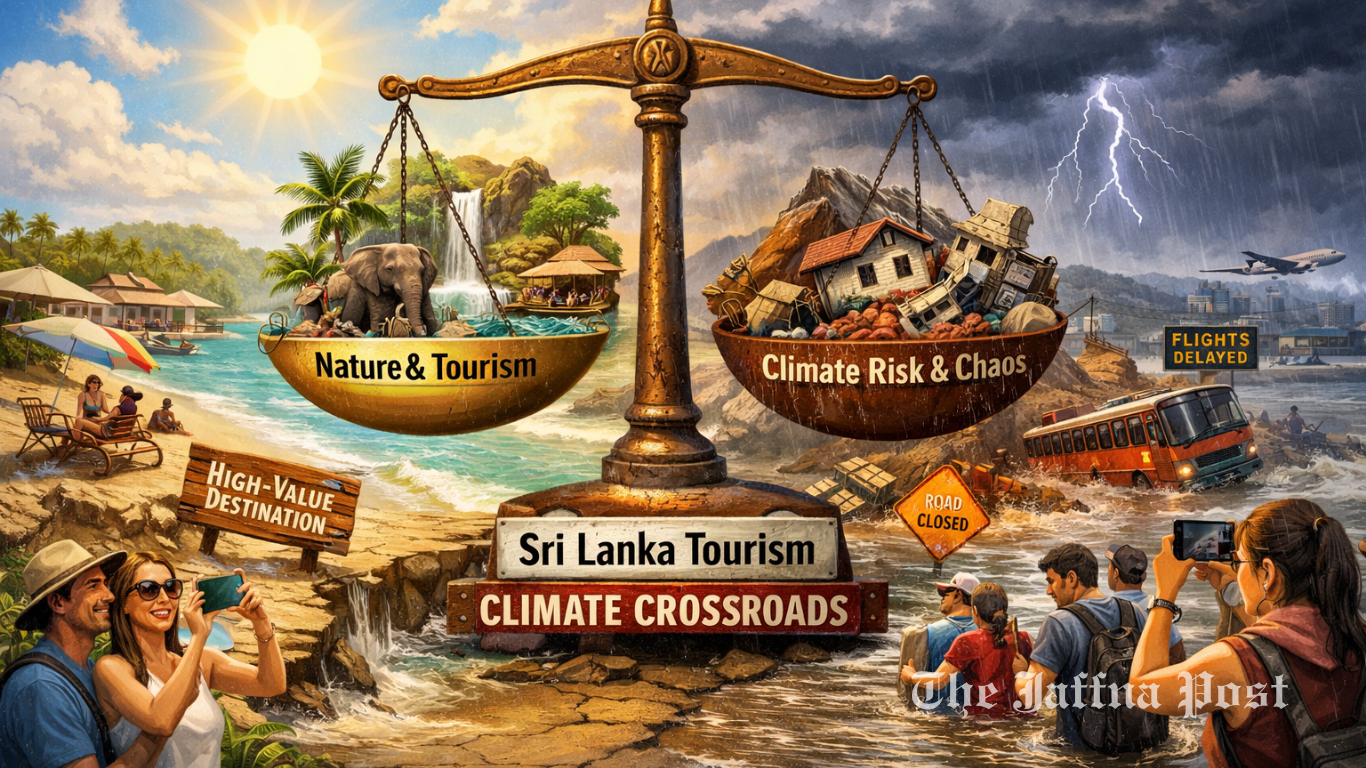

Climate change is no longer some distant environmental concern discussed at global summits by scientists and politicians. It is now directly and fundamentally impacting Sri Lanka tourism in a very practical and operational manner.
Sri Lanka, by its very nature, is extremely vulnerable to climate variability. We are a small tropical island dependent on two monsoon systems, with our tourism products heavily centred around nature, beaches, wildlife, mountains, forests, waterfalls and marine experiences.
Unlike destinations built around shopping, entertainment or urban attractions, Sri Lanka essentially sells nature itself. So, when nature becomes unstable, the tourism product itself becomes unstable.
For decades we understood our weather patterns. There were reasonably established tourism seasons, shoulder periods and off-seasons based on the monsoon patterns. Farmers cultivated crops based on the monsoonal cycles. Today however, climate change is rapidly disrupting these traditional patterns.
Rainfall is becoming increasingly erratic and unpredictable. Intense thundershowers cause flash floods within hours. Landslides now frequently affect hill country tourism areas such as Ella, Haputale and Nuwara Eliya. Coastal erosion is threatening beaches and tourism infrastructure. Haphazard development in low level areas has disrupted rainwater drainage water, resulting in flash flooding. Similar unauthorised structures in the hill country are causing frequent earth slips and landslides.
We are already seeing tourists stranded in hotels during floods, roads cut off without warning, train delays and cancellations, airport transfer chaos and visitors left confused and helpless due to poor communication and weak coordination between authorities.
The real problem is not necessarily the weather itself. Tourists can tolerate rain and temporary inconvenience. What tourists will not tolerate is uncertainty, disorganisation, poor communication and lack of safety.
That is where Sri Lanka still remains dangerously weak. Our disaster preparedness and tourism crisis management systems are fragmented, reactive and poorly coordinated. During emergencies there is often no unified source of information, real-time tourist communication system, no multilingual emergency assistance, no organised evacuation support and no destination-level crisis management framework.
After the devastating tsunami 22 years ago, an elaborate coastal evacuation procedure was instituted. Today it is unheard of, there have been no evacuation drills nor periodic reviews or updates.
In today’s digitally connected world, more than bad news, perception of danger spreads more quickly. One viral social media post showing tourists stranded in floodwaters can do more damage to the country’s reputation than millions spent on promotional campaigns.
Flooding and changing rainfall patterns create ideal breeding conditions for dengue and other vector-borne diseases. Water contamination during floods can increase diarrheal diseases and infections. Poor waste management and drainage systems further aggravate the problem. At the same time, droughts place pressure on sanitation systems and water quality. Sri Lanka now faces the dangerous paradox of both floods and water scarcity occurring within short periods.
Luxury tourism itself is highly water-intensive. Hotels, golf courses, landscaped resorts and tourism infrastructure consume large quantities of water and energy, which under worsening climate conditions, creates additional pressure on an already stressed ecosystem.
There is currently much discussion about attracting ‘high-value tourists’ and repositioning Sri Lanka as a premium destination. While this sounds attractive, one cannot build a premium tourism brand purely through advertising slogans and marketing campaigns.
Higher-end tourists today expect reliability, safety, efficient infrastructure, environmental responsibility, water security and good crisis management. Without these basics in place, the destination positioning becomes fragile and unconvincing.
A genuine high-value tourism destination requires efficient infrastructure, clean public spaces, reliable transport, proper healthcare systems, strong crisis preparedness, environmental management, digital connectivity, water security, safety and professionalism.
Take for example the recent tragedy where a fully loaded bus fell down a steep precipice in the Ella-Wellawaya area. The rescue attempts were rudimentary, with no proper search and rescue protocols, no paramedic support, and woefully lack of rescue equipment.
Without these basics in place, the ‘luxury’ label becomes superficial and unconvincing. A tourist paying USD 1,000 a night for a luxury holiday will not tolerate being stranded by floods, facing water shortages, worrying about dengue outbreaks or dealing with chaotic emergency responses.
So, can Sri Lanka realistically aspire to become a high-end tourism destination while these basic vulnerabilities remain unresolved? While the hard product infrastructure needed to serve such upmarket clientele is the first priority, in the current context, climate change also suddenly becomes far more than an environmental issue, and turns into a tourism competitiveness issue.
Before Sri Lanka seriously talks about moving upmarket, the country must first strengthen:
· climate resilience,
· water management,
· tourism zoning,
· disaster preparedness,
· environmental protection,
· transport reliability,
· public health systems,
· and destination management capabilities.
Sri Lanka’s future tourism success may therefore depend less on how we market the island conventionally, and far more on how competently we manage climate risk and operational resilience.
Sri Lanka urgently needs a comprehensive Climate Resilient Tourism Strategy integrated into national tourism planning. The bottom line is that you cannot successfully promote a product that is not yet ready for its positioning.