Community Driven Initiatives in Challenging Times
Sri Lanka continues to navigate a complex period of economic recovery, social adjustment and structural transformation. While national policies and international financial assistance play an important role in stabilising the country, meaningful progress at the grassroots level often depends on the work of community-driven organisations.

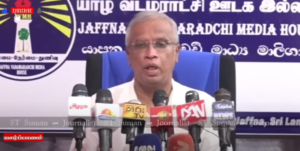
Chairman Ratnam Foundation
Among such initiatives, the Ratnam Foundation has emerged as a noteworthy example of how diaspora-supported philanthropy can contribute to education, healthcare and community development.
The organisation’s recent annual report highlights a growing portfolio of programmes aimed at empowering individuals, supporting vulnerable communities and strengthening educational opportunities during a period when many families continue to face economic hardship.
Operating as a registered charity in the United Kingdom, the foundation has focused its efforts primarily on education, youth development, healthcare support and social rehabilitation. These initiatives demonstrate how targeted community programmes can deliver practical benefits while laying the foundation for long term social progress.
Education as the Foundation of Change
Education remains the central pillar of the Ratnam Foundation’s work. Through its scholarship programme, the organisation provides financial assistance to students from disadvantaged backgrounds, helping them continue their studies despite rising living costs and financial pressures affecting many households.
In addition to scholarships, the foundation has invested in improving the learning environment within schools. One of its notable initiatives has been the introduction of Smart Board technology, bringing digital learning tools into classrooms that previously had limited access to modern educational resources.
Beyond conventional classroom education, the foundation has also promoted science and technology education through exposure to robotics, Internet of Things applications and other emerging technological fields. These programmes aim to prepare young people for participation in a global economy increasingly driven by technology and innovation.
Developing the Next Generation of Leaders
Recognising that education must extend beyond textbooks, the Ratnam Foundation has also invested in leadership development and personal growth programmes.
Workshops organised during the year focused on leadership skills, communication abilities and career awareness for students and young professionals. Such initiatives are designed to cultivate confidence, responsibility and social awareness among young people, encouraging them to think about their role in contributing to their communities and the broader society.
Addressing Social and Economic Hardships
While education forms the core of its mission, the Ratnam Foundation has also extended its support to address immediate humanitarian and economic needs.
The organisation has provided relief assistance to families experiencing hardship and supported community level initiatives aimed at improving livelihoods. One particularly important initiative is its interest free microcredit programme. By providing small loans to individuals seeking to establish livelihood activities, the programme helps create opportunities for self employment and economic independence.
Healthcare and Rehabilitation Support
Healthcare support represents another important dimension of the foundation’s work. The organisation has contributed to the development of medical facilities such as the Diabetic Centre at Moolai Hospital, Jaffna, helping improve treatment services for patients living with chronic illnesses.
The foundation has also supported rehabilitation programmes for individuals recovering from drug dependency. These programmes combine counselling with vocational training in areas such as tailoring, welding and computer skills, enabling participants to reintegrate into society and build sustainable livelihoods.
Strengthening Schools and Communities
In addition to larger programmes, the Ratnam Foundation has implemented a number of smaller community initiatives that collectively have a meaningful impact. These include promoting home gardening in schools, encouraging reading habits among students, supporting children with learning difficulties and improving basic school infrastructure such as water facilities.
Although modest in scale, these initiatives contribute significantly to improving everyday learning environments and strengthening community engagement.
Connecting Local Initiatives to Global Networks
While the achievements of the Ratnam Foundation reflect the importance of community-based initiatives, the future potential of such organisations lies in their ability to connect with wider international networks.
Platforms such as the Global Connectivity and Development Alliance aim to build bridges between the global Tamil diaspora, international professional networks, academic institutions and development initiatives in Sri Lanka’s Northern and Eastern regions.
A Shared Responsibility for the Future
The experience of organisations such as the Ratnam Foundation demonstrates that meaningful change often begins with dedicated individuals and community-driven initiatives. However, the scale of challenges facing many communities requires broader partnerships that combine local commitment with global collaboration.
By linking grassroots organisations with diaspora professionals, international institutions and global development networks, initiatives like the Global Connectivity and Development Alliance offer a pathway to expand and strengthen these efforts.
For the Northern and Eastern regions of Sri Lanka, where decades of conflict and uneven development have created structural challenges, such partnerships are particularly important. Education, innovation and community empowerment must form the foundation of long-term development.
Connected to global initiatives and diaspora networks, community-driven organisations have the potential to help build a future where education, opportunity and human dignity become the cornerstones of lasting development.

Founder/International Coordinator GCDA