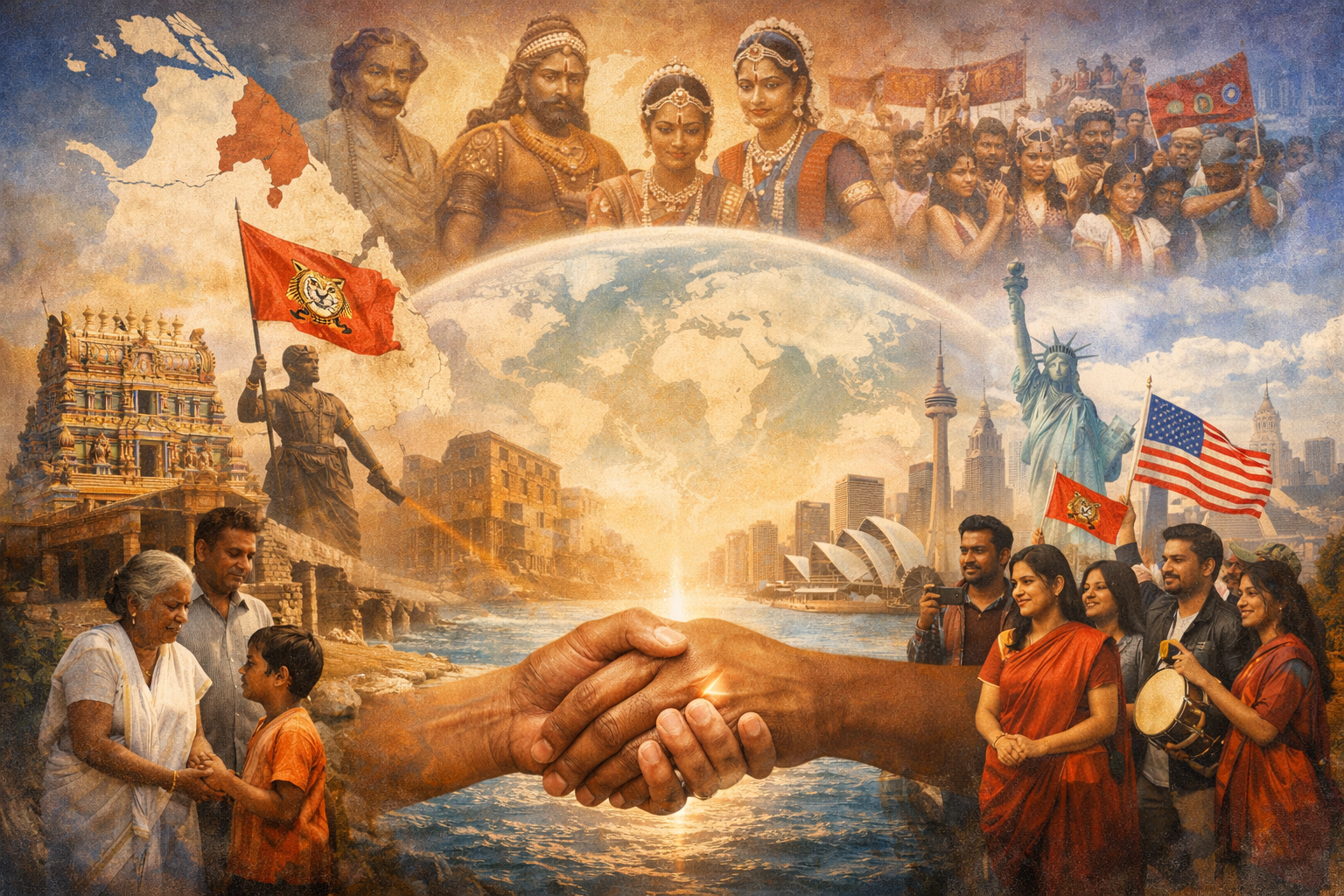

For decades, the relationship between Sri Lankan Tamils in the North and East and the global Tamil diaspora has been sustained by deep emotional connection rooted in shared history, language, culture and collective memory.
That connection ensured survival through war, displacement and political marginalisation. Yet as Sri Lanka navigates economic fragility and structural reform, emotional solidarity alone is no longer sufficient.
The Northern and Eastern Provinces represent approximately 14 percent of the country’s landmass, but land without economic leverage and institutional authority remains symbolic rather than strategic.
The pressing question today is not whether Tamils care about their homeland, but whether the political environment allows them to organise for a sustainable future.
Connection is emotional and identity-based. Connectivity, however, is structural and institutional. It requires coordinated economic systems, organised diaspora engagement, transparent development mechanisms, unified political representation, and functioning provincial governance.
At present, while connection between homeland and diaspora remains strong, connectivity is weak. Diaspora contributions, often estimated at nearly 1 billion US dollars monthly in global economic participation, flow individually rather than strategically. Without formal platforms to mobilise even a fraction of this capacity, the North and East remain economically dependent, youth migration continues, and demographic stability becomes fragile.
This is where the role of the current NPP government becomes decisive. If the NPP is serious about its rhetoric of equality, anti-corruption governance, and systemic reform, it has a historic opportunity.
It can begin by fully operationalising provincial councils, devolving administrative authority in practical terms, ensuring transparent land governance, and halting politically sensitive land acquisitions that generate mistrust.
It can establish a legally recognised Northern and Eastern Development Authority with diaspora representation, supported by transparent digital investment portals and streamlined regulatory approvals. It can prioritise infrastructure connectivity such as ports, airports, fisheries modernisation, renewable energy corridors and digital economy integration. It can provide guarantees that economic development will not alter demographic balance but instead empower local communities.
The deeper question, however, is political trust. Will the NPP move beyond symbolic inclusivity and genuinely embrace power sharing within a constitutional framework? Or will it centralise authority under the banner of national reform while leaving minority regions structurally unchanged?
Economic development in the North and East cannot be reduced to welfare or settlement driven irrigation schemes. It must be based on local participation, land security, cultural sensitivity and equitable resource allocation. Without these foundations, development projects risk being viewed as instruments of control rather than empowerment.
Connectivity does not undermine national unity. On the contrary, it strengthens it. When regions become economically productive and politically respected, national stability improves.
If the NPP government chooses transparency, decentralisation and inclusive growth, it can convert diaspora connection into structured connectivity that benefits the entire country. If it fails to do so, emotional unity will remain intact, but structural progress will be stalled.
Connection gave Tamils resilience. Connectivity can give them sustainability and leverage. Fourteen percent of land can translate into meaningful influence only when identity is institutionalised and economic power is organised. The responsibility lies not only with Tamil leadership and the diaspora, but also with the present government.
This moment is an opportunity. Whether it becomes a turning point depends on political courage and constitutional honesty.