
Recent reports on Sri Lanka’s cabinet reshuffle mark another turning point in the nation’s development agenda. According to Hiru News (October 10, 2025), Bimal Rathnayake has been appointed Minister of Transport, Highways, and Urban Development, while the Ports and Civil Aviation portfolio has been assigned to Anura Karunathilaka. The report notes that the reshuffle is intended to “accelerate and streamline state development targets” ahead of the next national budget.
This administrative change presents an opportunity to renew focus on two critical infrastructure projects in the North — the Kankesanthurai (KKS) Port and the Jaffna Airport expansion — both of which hold transformative potential for Sri Lanka’s economy and regional engagement.
Commercial Potential
The Northern Province, and particularly Jaffna, remains one of Sri Lanka’s least integrated economic regions. A fully functional KKS Port can link northern producers in fisheries, agriculture, dairy, and Palmyra-based industries to markets across the Palk Strait and beyond.
Feasibility studies, backed by the Government of India’s US$61 million grant, reveal significant commercial potential. Conservative projections suggest monthly cargo volumes between 2,000 and 5,000 tonnes. Passenger movement through the Nagapattinam–KKS high-speed ferry service already ranges from 1,200 to 2,000 travellers per month, with capacity to exceed 5,000 once daily operations resume.
These figures are not speculative. They stem from operational data compiled by the Sri Lanka Ports Authority (SLPA) and partner agencies. The foundation has already been laid, what is now required is political and administrative commitment to move forward swiftly.
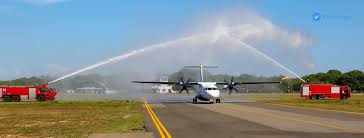
Parallel to port development, the Jaffna Airport expansion remains vital. Currently, road travel between Colombo and Jaffna takes nearly ten hours due to congestion and limited infrastructure. Enhanced air connectivity could reduce this journey to just one hour, enabling fast movement of people and goods while strengthening domestic and regional trade.
An upgraded airport will also serve as a key transit point between South Asia and the Middle East. Once operational, it will attract international carriers, facilitate tourism, and open new trade corridors for perishable exports, particularly seafood, dairy, and fresh produce, to reach Indian and Gulf markets within hours.
Minister Bimal Rathnayake’s earlier position on KKS Port development reflected caution rather than opposition. His new appointment, focusing on transport and highways, still places him in a pivotal role to support infrastructure connectivity. The handover of Ports and Civil Aviation to Minister Anura Karunathilaka should not be viewed as a setback but as an administrative realignment designed to fast-track long-delayed development priorities.
Policy Continuity
What matters most now is policy continuity. Projects such as KKS Port and Jaffna Airport cannot afford to be caught in political transitions. Their successful implementation will determine how evenly Sri Lanka’s post-crisis recovery is distributed across all provinces.
Accelerating the completion of these two projects will deliver far-reaching national benefits such as:
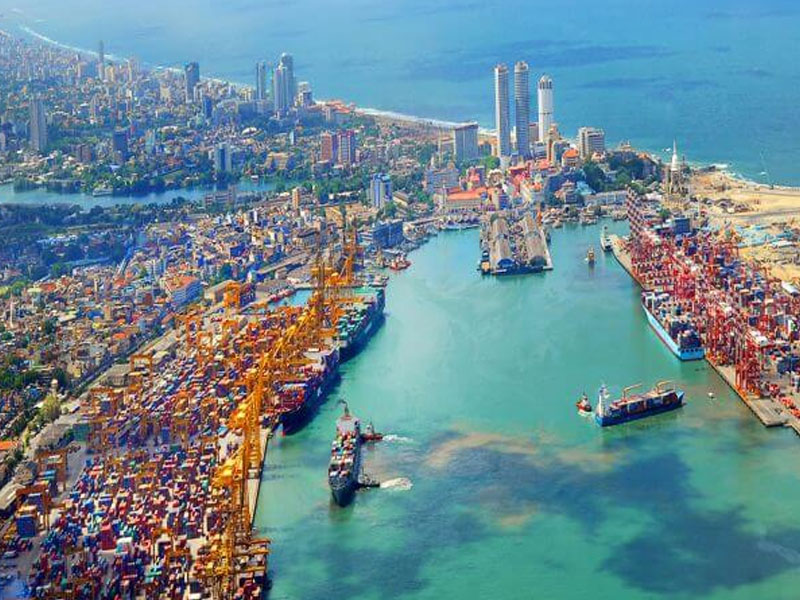
- Reduced congestion at Colombo Port, improving logistics efficiency nationwide
- Lower transport costs and travel time between North and South, enhancing labour mobility and trade
- Expanded regional exports to India and beyond, especially in perishable goods
- New investment opportunities in warehousing, fisheries, and agri-processing
- Cultural and people-to-people exchange, fostering reconciliation and national unity
Sri Lanka stands at a crossroads where infrastructure can define its regional relevance. By completing KKS Port and expanding Jaffna Airport, the government can open a northern economic corridor that complements Colombo’s dominance and ensures balanced development.
The reshuffle may change portfolios, but the vision must remain the same — to transform the North from a historical periphery into a strategic gateway connecting Sri Lanka with South Asia and beyond.
The KKS Port and Jaffna Airport are not merely infrastructure projects; they are instruments of inclusion, growth, and national renewal. Their completion would demonstrate that development in Sri Lanka is no longer Colombo-centric but truly national in reach.
The latest cabinet changes, if aligned with a pragmatic and forward-looking policy approach, can provide the momentum needed to turn long-discussed plans into tangible progress.
Restoring these ports quickly would not only stimulate the Northern economy but also reaffirm Sri Lanka’s commitment to becoming a regional hub for trade, travel, and cooperation.