A Significant Development Inspiring Confidence Among Diaspora Investors
The discussion organized by the Northern Civil Forum for Development and Prosperity (NCFDP) on 16 June 2026 marked an important milestone in shaping the future economic and social development of the Northern Province.
The meeting was attended by Tamil Members of Parliament S. Sridharan, Gajendrakumar Ponnambalam, Selvam Adaikalanathan (represented by Kurusamy Suren), and Dr. Sathyalingam, together with members of the NCFDP executive committee, civil society representatives, industry stakeholders, and individuals committed to regional development.
For many years, discussions concerning the North have primarily focused on political rights, land issues, and post-war challenges. In contrast, this meeting concentrated on economic growth, investment, employment generation, education, healthcare, and infrastructure development, making it a noteworthy shift in focus.
Key topics discussed included the development of Kankesanthurai (KKS) Port, expansion of Palaly International Airport, the Katunayake–Palaly air service, upgrading the Jaffna Teaching Hospital to a National Hospital, improving safety and rescue facilities for fishermen, expanding fire and emergency services, land release, increased Tamil representation in public service, expansion of the University of Vavuniya, transportation improvements, and educational development initiatives.
The meeting also examined several issues of social significance, including the appointment of a qualified Tamil Government Agent for Vavuniya District, the proposed Kayts–Karainagar Bridge Project, future utilization of schools facing closure, educational and cultural use of the Presidential Residence in Kankesanthurai, and the establishment of a Thiruvalluvar Cultural Centre.
One of the most significant outcomes of the discussion was the consensus that support should not be limited to currently proposed projects alone. Future development initiatives emerging from policymakers, government officials, industry experts, business organizations, universities, civil society groups, and diaspora communities should also receive support and consideration.
The participating Members of Parliament expressed their readiness to provide full cooperation in presenting worthwhile development projects to Parliament, relevant ministries, government agencies, and the business community, while facilitating their approval and implementation.
This position demonstrates that the development of the Northern Province is increasingly becoming a shared public objective rather than the agenda of any single political party. The emergence of a united approach that transcends political differences is a highly encouraging development for the future of the region.
This is particularly welcome news for the global Tamil diaspora. For many years, numerous diaspora investors have wished to invest in the North and East but remained hesitant due to uncertainties regarding political and administrative support. The current atmosphere is creating renewed confidence and encouraging greater engagement.
In the present circumstances, employment creation and empowerment are among the most critical priorities for the Northern Province. Creating quality jobs for young people, strengthening women’s economic participation, fostering entrepreneurship, and attracting investments into agriculture, fisheries, tourism, information technology, and manufacturing are essential for sustainable development.
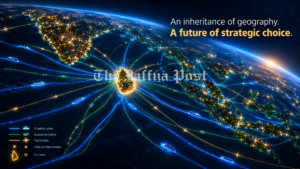
The Northern Province possesses numerous strategic advantages, including its proximity to India, the presence of Kankesanthurai Port, Palaly Airport, a skilled workforce, and abundant marine and agricultural resources. With effective planning and implementation, these strengths can transform the Northern Province into one of Sri Lanka’s most important economic growth centres.
The meeting held on 16 June 2026 should therefore be viewed not merely as a discussion forum but as the beginning of a new era of political and social cooperation aimed at the economic revival of the North. If this approach, focused on development, investment, employment, and empowerment continues, it has the potential not only to improve the living standards of Northern communities but also to make a substantial contribution to Sri Lanka’s overall economic growth.
For many years, people have hoped for a unified development vision for the North. That collective voice is now beginning to emerge. Transforming that hope into practical success will require the combined commitment of political leaders, government institutions, the business community, civil society, and the global Tamil diaspora.
The future of the North depends not only on political aspirations but also on economic transformation. The willingness of Tamil political leaders to collectively support development initiatives sends a powerful message that prosperity, opportunity, and empowerment can become the foundation of a stronger and more resilient Northern Province.