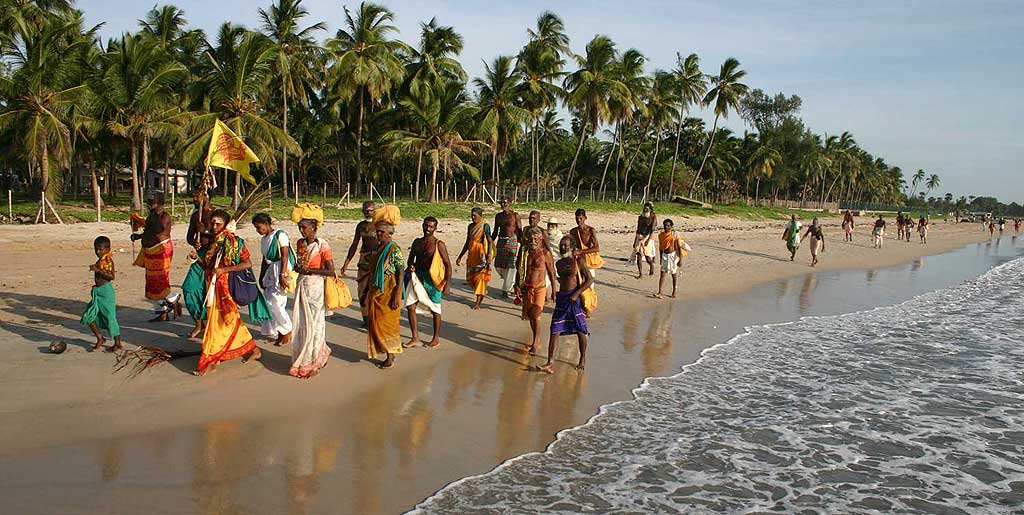
The Kataragama or ‘Kathirgamam’ foot pilgrimage, also known as Pada Yathra, from the coastal area of Thondamanaru in the northern tip of Sri Lanka, commenced with great devotion from the historic Selva Sannithi Murugan Temple on May 1, 2025, following special prayers at the shrine.
A large number of pilgrims engage in this divine pilgrimage, which has been considered the longest foot pilgrimage in the world, covering a distance of nearly 476 km from the Selva Sannithi temple to the Kathirgamam shrine in the southern tip of the island.
The traditional two-month-long foot pilgrimage typically begins after the April New Year season in Sri Lanka and is said to represent the rural voice of Sri Lanka. A large section of the pilgrims consists of elderly men and women.
The unique and historic foot pilgrimage is considered as one of the oldest in the world yet little is known about its origins. According to historians, the event is an annual re-enactment of episodes related as legend and myth about Kathirgamam.
The Pada Yatra traverses different landscapes covering the eastern part of the island and has played a major role in propagating and perpetuating the traditions of Kataragama throughout Sri Lanka and South India.
Pilgrims state that they follow a divine call experienced by one of their devotees before they commence the pilgrimage. The walk is an arduous journey that takes participants through various terrains and landscapes, even experiencing different weather conditions along the way. Their sheer devotion to the Kathirgamam deity enables them to tolerate the hardships of the long walk.
Participants sleep under trees and in temple premises found along the way, pointing out that they seldom know from where their next meal will come. There is even the threat of death from animal attacks in these jungle regions. The holy foot pilgrimage, however provides an intense spiritual opportunity for those who truly believe and embark on it with great devotion.
In the 1980s, an American named Patrick Harrigan was very much engaged in the Kathirgamam Pada Yatra, and due to the awareness created by him, a large number of foreigners also discovered this unique event. The multicultural nature of the route to the Kataragama region enables Buddhists, Hindus, Muslims, Christians, and those of any other religion to place their faith and offer their support and guidance to the pilgrims by offering food and refreshments.
It is important to mention that the Pada Yatra took place even during the period of the civil war. The pilgrims who went through the areas controlled by the Tamil militants as well as the highly militarised areas with army camps, received a warm welcome, and they were protected and respected by both sides engaged in the armed struggle.
Today the pilgrimage proceeds in a peaceful atmosphere from Jaffna to Kathirgamam with the pilgrims chanting ‘Arohara Muruga’ throughout their journey.