
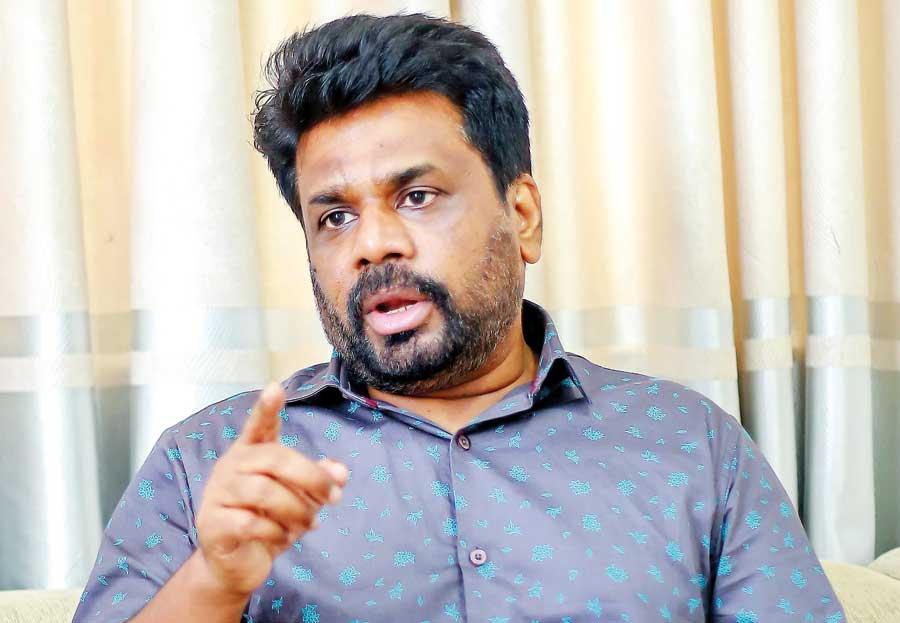
The National People’s Power (NPP) government, led by the Janatha Vimukthi Peramuna (JVP), is no longer governing the country in accordance with its original promises. What began as a hopeful shift in Sri Lanka’s political culture has now evolved into a disillusioning chapter in the country’s governance. Several key developments point to this retreat from reform.
Delayed Elections: A Calculated Strategy
One of the clearest signs of political backtracking is the government’s reluctance to hold Provincial Council elections. Despite public commitments, there is no visible intention of moving forward with the electoral process. Instead, the government seems to be waiting for legal intervention—perhaps by someone like M. A. Sumanthiran—to challenge the delay. If the courts rule against them, they are prepared to proceed, making it appear as though they are merely adhering to judicial orders.
This tactic reflects a broader trend: avoiding accountability by outsourcing difficult decisions to the courts, rather than upholding their own campaign promises.
Power Retention Over Reform
The NPP’s current focus seems to be securing a second term in office, rather than delivering structural change. In doing so, they are attempting to strike a balance between satisfying their progressive voter base and appeasing Sinhala-Buddhist nationalist sentiment.
This balancing act has resulted in the abandonment of core reforms such as:
• The repeal of the Prevention of Terrorism Act (PTA)
• The abolition of the executive presidency
• Any substantial constitutional amendments
Reforms now appear to be conditional—pursued only if they secure political advantage. So far, the only tangible action is a campaign targeting corrupt politicians. While necessary, this alone is not enough to define a transformative administration.
Unless more is achieved, the current NPP government risks becoming yet another casualty of Sri Lanka’s cycle of political betrayal—where promises are made for votes and quickly forgotten once power is secured.
Stalled Reconciliation and the Tamil Question
On the critical issue of reconciliation and the Tamil national question, progress has stalled entirely. Despite receiving support from Tamil voters—including the historic election of three NPP MPs from Jaffna—the government has failed to offer any meaningful political gains in return.
Even the basic act of holding Provincial Council elections, which would begin implementing the long-delayed 13th Amendment, has been side-lined. Instead, the administration seems comfortable allowing provincial governors and District Development Coordination Committees (DCCs) to manage affairs, effectively bypassing democratic representation in the provinces.
Just as the Rajapaksa regime once harboured dreams of indefinite rule, the JVP appears to be developing similar ambitions. This was made especially evident during Tilvin Silva’s visit to China and his rhetoric upon return. The difference is that while the Rajapaksas had their dynastic path, the JVP seems to be dressing its ambitions in revolutionary rhetoric—yet acting no differently.
Ethnic Communities as Political Pawns
Once again, it is the Tamil and Muslim communities who are being treated as political bargaining chips. Despite rhetorical commitments to justice and equality, the government’s actions reflect a familiar hardliner approach—one the JVP has not truly abandoned.
Unfortunately, Tamil political leaders themselves have not helped the situation. Rather than seizing this moment to push for meaningful reform, most are preoccupied with internal divisions and personal political survival. Constructive engagement has been absent, and unity even more so.
India, which once played a more engaged role in Tamil affairs, appears to have withdrawn. Its indifference is often justified by pointing to the persistent disunity among Tamil parties—a fair criticism, but one that deflects responsibility.
Empty Meetings and Empty Promises
The cancellation of a key ministerial meeting scheduled for this week (6/8/25), without even setting a new date, highlights the lack of seriousness within the government. The minister in charge vaguely claimed the same bill may be reintroduced in two months, but offered no justification for the delay. The question remains: why two months? The answer is unlikely to inspire confidence.
As an old saying goes, the current NPP government resembles “blowing a conch into a deaf man’s ear” (செவிடன் காதில் சங்கு ஊதுவது போல). The signs are loud, but no one is listening.
Tilvin Silva’s recent statements only confirm this indifference. Despite the trust placed in the NPP by Tamil voters, the government has offered nothing of substance in return. Leaders like Anura Kumara Dissanayake and Harini Amarasuriya now expect even greater support without delivering basic political progress. This attitude mirrors previous regimes: full of promises, short on delivery.
The NPP’s poor showing in local elections—both in the North and East, and in some key areas of the South—should serve as a wake-up call. Instead, the party seems determined to press on in the same direction.
Conclusion: A Lost Opportunity
The NPP government had a rare opportunity: majority leadership, a strong parliamentary mandate, and widespread public goodwill. Yet, it has squandered it all through indecision, political evasion, and empty rhetoric.
In doing so, the NPP has arguably become the most disappointing administration in Sri Lanka’s modern history. It failed not because of political opposition, but because it refused to act on its own ideals.
Given this experience, it is doubtful that Sri Lanka will see another left-oriented, socialist-leaning government rise to power in the near future. And with mounting economic pressures on the horizon, the nation’s challenges are only just beginning.