
By Nuwan I. Senaratna
For centuries, we’ve trusted others to tell us what’s happening. Editors, reporters, and producers have acted as interpreters of reality. But what if those messengers can no longer be trusted? Can we still rely on systems when outrage sells better than accuracy? When telling the news has become selling the news?
So, here’s the question: what happens if we remove the messenger altogether?
A Brave New World
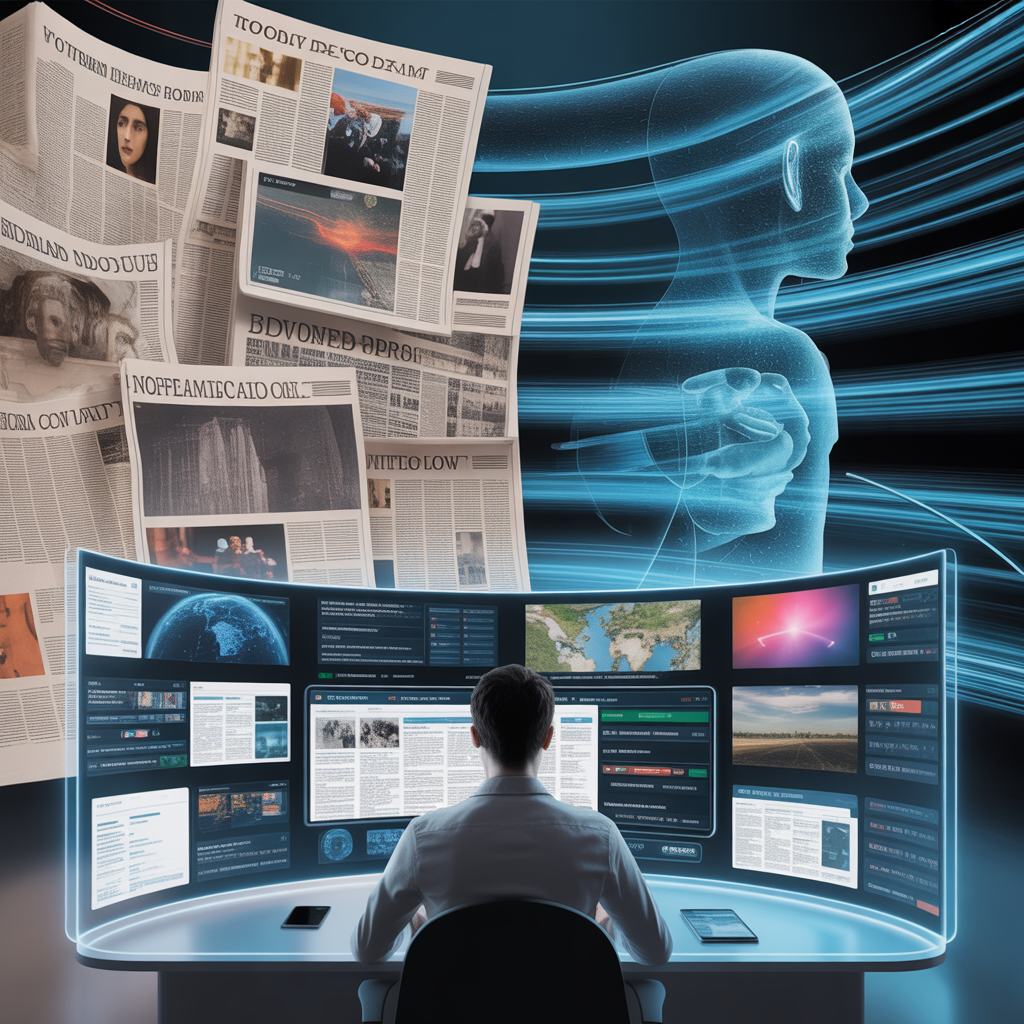
Imagine a world where information flows directly from source to citizen. What if you could see every government statement, corporate disclosure, satellite image, or eyewitness video — unedited and unfiltered? Your personal AI could turn that flood of data into something meaningful, presenting only what matters to you, in a form you understand.
Could journalism as we know it give way to something more personal — truth guided by machines but still controlled by humans?
The Shape of New News
Let’s look at seven traits of this possible future.
How would news work without gatekeepers — and could such a system survive deepfakes, falsehoods, and digital manipulation?
Source Transparency
Would you still need to “trust” a reporter if you could check the source yourself?
In this model, every fact, video, and statement is traceable. Instead of reading a journalist’s version of a speech, you could read or watch it in full.
When proof replaces paraphrase, lies lose their grip. Systems could automatically check where and when something was recorded. Trust would come from evidence, not reputation or authority.
Machine Curation
Could your news feed work for you, not for advertisers, politicians or business-tycoons?
Your personal AI could filter information based on your real interests — science, health, or politics — and explain why each story appears. It could flag suspicious or synthetic material and refuse to promote clickbait. Unlike social media, it would not feed your anger to keep you engaged.
Distributed Verification
Who decides what’s true? In this new world, no one person does.
Thousands of AIs and independent users could check claims against open databases, satellite data, or sensors. If a viral video claims a city has flooded, the system could verify it in seconds.
Immutable Records
How do we stop history from being rewritten? By locking each source into an unchangeable record.
Every document, video, or dataset would carry a permanent digital fingerprint. Once published, it couldn’t be quietly edited or deleted. In an age of deepfakes, these tamper-proof records could make forgery obvious — and honesty harder to avoid.
Contextual Reconstruction
Could facts stay the same but stories differ?
The same data might be shown as charts for a scientist, a story for a teacher, or a forecast for a policymaker. Everyone sees truth in a form they most useful. This separation of facts and presentation makes it harder for anyone to twist the message to fit their agenda.
Attention Autonomy
What would news look like if it didn’t need to shock you?
Without profit in outrage, your AI could prioritise accuracy and value over emotion. You’d decide what deserves your attention — not a company’s algorithm.
Ephemeral Analysis
Would one version of truth ever be enough?
You could ask your AI to retell a story from different perspectives — economic, moral, or environmental — and compare them. Seeing how framing shapes meaning helps expose bias. In a world full of AI-driven propaganda, this flexibility might be our best defense.
Concluding Reflections
Of course, such a system wouldn’t be perfect.
Could too much data overwhelm us? Could AIs still mirror our biases or flood us with noise? Without human editors, might we lose empathy and shared understanding?
Yet this approach could still be far stronger against future waves of disinformation. Deepfakes, bot armies, and propaganda would face a defense built on transparency, open proof, and personal control. Lies would be costlier; truth easier to test.
So perhaps killing the messenger isn’t an act of destruction, it’s liberation. In this post-messenger world, truth wouldn’t be handed down. It would be earned, tested, and shared by all of us.