When Lonely Planet named Jaffna the second-best destination in the world for 2026, it
wasn’t a surprise to anyone who has walked along the city’s sun-drenched causeways or
shared a crab curry under the shadow of the historic fort. For decades, Jaffna has been a
hidden gem — quietly rebuilding, rediscovering, and revealing a side of Sri Lanka that is
both ancient and refreshingly new.
But if Sri Lanka wants Jaffna to become the No. 1 travel destination in the world next
year, one step is obvious: connect Jaffna properly to the rest of the country through
direct flights from Colombo.
The Case for Direct Colombo–Jaffna Flights
Today, travelling between Colombo and Jaffna is an endurance test. The road journey
takes 8–10 hours on congested highways, often longer during holidays or heavy
transport seasons. Yet the flight time is barely 60 minutes.
The difference is not just about time; it’s about accessibility, comfort, and the quality of
experience. Thousands of visitors — especially from the Sri Lankan diaspora — arrive
each month at Bandaranaike International Airport (CMB) hoping to visit their ancestral
towns in the North. Many are elderly parents, young families, or short-stay
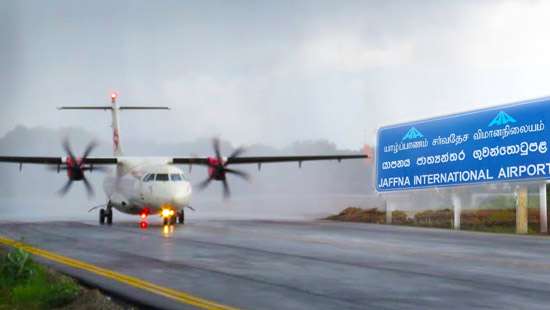
professionals. For them, a direct connection to Jaffna International Airport (JAF/Palaly)
would transform the journey from a tiring ordeal into a seamless experience.
Reliable connecting flights would also open Jaffna to the hundreds of thousands of
foreign tourists now arriving in Sri Lanka. In 2025 alone, tourist arrivals grew by more
than 25 percent, with visa-free entry now extended to citizens of 35 countries.
If even a fraction of these visitors could add a two-day Jaffna stay to their itineraries, the
Northern Province would see an economic revival unlike any since independence.
A Global Spotlight — and a Rare Opportunity
Lonely Planet’s editors praised Jaffna for its rich heritage, island adventures, and
authentic Tamil cuisine, calling it one of the world’s most exciting emerging travel
destinations. It is a recognition not only of beauty, but of resilience — a symbol of a
region opening its arms to the world after years of isolation.
With this global spotlight, Jaffna’s potential is enormous. But to translate that attention
into sustainable growth, connectivity is key. The airport upgrade already underway — a
new Rs 600 million terminal and proposed runway extension — is the perfect moment
for decisive action by the Civil Aviation Authority and the government.
What the Government Can Do — Now
- Introduce 3–4 daily flights between Colombo and Jaffna using 30–70-seat turboprop
aircraft. - Synchronise schedules with international flight arrivals and departures at CMB for easy
same-day transfers. - Offer through-ticketing with major airlines so that passengers from London, Toronto,
or Melbourne can book to Jaffna directly. - Create flexible fares for diaspora, local residents, and tourists to ensure affordability.
- Promote integrated tourism packages linking Jaffna with Trincomalee, Mannar, Delft
Island, and the Northern coastal circuit.
A Message to Policy-Makers
Jaffna has already captured the imagination of the world. The Lonely Planet recognition
is not a finish line — it’s an invitation to rise higher. With proper air connectivity, Jaffna
could easily leap from second to first place on future world-travel lists, showcasing Sri
Lanka not only as a land of beaches and mountains but as a nation of deep culture, faith,
and renewal.
Every day lost to inaction is an opportunity missed — for airlines, for tourism, and for
the people who have worked tirelessly to make Jaffna shine again. The infrastructure is
ready, the demand is undeniable, and the world is watching.
Give Jaffna its wings — and it will carry Sri Lanka to the top of the world’s travel map.
Growing Indian Arrivals Strengthen Jaffna’s Tourism Boom
One of the strongest contributors to Jaffna’s rise on Lonely Planet’s global list is the
surge in Indian tourist arrivals. India now remains Sri Lanka’s largest inbound market,
accounting for nearly 20–25 percent of total international visitors.
Many of these travellers arrive directly to the Jaffna International Airport on short-haul
flights from South India, particularly from Chennai and Tiruchirappalli, which have
resumed since the airport’s reopening.
Complementing these air connections are the Nagapattinam–Kankesanthurai ferry
services, now operating under the India–Sri Lanka maritime connectivity initiative. These
ferries carry both tourists and traders, encouraging cross-border cultural exchanges and
short leisure visits to Jaffna and the Northern islands.
Together, these air and sea links have positioned Jaffna as the gateway for Indian
travellers — a fact that significantly contributed to Lonely Planet’s decision to rank it the
world’s second-best destination for 2026. With continued expansion of flight
frequencies and ferry operations, Jaffna could easily claim the top spot next year.
By Raj Sivanathan