
This year marks exactly one century since SWRD Bandaranaike first raised his voice for a federal system of governance in Sri Lanka. However, the effort he made at that time to secure the support of northern Tamils for his proposal did not yield results.
His demand back then did not carry an ethno-political dimension. Had the Tamil leaders of that era cooperated with Bandaranaike and worked toward the demand for federalism, the political history of Sri Lanka might well have been entirely different.
At the same time, unfortunately, after the Donoughmore Constitution, Bandaranaike adopted an aggressive communal policy to win the votes of the majority community and come to power. This led to a catastrophic breakdown in relations between the communities. Had he not done so, Sri Lanka’s political history would have taken a different turn in another way.
Although the debate surrounding a federal system in Sri Lanka spans a century, the Tamil people’s demand for a political solution to their issues based on a federal model has persisted for more than three-quarters of a century.
Despite proposing a federal system of governance, the Ilankai Tamil Arasu Kachchi (ITAK), led by SJV Chelvanayakam, entered into pacts based on solutions short of a federal system during negotiations with two different governments in the middle of the last century. The two prime ministers who signed those pacts with Chelvanayakam succumbed to the opposition of southern Sinhalese nationalist forces. They failed to demonstrate statesman – like political courage and ultimately committed a breach of trust.
Once a stage was reached where it was no longer possible to find an amicable political solution to the national ethnic question through negotiations with Colombo governments, the demand for a separate state was born. When the Tamil moderate political leaders put forward the demand for federalism, they lacked a practically feasible roadmap to achieve it. Similarly, they possessed no clear plan to win the demand for a separate state.
Eventually, the armed struggle launched to achieve a separate state turned into an internal civil war, the subsequent loss of lives and destruction of which are part of recent history. The demand for a federal solution, which had been forgotten in Tamil politics for more than three decades, after the Vaddukoddai Resolution (May 14,1976) has re-emerged in the post-war period.
Today, finding a sustainable political solution to the national ethnic question based on a federal system remains the primary demand of almost all Sri Lankan Tamil nationalist political parties. However, despite operating in the political arena with the same core demand, these parties have been unable to reach a consensus to present a unified stance on behalf of the Tamil people.
During the peace process facilitated by Norway at the beginning of this century, it was mentioned at one stage during the overseas talks between Prime Minister Ranil Wickremesinghe’s administration and the LTTE that they were prepared to explore a political solution based on a federal structure. Apart from that single instance, Colombo governments have never discussed a federal solution with the Tamil leadership.
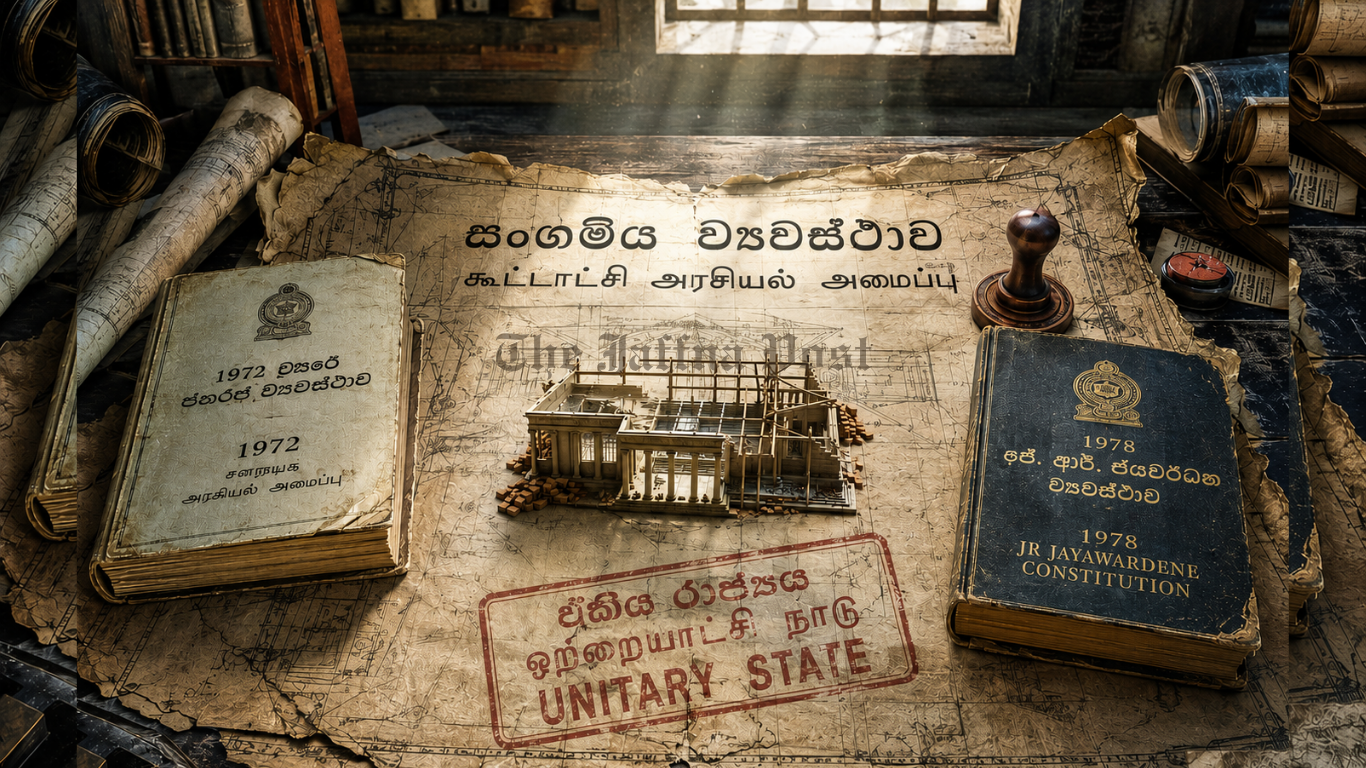
The federal system proposal submitted by the ITAK to the Constituent Assembly, established by the United Front government led by Prime Minister Sirimavo Bandaranaike to draft the first republican constitution, was rejected outright. It was that constitution, which came into effect in May 22, 1972, that declared Sri Lanka a unitary state. The second republican constitution (1978), introduced by the UNP government, led by President J.R. Jayewardene, further reinforced this unitary system.
The 38-year experience of Tamils with the Provincial Council system, introduced as a result of the July 1987 Indo-Lanka Accord, has clearly proven that meaningful devolution of power is impossible under a unitary state.
Against this backdrop, the firm stance of all Tamil nationalist political parties today is that changing the unitary system and introducing a constitution based on a federal system is the only sustainable solution to Sri Lanka’s national ethnic question. However, these parties merely continue to emphasize their demand without appearing to possess any internal political action plan to achieve it.
Some Tamil parties currently hold the view that, despite their deficiencies, the existing Provincial Councils must be protected and utilized as a stepping stone toward achieving a long-term federal solution.
Conversely, other Tamil parties argue that the Provincial Council system cannot even be considered a starting point for power devolution. They maintain that the only way forward is the abolition of the unitary constitutional system and the implementation of a political solution based on a federal system that recognizes the sovereignty of the Tamil people (nation).
Tamil political parties are currently adopting the same approach toward the issue of a political solution as they did in their belief that the Sri Lankan government could be held accountable for wartime human rights violations and war crimes through international pressure. Specifically, they believe they can achieve their desired political solution by exerting pressure through India.
Whenever they meet Indian leaders, particularly diplomats like Foreign Minister Jaishankar, leaders of Tamil parties do not stop at merely asking India to pressure the Sri Lankan government to hold provincial council elections without further delay and to fully implement the 13th Amendment to the Constitution; they also never fail to request India to urge Colombo to find a federal solution.
During a meeting with the leaders of Tamil parties in Colombo, Jaishankar openly questioned how one could even talk about finding a solution based on a federal system with Sri Lankan governments that have failed to fully implement the 13th Amendment, which was introduced 38 years ago to establish provincial councils following the peace accord.
No domestic initiative taken to find a political solution to the ethnic issue has succeeded. Without India’s direct intervention, even the power-sharing arrangement through provincial councils would not have come into existence. Despite this, the reality remains that India has been unable to make Sri Lankan governments operate the provincial councils effectively to this day. Given this state of affairs, what can India possibly do to bring about a federal solution?
In recent times, the Tamil National Council (Tamil Desiya Peravai) has initiated actions believing that it can bring Colombo into line by pressuring New Delhi through the state of Tamil Nadu.
After meeting the then Chief Minister of Tamil Nadu, M. K. Stalin, and leaders of other political parties in the state in December 2025, a delegation from the Tamil National Council conducted a second round of talks over the past several days, meeting the current Chief Minister Joseph Vijay and other political leaders.
During these meetings, they discussed various political and human rights issues currently faced by the Tamil people in Sri Lanka. The Tamil National Council’s statement noted that they also emphasized “the necessity of a federal-based political solution that abolishes the unitary constitutional system and recognizes the sovereignty of the Tamil nation.”
When they met the Tamil Nadu Opposition Leader, Udhayanidhi Stalin, they requested the formation of a representative committee comprising political parties in the state to adopt a unified stance on the Sri Lankan ethnic issue, and to convene an all-party conference. It remains unclear whether the Tamil National Council realizes the irony of making such a request to Tamil Nadu parties, given that Tamil parties in Sri Lanka itself have been unable to reach a unified stance on behalf of the Tamil people.
While things stand this way, at a time when the sentiment regarding the Sri Lankan Tamil issue in Tamil Nadu has “cooled down” due to various factors, the extent to which the Tamil National Council’s efforts to “re-awaken” them will bear fruit, is an important question.
Furthermore, whether state political forces, including Chief Minister Joseph Vijay, would show any interest in launching a movement to exert pressure on Prime Minister Narendra Modi’s government remains another crucial question.
The Tamil National Council must first clarify the appropriateness of gathering support in Tamil Nadu without first approaching the government or spearheading a democratic, people’s movement locally within Sri Lanka. What can be achieved merely by seeking the solidarity of Tamil Nadu’s political forces without launching any form of political movement in the North and East?
For Sri Lankan Tamil political parties, seeking India’s assistance and support is a historically deeply-rooted strategy. However, in the current scenario, it is an approach fraught with complex geopolitical and domestic limitations.
The primary reason Tamil parties are currently looking toward New Delhi is that India remains the only foreign country holding a formal, treaty-based official “locus standi” in the ethnic conflict. Due to the July 1987 Peace Accord, Tamil parties believe India have an “obligation” to pressure Colombo or leverage its goodwill.
Yet, beyond occasionally requesting successive Sri Lankan governments to hold provincial council elections and fully implement the 13th Amendment, New Delhi does not seem to view this “obligation” in any other light. The Modi administration cannot be expected to come forward and exert pressure even on this matter.
Even if highlighting India’s role in holding Colombo accountable to the Peace Accord is a natural strategy for Tamil parties, how can they expect India to deliver a full federal structure?
Although Tamil parties demand a federal structure that recognizes the Tamil nation’s right to self-determination, India’s foreign policy framework has clear limitations that do not align with this demand. Since India itself operates on a quasi-federal model with a highly centralized federal government, how can New Delhi be expected to demand a full federal system in a neighboring country when it hesitates to grant that level of autonomy to the states within its own borders?
In fact, it has been evident recently that several state governments, including Tamil Nadu, have been accusing the Modi administration of stripping away their powers.
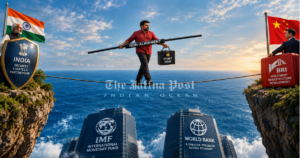
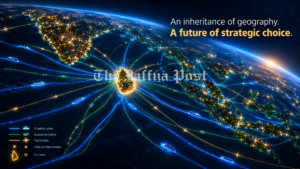
The era of interventionist diplomacy backed by military might, such as that of the 1980s, is long gone. Today, regarding Sri Lanka, New Delhi’s primary objective is to maintain a stable and friendly government that respects India’s maritime strategic interests. New Delhi believes that putting excessive pressure on the Colombo government over the Tamil issue would push Colombo into the clutches of superpowers hostile to India.
In the political climate of Southern Sri Lanka, the word “federalism” is perceived as the first step toward the partition of the country. Therefore, it can be expected that India will never adopt an approach that could trigger fierce Sinhala nationalist opposition and paralyze any diplomatic progress.
These views need not be interpreted as being put forward with the intention of trivializing the efforts being made by the Tamil National Council to regain the support and solidarity of Tamil Nadu’s political forces and its people for a solution to the ethnic issue. The leaders of the parties and groups comprising that Council are adopting the tactics that seem right to them.
However, it is essential to have a clear understanding of the limitations regarding the support of Tamil Nadu’s political forces and India’s involvement in the ethnic issue from the period following Black July 1983 to the present day, as well as the outcomes that could be achieved through them.
One must also reflect on the situation that arose as a result of how the Tamil side handled India’s past involvement. Following the recent efforts of the Tamil National Council, how Chief Minister Joseph Vijay’s government and the state’s political forces are going to approach this is crucial. We will be able to know that in the coming days.
For the time being, it would be a significant achievement if they at least pressure the Modi government to urge the Sri Lankan government to conduct provincial council elections and fully implement the 13th Amendment.