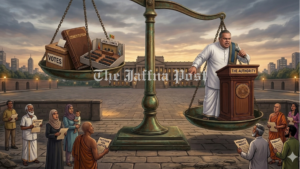

If the opposition is demanding President Anura Kumara Dissanayake’s resignation before the facts have been established, it raises legitimate questions about why such a conclusion is being reached before the investigation is complete.
It also makes it all the more important for investigators to determine whether there was any ulterior motive behind the prison uprising, whether any individuals or groups helped instigate or exploit the violence, and who, if anyone, stood to benefit from it. Any conclusions about responsibility, including calls for resignation, should be based on evidence rather than speculation or political expediency.
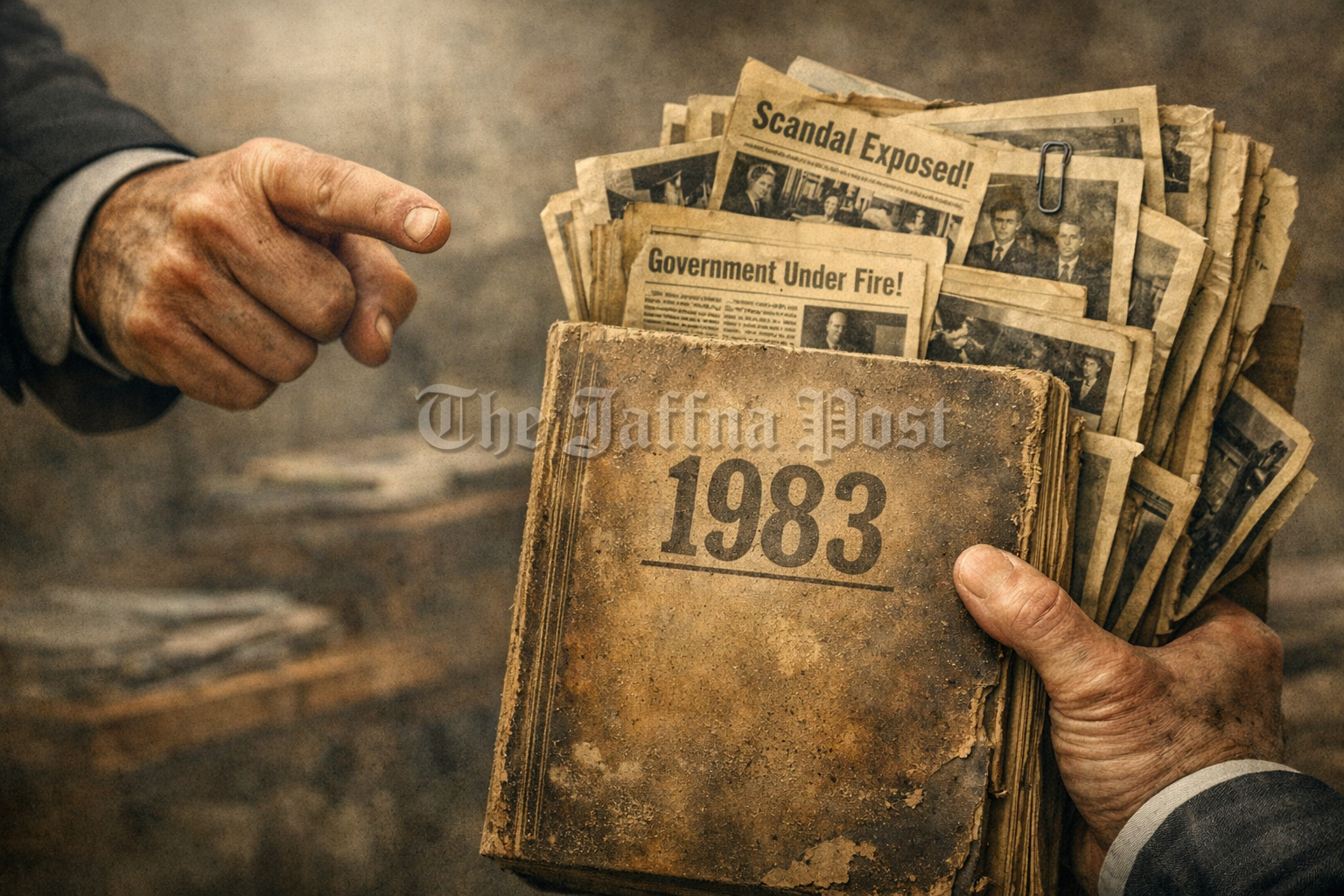
It is also fair to ask why the same standard was not applied to the UNP government in 1983. Why didn’t President J.R. Jayewardene resign after the Black July pogrom?
The 1983 anti-Tamil violence, including the murders inside Welikada Prison, has been widely documented by scholars, commissions of inquiry, and human rights organizations. Many researchers have concluded that state actors were either involved in the violence or failed to prevent it, and some have characterized it as state-perpetrated or state-enabled violence.
Then Minister Cyril Mathew has been widely accused of encouraging and enabling the violence and of playing a leading role, although these allegations remain matters of historical and political debate. President J.R. Jayewardene did not address the nation for several days while the country was burning and the violence continued.
When former Minister Ananda Tissa de Alwis visited Kandy on a private occasion, he reportedly remarked to those present: “අපි දත ගලවන්න ගිහින් හක්ක කඩාගත්ත.” (“We went to pull out a tooth but ended up breaking the jaw.”) The statement has often been interpreted as an acknowledgment that events had spiraled far beyond what had been anticipated or intended.
By contrast, the recent deadly prison uprising is still under investigation. At this stage, there is no established evidence that the state deliberately orchestrated the violence. However, there may have been serious failures, negligence, or mismanagement that must be thoroughly investigated, and anyone found responsible should be held accountable.
At the same time, the broader history of Sri Lanka’s conflict cannot be understood without examining regional and international influences.
During the 1980s, Sri Lanka established an Israeli Interests Section despite opposition from some domestic political groups and concerns among certain regional actors. Various reports indicate that Sri Lanka also maintained security and intelligence links with Israel during that period at the request of then-President J.R. Jayewardene. This raises important historical questions: Why did India, under Prime Minister Indira Gandhi, provide support to Tamil militant groups? What role did Tamil Nadu Chief Minister M.G. Ramachandran (MGR) play? These questions deserve careful examination because Sri Lanka’s conflict was shaped not only by domestic political failures but also by regional rivalries, Cold War geopolitics, and the strategic interests of external powers. Understanding that broader context is essential for an informed assessment of the conflict and its lasting consequence