In 1998 a Lankan soldier in custody revealed for the first time the existence of a mass grave in Chemmani, when he disclosed the death of Krishanthi Kumaraswamy, a school girl who was killed after being sexually molested and buried in Chemmani-Sindubathi cemetery by a group of soldiers.
Since the incident sent shock waves throughout the Island as well as internationally, a group of local as well as international journalists were taken by the Army to visit the site where the mass burial was supposed to have taken place.
Chemmani cemetery is located at the very entrance to Jaffna city from the South. The big archway which depicts the history of Jaffna welcomes visitors who enter the city of Jaffna. It was built by late Mayor of Jaffna Alfred Duraiappah .
However the Chemmani cemetery area has become the talking point since the armed forces liberated the Jaffna Peninsula from the clutches of the LTTE in 1995.
A large number of people, mainly young men and women were taken into custody on suspicion of their involvement with the LTTE soon after the `Operation Riviresa’ which was carried out to liberate Jaffna from the control of the LTTE.
Thereafter the fate of the majority of them still remains unknown. Krishanthi, a girl from a prestigious girl’s school in Chundikuli, Jaffna was sexually molested before she was killed and later buried at Chemmani. Krishanthi had gone to an Army camp near her house where her mother had gone to lodge a complaint. Since her mother didn’t return home, Krishanthi had gone to the camp in search of her mother, where she was supposed to have been molested and later buried at Chemmani cemetery after she was killed.
Renowned forensic expert Professor Chandrasiri Niriella also accompanied the media personnel to the Chemmani grave site to examine the area with regard to the burial site where a large number of civilians including Krishanthi were believed to have been buried.

The preliminary investigations followed by an extensive investigation during former President Chandrika Bandaranaike Kumaratunge’s period didn’t bring fruitful results, despite the strong evidence of involvement of Armed Forces personnel in the incident.
Now nearly three decades later, the Chemmani cemetery issue has come up again in the backdrop of the kith and kin of the disappeared persons seeking justice from successive governments in power from the time the voices came up over the disappeared persons.
Earlier in the mid-nineties excavation at the Chemmani-Sindubathi burial site in Jaffna had led to the recovery of human remains believed to belong to those who disappeared.
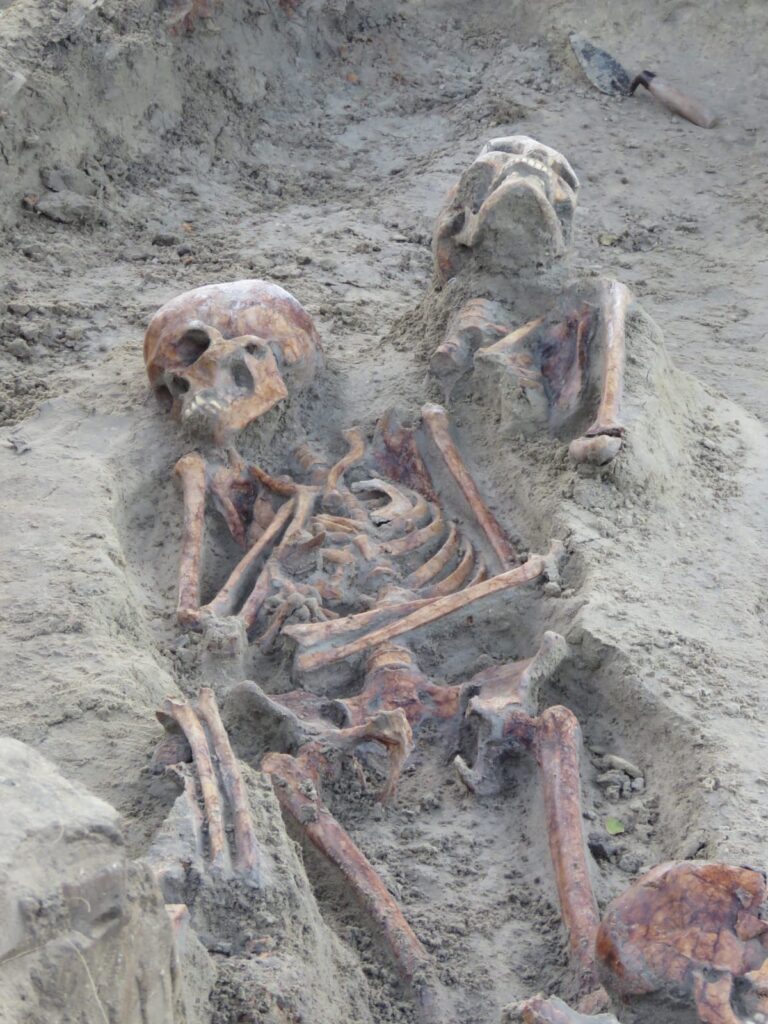
Jaffna Magistrate’s court has recently ordered to carry out the excavation extensively following the discovery of a skeleton of an infant.
Following the Court order, so far 13 human bone fragments from the cemetery area temple grounds have been found. Forensic experts identified one fragment as belonging to an infant, based on its facial structure. Five of the fragments have been fully exhumed, while excavation continues to dig out more evidences of mass burial. It is now believed that more infants could have been buried along with their parents in the mass grave.
The Chemmani cemetery area is a symbol of longstanding impunity. In 1998, a Sri Lankan soldier testified to the existence of mass graves in the area, alleging they contained the bodies of Tamils killed in custody. An initial excavation confirmed the presence of several skeletons. However, the Sri Lankan state failed to pursue further investigations, allowing key evidence and leads to fade into silence.
Amnesty International has already announced that the amount of persons disappeared during the North and East conflict period could be around 60,000 to 100,000.
There were several mass graves in the North in the military operational areas, but the investigations into those graves were not carried out properly and the Governments in the past had ignored everything completely.
A similar situation also prevailed at Suriyakanda area in Embilipitiya during the JVP insurgency period in the nineties.
Former President Chandrika Bandaranaike even took up the issue to spearhead her election campaign to come to power and she had even succeeded in the campaign. But hardly anything was done with regard to the Suriyakanda mass burial site in Embilipitiya.
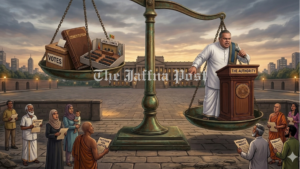
Currently it looks like that the National People’s Power (NPP) administration has again taken up the Chemmani issue. It is too early however to say whether the issue has come up with genuine interest to mete out justice or to bully the Rajapakse clan.