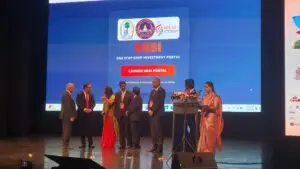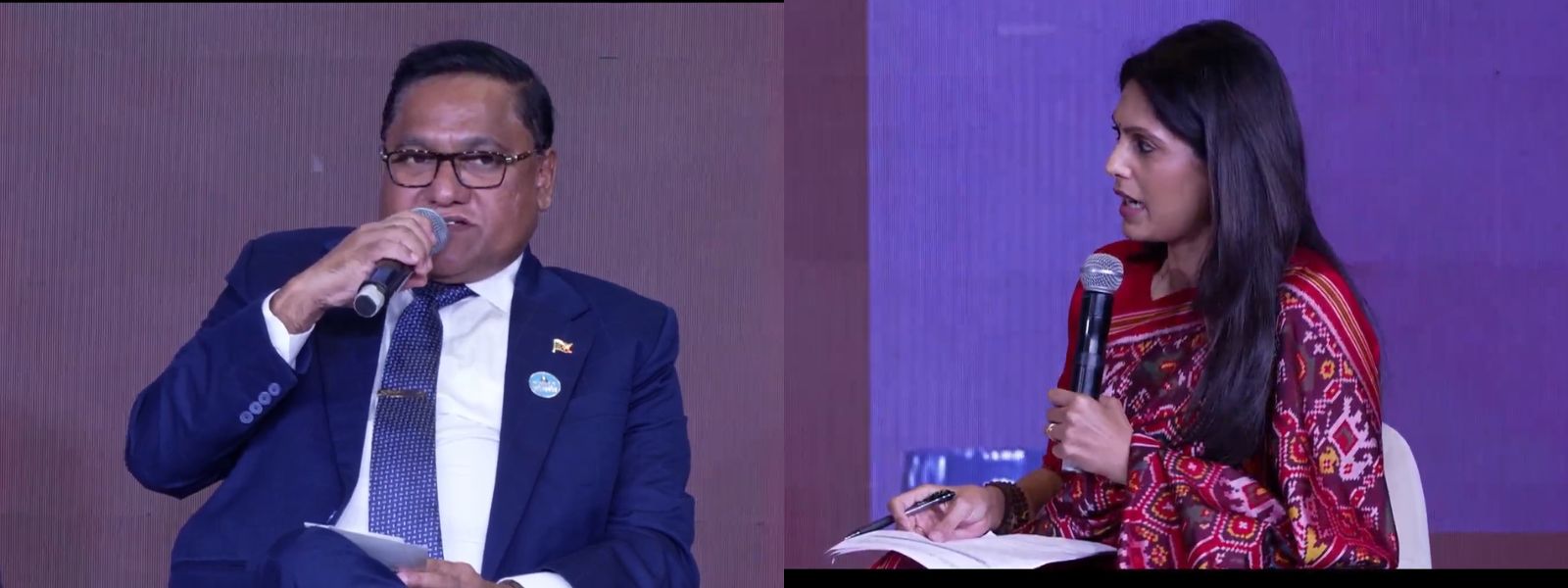

Following Foreign Minister Vijitha Herath’s recent visit to India and his conversation with renowned journalist Palki Sharma Upadhyay, comments mocking his English proficiency have surfaced, particularly on social media. A Colombo-based English daily condemned this behavior in its editorial.
The newspaper pointed out that the primary concern should be whether Herath acts in the national interest on the international stage, rather than his linguistic fluency.
While English proficiency is undoubtedly important for international diplomacy, it is incorrect to say that diplomatic interactions cannot be handled effectively through translators.
In the last century, Soviet leader Joseph Stalin and Chinese leader Mao Tsedong were not English speakers. Did they not handle international diplomacy skillfully during those crisis-ridden times? Stalin, who allied with the US and Britain to defeat Hitler’s Germany in WWII, conducted negotiations with Winston Churchill and Franklin D. Roosevelt solely through translators.
Similarly, there is no public evidence of current Chinese President Xi Jinping speaking English fluently; he engages with world leaders through interpreters, though it is said he can understand the language to some extent. Russian President Vladimir Putin, despite being able to speak English, predominantly uses translators for critical diplomatic engagements. Numerous such leaders can be cited as examples.
Therefore, it is incorrect to claim that those who cannot use English in international diplomacy lack the shrewdness or tactical ability to handle foreign affairs.
In Sri Lanka, because we were under British colonial rule, previous generations who were educated in the English medium were highly proficient in the language. Following the shift to education in national languages, those in our generation, unless they took a specific interest in English education, often find themselves unable to read or speak English fluently.
The belief that ‘only those who know English are intellectuals’ or that political leaders must be proficient in English is, in reality, a colonial mindset.
Among today’s Tamil politicians, the vast majority cannot speak English fluently. However, they continuously engage in meetings with foreign diplomats as a core part of their political activity, which would be impossible without the help of translators.
That said, for those who have been in politics for a long time, especially Members of Parliament, it is not ideal to remain without developing English language skills, given the necessity for effective diplomatic engagement.
Former President Ranasinghe Premadasa did not come from a significant educational background. However, throughout his long political career, he gradually learned to speak English. We eventually saw him participating fluently in parliamentary debates and interviews with international media in good English. He interacted with world leaders skillfully in English during his premiership and presidency.
Ultimately, there are plenty of examples of individuals we considered highly ‘educated’ and fluent in English who failed to establish themselves as capable politicians.