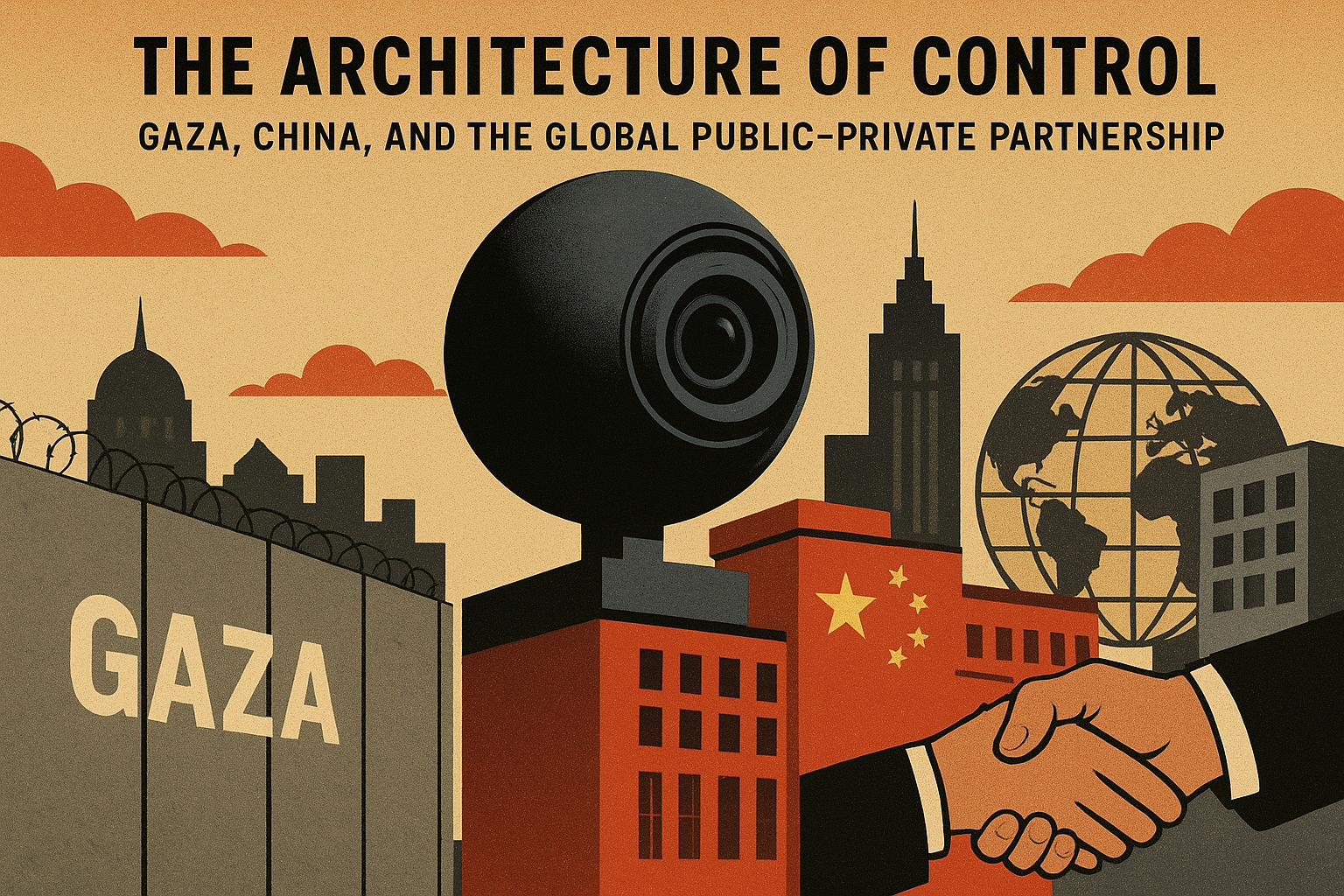

Article 3 in the series: The Architecture of Control Gaza, China & the G3P
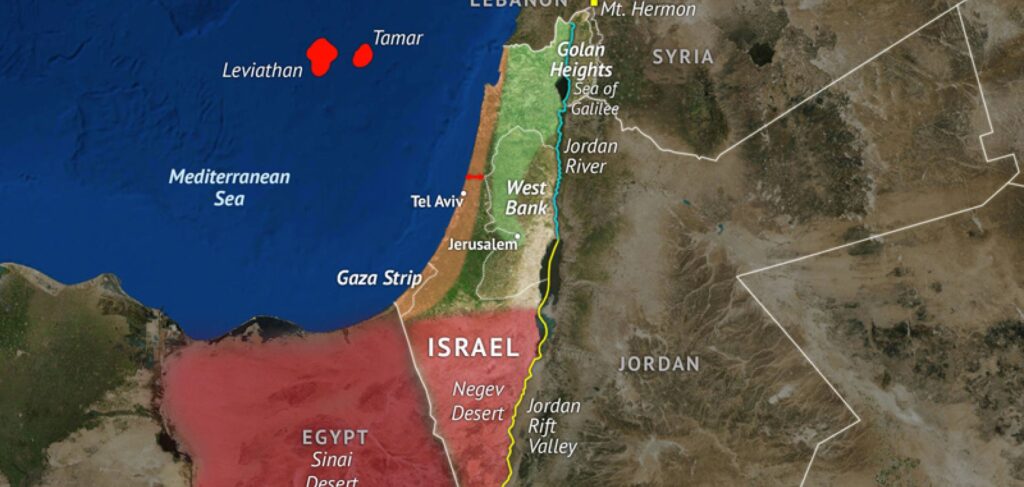
The Interface State
[Fact] Israel’s innovation sector is fundamentally porous: US venture funds, EU research programs, and Asian sovereign investors all take equity in its startups. In 2024, foreign investors participated in a staggering 84% of the capital raised by Israeli tech companies (Start-Up Nation Central, Israel Tech Review 2024). This architecture is exemplified by deals like Israeli VC fund Team8 raising $500 million from Singapore’s sovereign wealth fund GIC alongside U.S. investors (Calcalistech, Nov 2023).
[Inference] This financial architecture turns Israel into a cross-licensing platform—where Western software, Chinese hardware, and Gulf liquidity meet under a single regulatory umbrella. It is not simply a high-tech hub; it is the operating system for the G3P’s digital layer across West Asia.
Hardware from the East, Code from the West
[Fact] Huawei and ZTE have supplied telecoms equipment to Israeli research networks since 2017 under university procurement programs; after 2019 U.S. restrictions curtailed these ties but did not end them (Calcalist, 2022). At the same time, Israeli firms such as Nvidia-Mellanox, Mobileye, and Check Point supply AI chips, automotive sensors, and cybersecurity suites to Chinese OEMs through third-party licensing.
[Inference] Each transaction—router firmware here, machine-learning library there—creates reciprocal dependencies. Israel exports software logic and encryption standards; China embeds the physical layer. Together they form a single supply stack that the G3P can monetise region-wide.
Haifa: From Port to Data Node
[Fact] Shanghai International Port Group’s 25-year concession at Haifa began operations in 2021 (Reuters, Haaretz). The new “Bay Port” terminal handles nearly half of Israel’s container throughput and is fully digitised—using automated cranes and AI traffic systems supplied jointly by ZPMC (China) and Tadiran (IL).
[Inference] Haifa has quietly become a dual-use logistics cloud: a maritime data hub serving both NATO logistics and the Digital Silk Road. The same fibre backbone that synchronises cranes can move customs, energy, and reconstruction data. In effect, a Chinese-built port is now Israel’s most advanced Western-linked database.
Cyber Sovereignty as Export Commodity
[Fact] Israel’s cyber ecosystem, home to nearly 500 private cyber-security firms, hosts major operations for Microsoft, Google, and Palantir, which have all launched significant cyber centers and R&D activities in the country (Start-Up Nation Central, Israeli Cyber Annual Insights 2025). Israeli code audits and intrusion-detection suites are licensed to Gulf smart-city projects (notably NEOM and Dubai Police AI Division).
[Inference] Through these contracts, Israel acts as security guarantor of the G3P network: the country that certifies whether Chinese or Western infrastructure complies with transnational data-protection norms. The result is a de facto arbitration role between US digital standards and Chinese engineering practices.
Fintech, Tokens, and ESG Metrics
[Fact] Tel Aviv’s stock exchange launched an ESG Clearing Platform in 2024 with BlackRock Aladdin integration and pilot blockchain settlement through Fireblocks Ltd. The same platform underpins carbon-credit verification for Israeli and Emirati renewable projects (Bloomberg, Dec 2024).
[Inference] These ESG and token-clearing systems will likely serve as the financial back-end for Gaza’s reconstruction funds, whether managed by a transitional authority or by Gulf sovereign vehicles. Israel thereby supplies the ledger logic—the smart-contract standards on which Chinese infrastructure and Gulf finance depend.
Bridging the Two Internets
[Fact] Israel’s digital strategy is a masterclass in pragmatic multi-alignment. The state formally joined the US-led Clean Network program in 2020, agreeing to exclude Huawei from its 5G infrastructure and aligning with Washington’s vision for a “trusted” digital ecosystem (Reuters).
This official posture, however, belies a deeper history of integration. Throughout the 2010s, Chinese state-owned enterprises were welcomed to build and operate critical infrastructure, from the Haifa port terminal to major transit lines, while tech giants like Alibaba and Lenovo poured capital into Israeli AI, cloud, and communications startups (Middle East Institute).
This engagement extended to security tech, with Chinese surveillance cameras being integrated into the Israeli police’s “Hawk Eye” system (Ynet News). By 2019, U.S. pressure led Israel to establish a committee to screen foreign investments—primarily targeting China—and its public stance has since cooled, formally leaning into the U.S. security framework (The Times of Israel blog, Middle East Institute).
[Inference] Israel’s value to the G3P is not in choosing a side, but in its unique capacity to operate within both. It understands the state-driven logic of China’s Digital Silk Road from firsthand partnership, even as it champions the protocol-driven standards of the Western internet. This dual familiarity positions Israel as the essential protocol translator—rewriting code and business layers so American and Chinese systems can interoperate in third markets without open confrontation.
When a Gulf state needs US-certified cybersecurity for its Chinese-built smart city, it turns to an Israeli firm. Israel’s public stance skews Western, but its deep, embedded experience with Eastern code makes it the G3P’s indispensable arbitration layer for the bifurcating technological world.
Gaza and the Edge Cloud
[Fact] The World Bank’s active “Digital West Bank & Gaza Project” (P174355) and “Resilient Municipal Services” (P178723) project form the procurement framework for rebuilding Gaza’s digital and utility infrastructure, aiming to increase access to high-speed internet and digital government services (World Bank Procurement Plans, 2024-2025).
[Inference] The logical technological implementation for managing utilities and health data in a constrained environment like Gaza is edge-computing architecture. Those clusters will almost certainly be hosted through Israel’s northern data centres or through Tel Aviv-Abu Dhabi joint servers.
Physically, the data may reside in Israel; politically, it will appear international; economically, it will feed the same G3P analytics pipeline that monetises “resilience” and “sustainability” elsewhere.
The Moral Paradox
[Inference] Israel’s transformation into a neutral technological interface allows it to present itself as indispensable even to those who oppose its policies. Human-rights groups call this “ethical laundering through infrastructure.”
Every humanitarian metric—power restored, water purified, homes rebuilt—passes through Israeli-coded dashboards. Thus, occupation is abstracted into management; resistance into a variable.
Conclusion: The Interface as Empire
Israel no longer needs to dominate territory to project control. Its dominance lies in the logic layer: encryption, verification, and protocol arbitration. In the emerging West Asian technate, Israel is the firewall and the bridge—a Western democracy fluent in Eastern code.
Empires once ruled by armies, then by banks; the next rules by APIs. And Israel, more than any state, has positioned itself as the API of empires.
Evidence Summary

Author’s Note
Sections tagged [Fact] derive from publicly available reports by major outlets, official agencies, or international organizations.
Sections tagged [Inference] interpret those records within the framework of G3P integration and should be read as analysis, not assertion.