Some nations have emerged around a dominant ethnicity or religion. That is a historical reality.
Yet, in almost all such cases, modern nation states define themselves by citizenship, not by internal ethnic categorisation.
What makes Sri Lanka somewhat unique and worthy of gentle reflection is that our national flag visually represents different ethnic and religious communities within the same country, distinguishing majority and minority identities.
During a recent holiday, a friend of mine, a respected talented musician and a Sinhalese Buddhist, shared a thought that stayed with me. He said: “Perhaps some of our divisions did not begin only with later policies, but much earlier even with how we symbolically defined ourselves as a nation.”
It is widely accepted that Professor Senerat Paranavitana, a renowned archaeologist, a scholar of great intellect and integrity, played a key role in shaping our national flag at independence. There is no doubt this was done with wisdom, sincerity, and a genuine intention of inclusion, not division.
At that moment in history, acknowledging diversity may have felt progressive and benevolent and perhaps it was. But with the benefit of hindsight, it is fair to ask, respectfully and without blame: Does our flag represent Sri Lankans as one people, or does it symbolically describe communities within Sri Lanka?
Most national flags reflect shared values, history, struggle, or belief systems. Very few, if any, visually categorise their own citizens by ethnicity or religion. This reflection goes beyond the flag.
Why, even today, do official documents such as birth certificates require race and religion?
What purpose does this serve in shaping a united national identity? Personally, I have always declined invitations or rituals framed purely around race or religion not out of disrespect, but conviction. I choose to stand simply as a Sri Lankan.
This is not a rejection of culture, faith, or heritage. Those are deeply personal and must always be respected. But a nation’s identity should be larger than all of them combined.
This government came to office with hope and promise. Perhaps the time has come for brave, inclusive conversations, not to rewrite history, but to evolve from it.
Unity does not mean sameness. Unity means belonging without qualification.
This is not a conclusion. It is an invitation to reflect, to listen, and to imagine a future where we are known first and foremost as Sri Lankans.
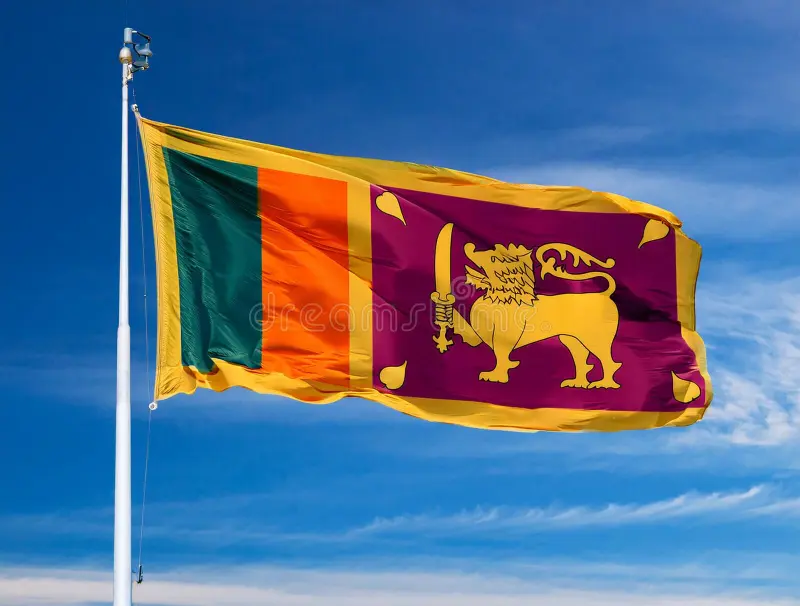
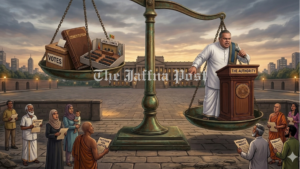
Our National Flag and Our Shared Identity — Opening a Thoughtful Conversation






Latest Post



News Gallery