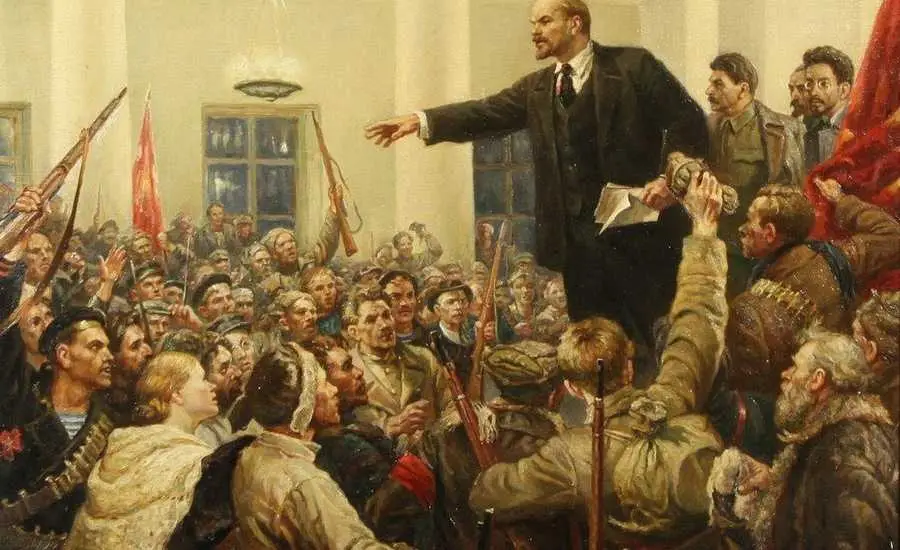

Each year, on the anniversary of Vladimir Ilyich Lenin’s death, the international left is reminded that the Russian Revolution was not a historical accident nor a purely Russian phenomenon, but a conscious revolutionary intervention that reshaped world history.
Lenin’s death in January 1924 marked the loss of an irreplaceable revolutionary leader. Yet, by that time, the October Revolution had already secured its enduring significance. It proved in practice that imperialism could be broken at its weakest link, that workers and peasants could seize state power, and that socialism was achievable even under conditions of economic backwardness, isolation, and intense external hostility.
Remembering Lenin, therefore, is not an act of ritual or nostalgia, but a reaffirmation of the revolutionary lessons of 1917—above all, the necessity of principled leadership, class independence, and the destruction of the bourgeois state apparatus.
These lessons cast a critical light on contemporary developments in Sri Lanka. The present JVP/NPP-led government, which came to power in the aftermath of the Aragalaya—a mass uprising rooted in popular anger against corruption, austerity, and elite domination—carried the expectations of a decisive break with neoliberal capitalism.
Yet, its subsequent reliance on elitist capitalist advisors, technocrats, and market-oriented policy frameworks signals a troubling departure from the revolutionary and Marxist tradition it historically claimed.
From a Leninist perspective, this shift represents not merely a tactical compromise but a class realignment. Lenin consistently warned that without a decisive rupture from bourgeois interests and without dismantling the capitalist state machinery, movements born of mass struggle risk being absorbed into the very system they sought to overthrow.
The prioritization of ‘investor confidence’, international financial orthodoxy, and capitalist expertise reflects a preference for systemic stability over working-class power, popular participation, and socialist transformation.
Historically, Sri Lanka’s left has repeatedly entered bourgeois coalition governments under the pretext of advancing progressive reforms from within the capitalist state. The LSSP and Communist Party justified such alliances as tactical maneuvers, seeking to implement limited social welfare measures, labor protections, and anti-imperialist policies while remaining subordinate to the bourgeois parliamentary apparatus.
From a Leninist standpoint, this approach represents a strategic error: without the seizure of state power and the destruction of the capitalist state machinery, such participation risks integrating the working class into the capitalist system and demobilizing revolutionary forces.
The only notable exception was the 1970 –77 United Front government under Sirimavo Bandaranaike. There, mass pressure from below combined with favorable objective conditions, enabled genuinely pro-people reforms—land redistribution, nationalization of key sectors, food subsidies, and expanded education—demonstrating the potential for state intervention to serve popular interests.
Yet, even in this case, the absence of workers’ control over the state and socialist democracy meant these gains remained vulnerable to reversal, confirming Lenin’s warning that reform under bourgeois institutions cannot substitute for proletarian revolution.
History offers many examples of left parties that, once integrated into parliamentary and state structures, substitute revolutionary politics with reformist governance. In doing so, they weaken the independent political initiative of the working class—the very force Lenin identified as the engine of historical change. The danger is not only ideological dilution but the demobilization of the masses whose collective action made political change possible in the first place.
The legacy of Lenin and the October Revolution thus remains a living challenge. It reminds us that genuine liberation cannot be achieved by managing capitalism more efficiently or humanely, nor by relying on elite expertise detached from mass struggle.
For Sri Lanka, fulfilling the aspirations unleashed by the Aragalaya requires reclaiming the revolutionary lessons of October: class independence, workers’ leadership, and a socialist alternative rooted in the needs of workers, peasants, and the oppressed.
Without this, movements born from popular revolt risk becoming instruments of the very system they once set out to transform.