

“Please don’t send me to school!”
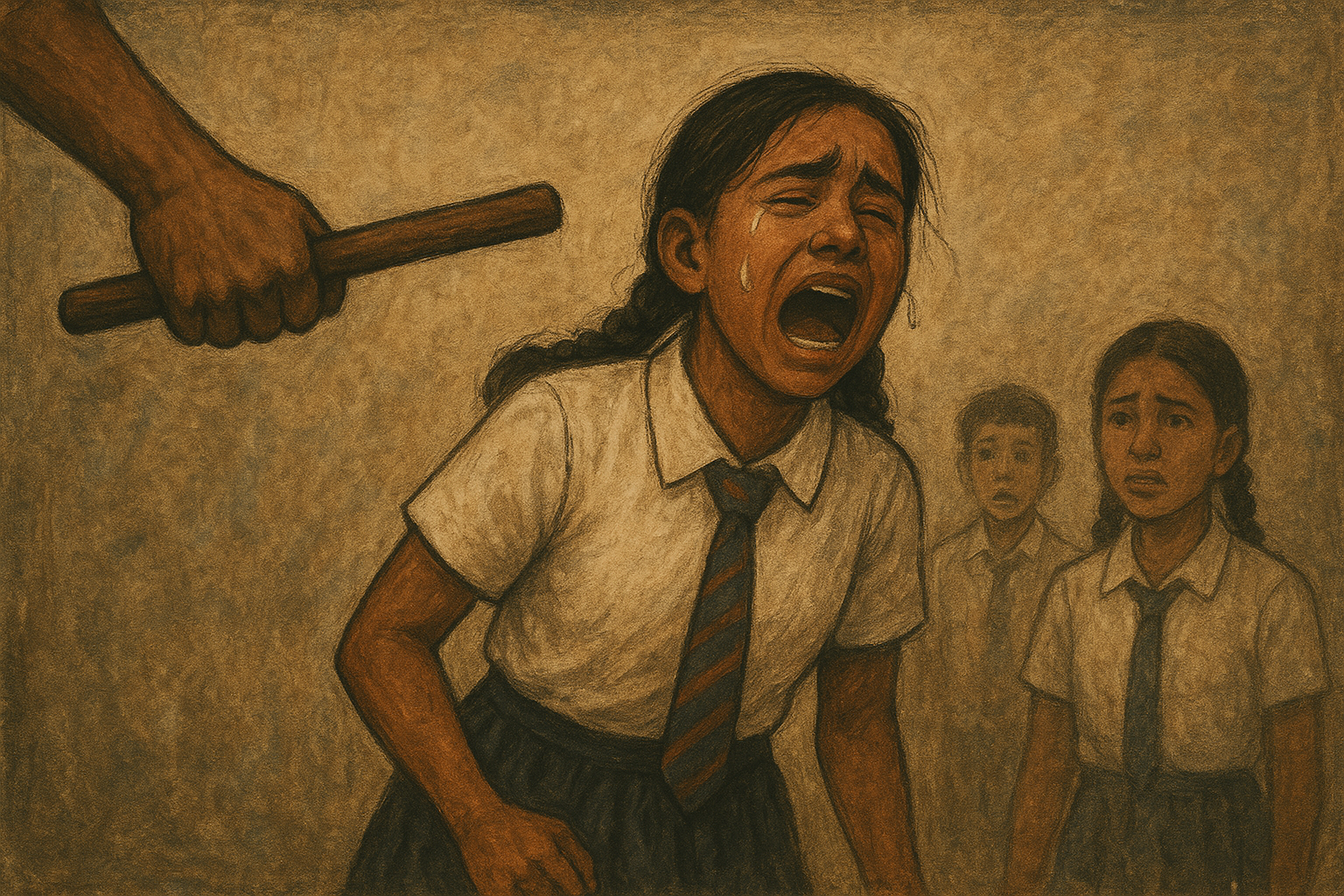
It was a sentence whispered through tears, as my five-year-old daughter clung tightly to my legs one morning. She was not sick. There was no exam. This was a child who, just weeks earlier, had woken up each day with excitement, eager to wear her uniform, hug her friends, and run into class.
Suddenly, everything changed.
Her mornings turned into battles. She cried. She screamed at the sight of her school bag. She begged us on her knees to let her stay home. We were stunned. Confused. Heartbroken.
What could have gone so wrong?
After much gentle probing, the truth emerged. Her teacher was hitting children in class. I was horrified. When I brought this up with the school’s administration, I expected swift action. Instead, they acknowledged it does happen and shrugged it off.
No apology. No accountability. No effort to protect the children.
The final straw came when I witnessed the punishment with my own eyes, a moment I’ll never forget. A child flinched, not from guilt or correction, but from sheer terror.
We withdrew our daughter immediately.
The trauma she carried was so deep, so lasting, that she refused to step foot in any school for nearly a year. We had no choice but to home-school her, giving her space to feel safe again, to rebuild trust in the idea of learning.
Unfortunately, this is not an isolated case.
Corporal punishment often disguised as “discipline” remains shockingly prevalent in Sri Lankan schools. Despite public awareness campaigns and policy-level dialogues, outdated methods rooted in fear continue to be used in classrooms across the country.
According to a 2017 study by the National Child Protection Authority (NCPA), over 80% of schoolchildren in Sri Lanka have experienced physical punishment in some form. This includes slapping, hitting with rulers, ear pulling, and forcing children to stand for long periods.
Some may argue these are “harmless” or “traditional” methods of instilling discipline. However, decades of research tell a very different story.
A comprehensive meta-analysis by Gershoff & Grogan-Kaylor (2016), published in the Journal of Family Psychology, found that corporal punishment is associated with increased aggression, mental health issues, antisocial behaviour, and lower academic outcomes in children. It doesn’t make children more obedient, instead it makes them anxious, withdrawn, and afraid.
Further, a 2020 UNICEF Sri Lanka report confirmed that corporal punishment significantly contributes to school refusal, depression, and emotional withdrawal in young learners.
In short, fear and learning cannot coexist. When a child is afraid, the part of the brain responsible for critical thinking and memory shuts down. Instead of processing knowledge, the child is simply trying to survive the day.
As a parent-child coach, I work with families across Sri Lanka, many of whom have faced similar experiences. The emotional scars left by school-based punishment are often buried deep, showing up as anxiety, low self-esteem, difficulty trusting adults, and even physical symptoms like headaches and stomach pain.
So, the question is not whether corporal punishment is effective. The question is, how long will we allow this silent violence to continue?
Our children deserve safe spaces to learn, not classrooms that operate like fear factories. Our teachers deserve proper training in positive discipline and emotional regulation, not outdated methods handed down through unchecked tradition.
It is our collective responsibility as parents, educators, and policymakers to protect the emotional well-being of our children.
The classroom should be a place of curiosity, safety, and connection. Not fear.
It’s time we stop justifying pain as discipline. It’s time we end corporal punishment in Sri Lankan schools, not eventually, but now.
Connect on Instagram @coachsharika | Linkedin linkedin.com/in/sharika-mubarack-a0377291/|Facebook @MetaSoul Transformation Coaching