If I told you that citizens’ active participation in initiating change to the current corrupt, insensitive, political culture of Sri Lanka would be more effective than constitutional amendments, would you agree?
For decades, Sri Lankans have lived within a system that has become accepted and normalised with time. It was grounded in their imagined conscience that hardship was normal, corruption must be tolerated, and survival required patience. From ancient times people were used to accepting existing practices as normal, resulting in a social construct of passivity and a culture of uncontested compliance.
Sri Lanka’s political history between 1948 and 2026 can be understood as the evolution of competing political imaginations. As discussed in Bergman and Luckmann’s ‘The Social Construct of Reality, accepted dominant social constructs have normalised elite leadership, patronage politics, centralized authority, ethnicised politics, and passive citizenship for decades. These beliefs have shaped both citizens’ expectations and politicians’ governing practices, and have become embedded in everyday social and political life.
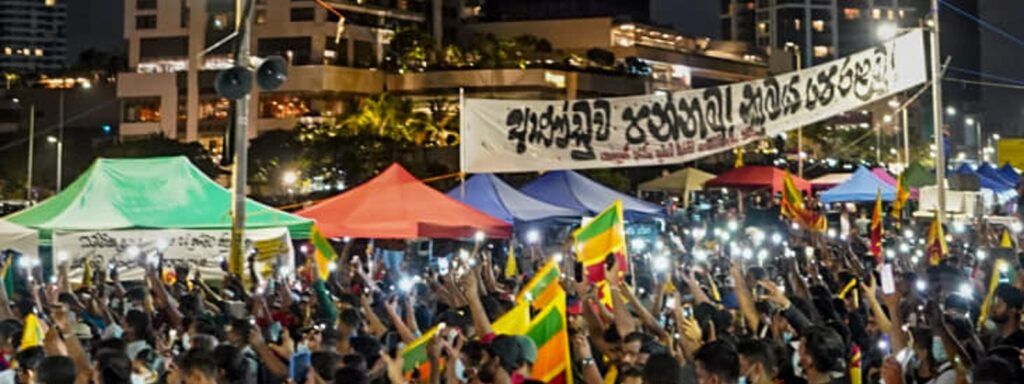
Aragalaya a turning point
In 2022, the Aragalaya presented a profound challenge to these established meanings. This window of opportunity opened due to developments in digital technology enabling information, particularly criticism of governance, to be freely transmitted worldwide bypassing censorship. This has resulted in the collapse of the gatekeeper and changed the profile of journalism as well.
Its significance lay not only in forcing the resignation of a president but in destabilising the symbolic assumptions that shaped Sri Lanka’s post-independence political order. The Aragalaya transformed politics into a participatory public activity involving all sectors of society including students, professionals, artists, clergy, workers, women, and civil society irrespective of caste creed, class and ethnicity. By redefining leadership, citizenship, accountability, legitimacy, and democratic participation, the movement expanded the realm of what Sri Lankans could imagine as politically legitimate.
Whether these reconstructed meanings become institutionalized or are reabsorbed into older structures remains an open question, but it is an undisputed fact that the Aragalaya permanently altered the country’s political imagination and marked a critical moment in the ongoing social construction of democracy.
The economic collapse in 2022 has proved that the systems that prevailed so far are seriously flawed. The Aragalaya has brought home the fact that the old political orders will be tolerated no more.
The time is ripe for change
It is the duty of every citizen to contribute their knowledge, expertise and intellect to bring about a system change which could salvage the country from its current crisis. In doing so it is necessary to view the problem through an entirely new lens. People’s participation in this process is vital, as political initiatives have failed to achieve the desired result.
I am honoured to invite you to respond with your ideas on how you see a new Sri Lanka in terms of democracy, governance, people’s participation, role of the media (traditional and social media), any other topic.
Contact Shiranee Dissanayake at edrivelk@gmail.com