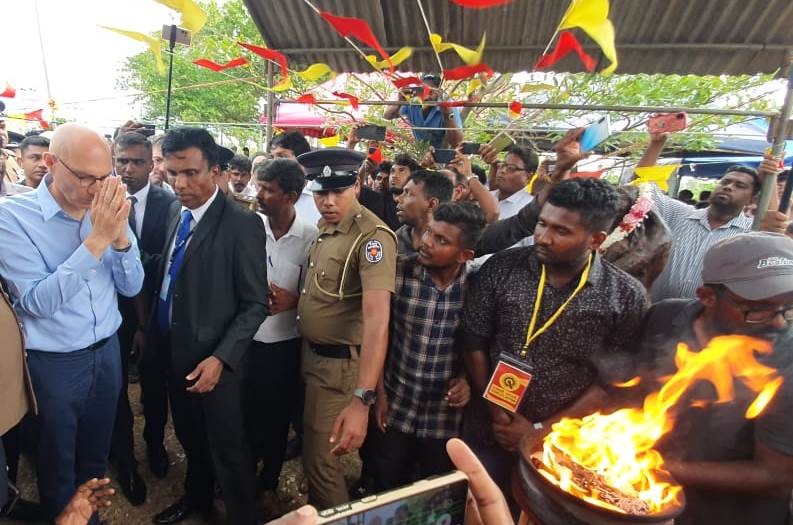


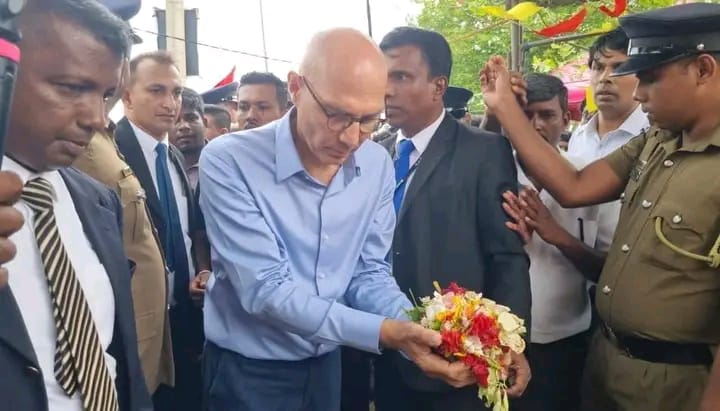
United Nations Human Rights Chief Volker Kurt left Sri Lanka after his five-day whirl-wind visit looking into the post war human rights developments in the Island.
During his stay in the island, the UNHRC dignitary travelled extensively in the North and East and to the alleged mass burial site at Chemmani in Jaffna.
The Government of Sri Lanka coordinated Turk’s visit well, by making Sri Lanka Air Force helicopters available to transport him around the island in view of his hectic time schedules.
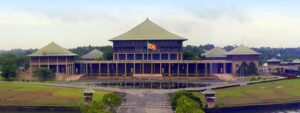
Apart from interacting with the general public in the North and East, Turk also met military officials as well as Parliamentarians of all political parties.
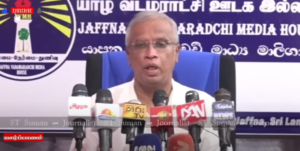
A press briefing was held in Colombo and in his press statement Turk specifically mentioned strengthening peace and reconciliation.
He has also alerted the Government that to enhance human rights activities, a strategy should be adopted in accordance with international norms.
At the conclusion of his five- day visit the report released by the UNHRC Chief on his Sri Lankan assignment is as follows:
“Releasing of lands still occupied and used economically by the military, and resolving land disputes involving archeological, religious and conservation issues should be carried out in consultation with communities. Muslims must be facilitated to return to their lands if they wish.
During my meetings with religious leaders, I stressed the pivotal role they have in promoting human rights and inter-faith understanding. This is a key ingredient for a peaceful, harmonious, and ethical society.
In a world where hate speech and incitement on religious grounds are becoming increasingly commonplace, I urged them to use their influence to stamp this out.
The new Government has set a fundamental goal of ‘national unity’. Quick wins and confidence-building measures are key to enhancing trust and reconciliation. My Office remains ready to assist and provide assistance in this regard.
I leave here with strong hope that there is a palpable desire both in the Government and civil society to draw a line under the entrenched identity politics of ethnicity, religion, language, culture, caste and class.
In a world where wars, economic uncertainty and human rights violations are sadly becoming the norm, my wish is that Sri Lanka can become a story of hope, and I look forward to constructive engagement with the Government.
Indeed, Sri Lanka can become an example of peaceful co-existence, of understanding the other, of tolerance, of recognition of differences, while at the same time embracing diversity and seeing it as richness and as a strength of this country’s rich tapestry.”