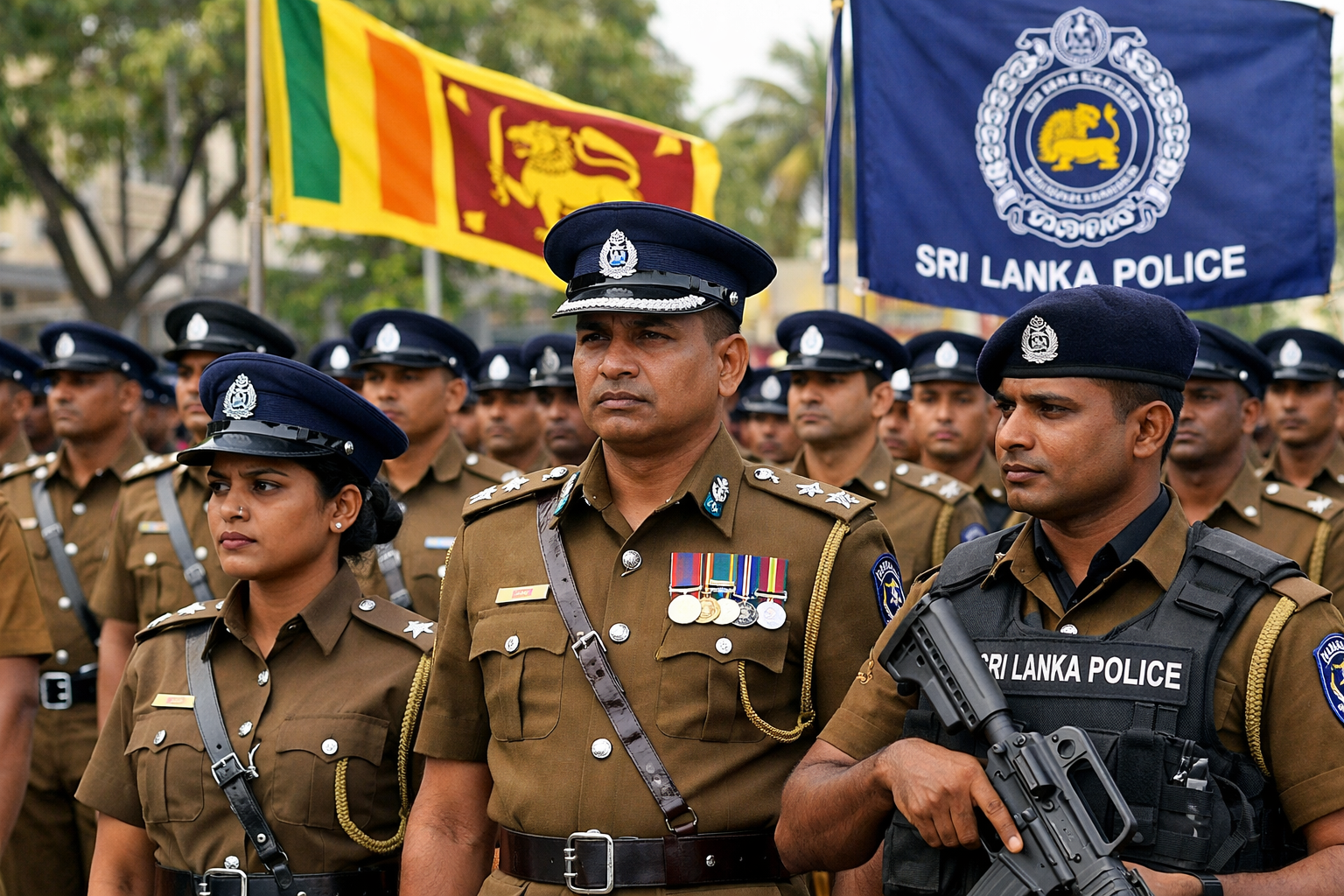

For many years, the khaki uniform stood for safety, dignity, and discipline. When a police officer walked into a room, people didn’t just see authority, they saw a guardian of the law. Respect for the uniform came not from fear, but from faith that the person wearing it would stand up for what is right.
Sadly, today, that trust is fading. Across Sri Lanka, people now speak about the police not with confidence, but with disappointment and frustration. What was once seen as the “long arm of the law” is now, far too often, viewed as an arm that bends to political power and influence.
Instead of being protectors of the public, many are seen as being caught in the grip of political agendas, damaging the dignity of an entire service where many good officers still exist and struggle silently.
A breakdown of discipline and basic service
For an ordinary citizen, even making a simple police complaint has become exhausting. Walking into a station and asking for help should not feel like a battle, yet many feel turned away, ignored, or discouraged from recording their grievances properly.
On the roads, however, police presence is strong. Fines, harassment, and “other conversations” happen very quickly. The imbalance is obvious to the public: efficiency appears only when money is involved, not when justice is.
Worse still, decisions seem to change from officer to officer. Instead of clear procedures, people experience mood, hierarchy, and connections. That uncertainty has created something deeply dangerous. People no longer see the police as protectors, they see them as obstacles.
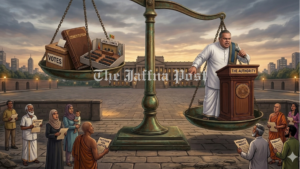
Two systems of justice, one for the powerful and one for everyone else
Recent incidents have made this painfully visible. When ordinary citizens are arrested, they are handcuffed, shouted at, and rushed away. When politically connected or powerful individuals are arrested, the tone changes completely: no handcuffs, friendly conversation, interruptions from outsiders, and “special treatment.”
It is evident from the January 2, 2026 event in Mathugama, where the Pradeshiya Sabha chairman was escorted to the police without handcuffs, or the accident where the Ex Speaker was not given an alcohol test to check if he was drunk at the time of the accident.
Moreover, we can see politicians arriving at the spot of the arrest to influence the police, walk into the police station showing they have unlimited power. This is not right. Are we all equal in the eyes of the law? Or it is different dependent on the power you hold.
The message the public receives is simple and heartbreaking. The law does not treat everyone the same. We have all seen situations where politicians call senior officers and orders are changed on the spot. We have seen high-profile suspects move freely. We have seen serious cases collapse due to “missing files” or “documentation errors,” while small offenders are punished harshly and quickly.
So the natural question arises: Is this incompetence or protection of the powerful?
A culture of impunity
When senior police officers themselves face unresolved legal issues; when suspects disappear; when criminals escape custody; and when even a wanted criminal appears inside a court without being arrested at the gate—citizens become afraid to seek help, and the system is clearly in crisis.
Trust takes years to build and only seconds to destroy. Right now, the public is not asking for miracles. They are asking for the basics: record complaints properly and in the language requested by the plaintiff; follow single procedure across all police stations; treat all people equally; act without fear or favor.
Without these foundations, the entire justice system collapses before it even reaches a courtroom.
What working police systems elsewhere teach us
In places where the police are respected, such as Japan, Singapore, Australia, or the UK, the public believes in the process because: Investigations cannot be “called off” by influence;
Rules apply to everyone; Professionalism is not optional. There, a uniform represents the law, not a political party.
Questions we must honestly ask
- Who does the police truly serve? The Constitution or individuals in power?
- Why do ordinary people face the full weight of the law while the influential receive courtesy?
- How can citizens respect the law if they cannot respect those entrusted to enforce it?
The way forward is restoring honor to the khaki uniform
Reform must move from slogans to real change. This is what the people wanted and voted for, politically difficult, yet it means real accountability. Those who neglect duty, alter files, or fail to take complaints must face immediate consequences.
Removing political interference
Transfers, promotions, and investigations cannot depend on politics, not even a politically motivated organization calling itself independent, but independent from what? One law, one procedure. A suspect is a suspect, not a VIP or a nobody.
Rebuilding community trust
The public must feel safe walking into a station again. There are many honest officers in the service who wear their uniform with pride and integrity. They, too, are victims of this damaged system. Reform will not only protect citizens but also restore dignity to these officers who suffer silently inside the same uniform.
A final thought
The collapse of public trust in the police is more dangerous than the failure of politics. When faith in law enforcement disappears, society itself begins to break. Sri Lanka needs a police service that stands tall, independent, disciplined, and respected.
It is time for action, not speeches. It is time to protect the badge by upholding what it is meant to represent, because the law is not a joke. It is meant to protect us all, and the people of this country deserve better.