A Perspective of a Leftist Belonging to the Majority Community
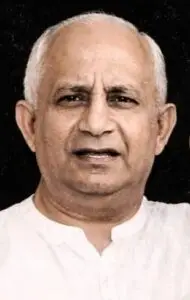
To mark the second death anniversary of the former General Secretary of the Nava Sama Samaja Party (NSSP), Dr. Vickramabahu Karunaratne, an event was held on July 25, 2026, at the auditorium of the Center for Society and Religion in Maradana, Colombo.
The political movement of Dr. Karunaratne continues to maintain the exact firm stance he held until the end regarding the right to self-determination of the Tamil people in Sri Lanka.
On that day, a short book titled “What is the Current Status of the Vaddukoddai Resolution?” written by the current General Secretary of the NSSP, Ranath Kumarasinghe, was released.
Half a century has elapsed since the passing of the Vaddukoddai Resolution on May 14, 1976, which marked the shift in the goal of the Tamil people’s political struggle from seeking a solution based on autonomy (federalism) within a united Sri Lanka to a demand for an independent state of ‘Tamil Eelam.’ A few quiet events were organized in the North to mark the occasion.
However, it appears that no one has researched its current ‘validity’ or published a book on it, especially after more than 17 years have passed since the end of the civil war.
Yet, a leftist politician from the majority community has taken the interest to express his thoughts on the current status of the Vaddukoddai Resolution through a book, albeit a small one. It seems he has put forward arguments justifying the Vaddukoddai Resolution as a manifestation of his movement’s unwavering faith in the Tamil people’s right to self-determination.
Even after the end of the civil war, which was the outcome of an armed struggle to achieve a separate state, governments and southern Sri Lankan society, particularly the Sinhala political community, have shown a lack of interest in the proper functioning even of the Provincial Councils brought about by the July 1987 Indo-Lanka Accord. Under these current conditions, it appears to be Ranat Kumarasinghe’s belief that the ‘choice’ still left for the Tamil people is indeed the right to self-determination.
In the midst of the current political situation, how appropriate or valid it is to voice support for the Vaddukoddai Resolution depends on how one evaluates the political events of the past half-century; such is the belief of this columnist.
Nevertheless, out of a desire for Tamil readers to know Kumarasinghe’s views, key excerpts from his book regarding the Vaddukoddai Resolution are republished in this column. They are as follows:
“The historical role of the Vaddukoddai Resolution was that it moved the Tamil people to abandon their efforts to reach an accommodation with Sri Lanka’s Sinhalese rulers and to take control of their own destiny.
“That resolution affirmed that there was no other way to secure freedom or liberation for the Tamil people except by bringing transactions with Sinhalese rulers to an end, standing up on the basis of the right to self-determination, and creating a separate Tamil Eelam.
“Today, we are discussing the resolution adopted at the Vaddukoddai Conference, which built expectations of an independent self-rule based on the massive institutional strength of the Tamil people. Having arrived at a fragmented state after such a powerful movement was destroyed with the assistance of global superpowers, we are today discussing the ideas that were formulated during that time of strength.
“Failures never put an end to truths. Sri Lanka’s Marxist movements, revolutionary movements, and democratic movements have today been pushed into an extremely difficult and precarious situation.
“This decline and fear of war did not affect the Tamil people alone. It can be said that it affected the Sinhalese community to an equal extent—and perhaps at times even more.
“Since the majority of the working-class movement, which serves as the lifeblood of Sri Lankan society, succumbed and acted in line with the militaristic agenda, history has assigned them the responsibility of seeking answers for the consequences of this massive collapse in social values.
“The struggle launched by the Tamil people to liberate their territories and determine their own destiny met with a cruel defeat. However, this does not mean that the expectations and vision of the Vaddukoddai Resolution have failed. This is merely the defeat of one ‘innings’ of the liberation struggle.
“We must use the vision of the Vaddukoddai Conference to discuss the reasons for that defeat, formulate strategies to prepare for the next ‘innings,’ and move forward.
“Speaking in Parliament during the budget debate of the United Front government in November 1976 after the Vaddukoddai Conference, Tamil leader S. J. V. Chelvanayakam conceded that the federal movement he had led to secure the lost rights of the Tamil-speaking people had failed.
“Prior to that, after the agreements he made with two Prime Ministers failed, Chelvanayakam reached a firm conclusion regarding Sinhalese leaders.
“That conclusion was that Sinhalese leaders were neither magnanimous enough nor strong enough to rule the Tamil people. Nor were they noble enough to do so. That is our experience as well.
“Leaving ruling the Tamil people aside, the Sinhalese leaders of this country are not fit to rule even the Sinhalese people. If they had possessed that strength, they would not have felt the need to tear up the agreements signed with the Tamil people.
“Just as previous governments claimed that there was no difference between the Sinhalese people and the Tamil people and that they treated them equally, the current National People’s Power government is telling the same story. Self-determination is needed not only for the Tamil people but also for the Sinhalese people. Sinhalese farmers and fishermen require a self-governing authority capable of deciding production, distribution, and price determination in their respective regions.
“Self-determination for a nation does not end with merely solving an economic problem. It concerns the future destiny, culture, language, and education of a nation. They have the right to live in a free country capable of independently making decisions about all these matters and moving forward without being subjected to oppression by another community.
“A free state possesses the freedom to decide which national state it engages in transactions with and carries out joint development work with. All of this is what we call self-determination.
“Without accepting such an administration, a nation cannot be united. If it cannot be united in this way, a ‘national state’ cannot emerge, nor can a path to development be laid on this soil.
“Only if the rights of the Tamil people are granted will the Sinhalese people also achieve liberation. Merely because the Sinhalese people are the majority ethnicity, they will not obtain a separate salvation on their own.
“Even after winning the war, the country has been pushed into a state of begging economically. Former President Ranil Wickremesinghe said this issue would be resolved only in the year 2048. But whether it will be in that year or in 2088 is something nobody knows.
“Democratic transformations must begin with granting the rights of the Tamil people. This should be based on the vision of the Vaddukoddai Resolutions. There must be joint action with the Tamil leadership. In the present context, rulers must facilitate the next steps that they are going to take.
“How the rights should be granted to the Tamil people is contained in the Vaddukoddai document. It serves as an excellent example of how to build a democratic, secular state.
“If allowed to act in accordance with the Vaddukoddai resolutions, opportunities will be created for us to carry forward struggles for development—both individually and collectively. Discussions regarding the solution to the national question (how to move forward) must be advanced based on the vision of the Vaddukoddai Resolution within today’s context.”