
13th Amendment in focus?
by Ananth Palakidnar – 15. 12. 2024
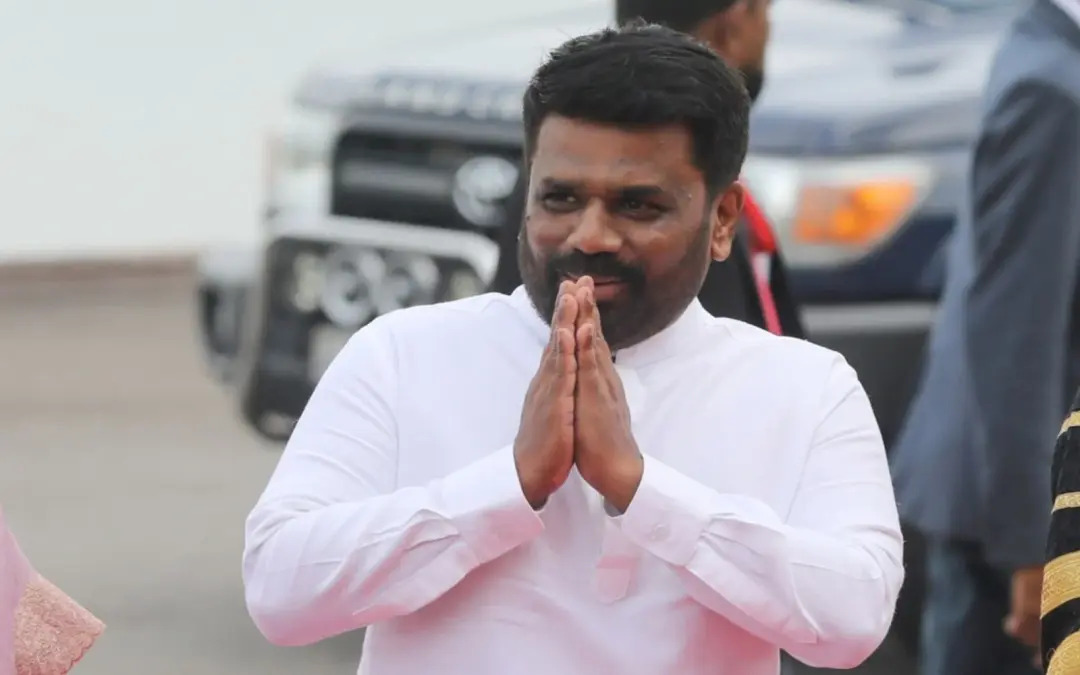
President Anura Kumara Dissanayake, in his first foreign visit since assuming office as the President of Sri Lanka, will be traveling to India today.
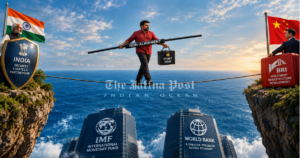
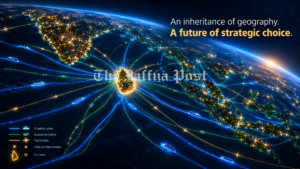
It has long been a tradition for Sri Lankan leaders, regardless of their political ideologies or foreign policies, to visit India as their first international trip after assuming premiership. India, Sri Lanka’s immediate neighbor, has become a regional military and economic superpower in South Asia over recent years. The country also plays a key role in counterbalancing China’s growing influence, particularly concerning Sri Lanka’s strategic location.
India has consistently been a “big brother” to Sri Lanka, providing military and economic support, as well as assistance during natural calamities. Given this, President Dissanayake’s first overseas visit is of great significance to his government, the National People’s Power (NPP).
The NPP’s roots trace back to 1970 when its militant wing, the Janatha Vimukthi Peramuna (JVP), launched an armed struggle to overthrow the government of then-Prime Minister Sirimavo Bandaranaike. Led by the late Rohana Wijeweera, the rebellion was violently suppressed by the Sri Lankan government with extensive use of the military.
At that time, India was led by Prime Minister Indira Gandhi, a close ally of Sri Lanka’s Mrs. Bandaranaike. Both leaders were prominent figures in the Non-Aligned Movement (NAM), and India sent forces to safeguard strategic locations such as Bandaranaike International Airport during the conflict. While Indian forces did not directly engage with the JVP, they provided vital logistical support to Sri Lanka’s military, including transport of supplies by Indian Air Force planes and naval patrols to block foreign assistance to the rebels.
This Indian intervention deeply affected the JVP, which became increasingly hostile toward India. Tensions further escalated when, in 1987, the Indo-Lanka Peace Accord was signed between Indian Prime Minister Rajiv Gandhi and Sri Lankan President J.R. Jayewardene to address the ethnic conflict in the North and East. The JVP led mass protests against the arrival of Indian Peace Keeping Forces and opposed the 13th Amendment to the Sri Lankan Constitution, which sought to establish a Provincial Council system.
The early 1990s saw the JVP’s militant activities crushed under President Ranasinghe Premadasa’s regime. Despite the defeat of its armed wing, the political wing of the JVP, now known as the NPP, has grown significantly. It is of noteworthy praise that the NPP has cosistently worked tirelessly at the grassroots level, avoiding influence from both foreign and domestic elements. This effort culminated in substantial victories in the 2024 Presidential and Parliamentary elections, solidifying the NPP’s role as a major political force.
With 2024 drawing to a close, President Dissanayake’s visit to India aims to strengthen Indo-Lanka relations. He is expected to receive a warm welcome at Rashtrapati Bhavan from Indian President Draupadi Murmu and Prime Minister Narendra Modi. President Dissanayake’s delegation will include Foreign Minister Vijitha Herath and Deputy Minister of Finance Anil Jayantha Fernando. True to his campaign promise, President Dissanayake is traveling with only a small delegation as part of his cost-cutting measures, which are expected to continue for future foreign trips.
The primary focus of President Dissanayake’s visit will be economic issues. However, he will also have to address the sensitive topic of the 13th Amendment to the Sri Lankan Constitution. While President Dissanayake has consistently called for its abolition in his political forums, his experience as a former JVP leader and now a moderate politician will likely lead him to recognize the 13th Amendment’s role in maintaining national unity. Since its introduction 37 years ago, the amendment has played a crucial role in preserving Sri Lanka’s territorial integrity while gaining support from former Tamil militant groups. Without the 13th Amendment, the North and East might have faced even greater challenges in finding a political solution.
Some view the 13th Amendment as a stepping stone toward a fully-fledged federal system for the North and East, a perspective also shared by some former militant groups who hoped to expand its provisions with India’s guidance.
The other issue expected to surface between India and Sri Lanka will be the problems faced by Lankan fisherfolk due to the infiltration of Indian fishing trawlers into Lankan waters. This issue has long been a source of tension between the two nations and will likely feature in President Dissanayake’s discussions.
Therefore President Anurakumara Dissanayake’s forthcoming visit to India is expected to pave way to take meaningful steps towards dealing with several core issues, the most important among them being the 13th Amendment to the Lankan Constitution.