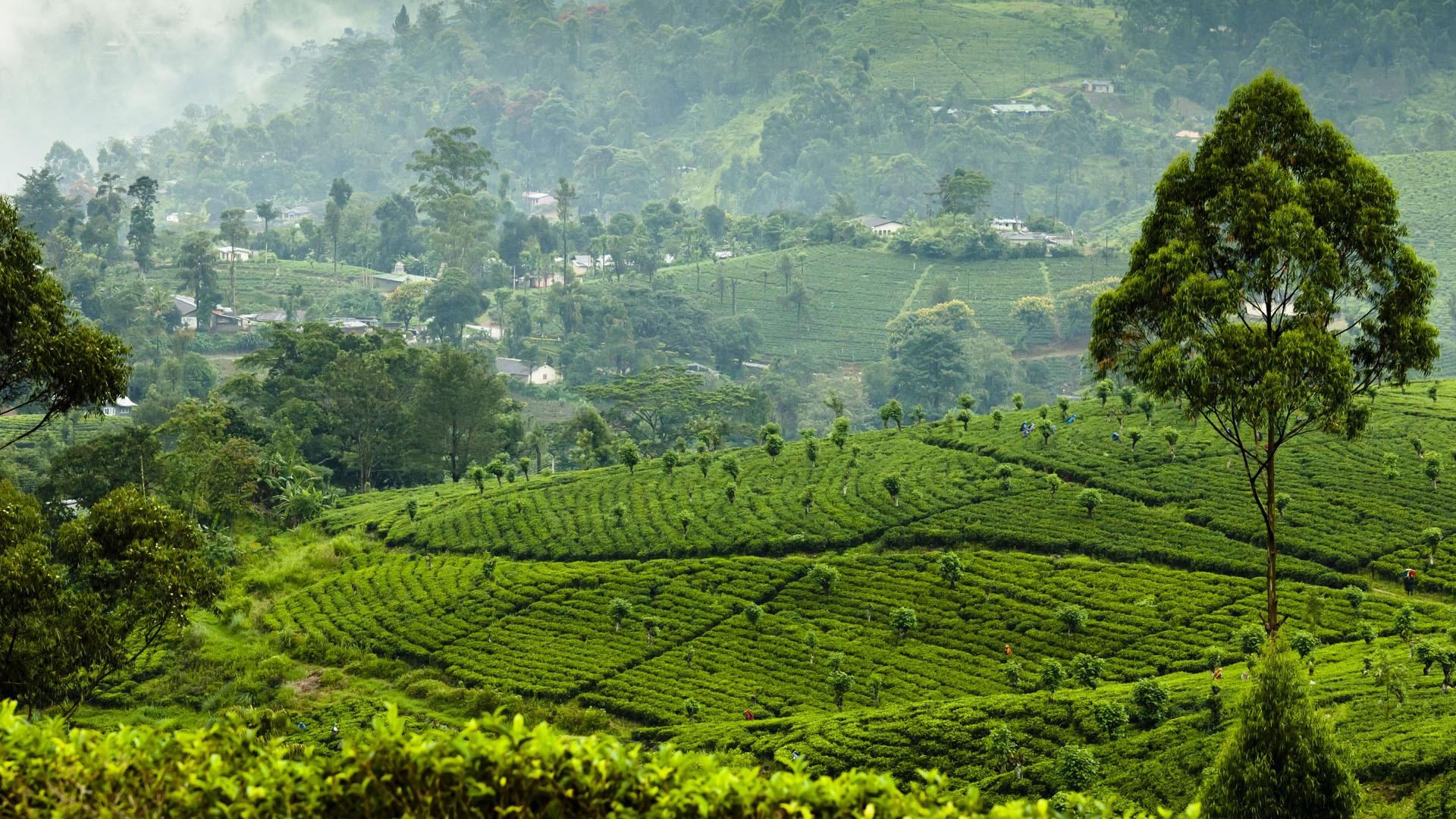

For millennia, Sri Lanka’s central hills were protected by dense rainforest. That system slowed water, stabilised slopes, fed rivers, and made the island resilient. Tea killed that system.
What replaced it is not tradition or progress, but a monoculture that accelerates floods, triggers landslides, dries landscapes, and traps people in generational poverty. This is not a neutral debate.
Supporting tea today means supporting environmental destruction and a labour system that functions as modern slavery. Disasters like Cyclone Ditwah are not accidents; they are the predictable outcome of land misuse and political protection. If tea still made sense, the numbers would defend it. They do not.
- USD 247 billion global tea economy, <1 % captured by Sri Lanka
The global tea economy is worth roughly USD 247 billion. Sri Lanka captures about USD 1.43 billion of that, under 1 % of the total.
How does a country that grows some of the world’s most famous tea end up with crumbs?
Because Sri Lanka exports tea largely as a raw or near‑raw commodity. Leaves are grown, lightly processed, auctioned, and shipped. The real value is captured elsewhere, by brands, retailers, and marketers who neither employ Sri Lankan workers nor restore Sri Lankan land.
Defending this model is not economic realism, it is economic illiteracy.
In a modern value‑chain economy, raw‑material export guarantees low margins, wage suppression, and permanent price‑taker status, while consuming land whose ecological value is far higher than its market return.
2. Over 1 million low-paid workers.
More than one million Sri Lankans depend directly or indirectly on tea, yet plantation wages hover around subsistence, well below a living wage and often below effective minimum‑wage standards. This is not a failure of productivity, it is a vile business model.
Tea depends on a captive workforce. That requires weak schooling, limited mobility, and political marginalisation. Too many hill‑country politicians deliberately keep their voter base undereducated while enjoying celebrity lifestyles and urban luxury. Poverty is not an accident, it is how control is maintained.
Anyone defending tea while ignoring this reality is defending a system that survives by suppressing choice and dehumanising labour. Call it what it is: Modern slavery with excellent branding.
3. 65 % women workers in the lowest‑paid roles
Around 65 % of tea pluckers are women, concentrated in the most physically punishing and lowest‑paid work. Repetitive strain injuries, chemical exposure, miscarriages, and chronic illness are widely documented features of women’s plantation labour.
This role is routinely romanticised, smiling women in colourful saris against green hills, marketed as heritage and grace. The reality is quota pressure, constant surveillance, painkillers to finish a day’s work, and wages that barely sustain life. The image is exported; the suffering is local.
Less visible is coercion inside the household. Studies show many women are pressured or forced by husbands or male relatives into plantation work because it guarantees daily cash income. In many cases, part or all of their wages are taken by male family members, effectively converting paid labour into unpaid servitude.
When women gain education or alternative employment, they leave tea immediately. The industry survives not by empowering women, but by trapping them.
4. Only 4.6 % of wet‑zone rainforest left
Sri Lanka has destroyed over 95 % of its original wet‑zone rainforest, much of it replaced by tea plantations. These forests were not decorative, they were hydrological infrastructure.
Remove forests and water runs too fast when it rains, causing floods and landslides. Then it disappears too quickly, producing drought and soil drying. This is how disasters are engineered.
Continuing tea on this land is a conscious choice to prioritise short‑term export optics over long‑term national safety.
5. Over 11 % loss of dense tree cover since 2000
Forest loss in Sri Lanka is not historical, it is recent and ongoing. Satellite data show that dense tree cover fell from about 40 % of land area in 2000 to under 29 % by 2020, a loss of more than 11 % in two decades.
Much of this loss occurred in hill‑country regions converted to plantation use. Stripping forest cover removed the hills’ ability to regulate water flow, accelerating runoff during storms and reducing groundwater recharge in dry periods.
The result is simultaneous flooding, landslides, drought, and soil degradation. Many tea lands are already marginal or failing, edging toward desertification. The land itself is delivering the verdict.
6. 90 % of endemic species at risk
Roughly 90 % of Sri Lanka’s endemic species depend on rainforest habitats. Tea monoculture fragments and destroys those ecosystems. This is not only ecological damage, it is economic vandalism.
Biodiversity underpins tourism, research, water regulation, and ecosystem stability, none of which are priced into a tea-bag. Choosing tea over biodiversity trades permanent national assets for short‑term cash.
7. 643 deaths, 70,000 displaced, 535,000 hectares flooded
Cyclone Ditwah killed hundreds, displaced more than 70,000 people, and flooded over half a million hectares. Estate communities were among the most exposed. This was not misfortune. It was predictable.
Tea stripped hills of their natural defenses, and workers were housed on unstable slopes because safety wasn’t even an afterthought. Defending tea after disasters like this is not ignorance, it is moral indifference.
8. 12 % yield decline projected, up to 30 % land loss by 2070
Climate models project a 12 % decline in tea yields by 2035, with optimal growing areas shrinking by up to 30 % by 2050. Much tea land has already failed. Drier soils, erratic rainfall, and pests are turning plantations into stranded assets. Persisting with tea under these conditions is not optimism, it is denial.
9. Living‑wage gap: estate income falls 25–40 % short of basic needs
Independent research shows that a basic living wage for an estate‑sector household is around LKR 45,000 per month. Typical estate earnings fall 25–40% below this level. This gap means full‑time plantation work cannot sustain a family.
Households are pushed into debt, malnutrition, child labour, and informal borrowing. Social security mechanisms become largely symbolic when wages are structurally inadequate. A workforce that cannot earn a living wage cannot save, relocate, or bargain. Dependency is reproduced by design.
10. 51.3% multidimensional poverty in estate areas
Estate areas show a multidimensional poverty rate of 51.3 %, compared with 16.6 % in rural areas and 4.4 % in urban Sri Lanka. These are not legacy gaps, they are widening ones.
Tea workers were brought to Sri Lanka by the British as indentured labour, deliberately excluded from land, power, and mobility. That history is now misused by corrupt politicians and tea businessmen, who present themselves as uplifter, even saviours.
The numbers expose the truth. As the rest of the country advanced in education, health, and income, estate communities fell further behind. History explains the origin of injustice, it does not excuse its shameless continuation.
Who or what do you support?
There are only two honest positions left. You can support tea, and with it support accelerating environmental destruction, engineered disasters like Ditwah, and a labour system that survives by trapping people in poverty. Or you can support ending tea.
Climate change makes this choice even more urgent. Hotter temperatures, more intense rainfall, and longer dry spells turn deforested hills into disaster multipliers. Every year tea remains on steep, degraded land, flood peaks rise faster, landslides trigger more easily, and drought bites harder.
What was once merely damaging is now lethal, as Ditwah demonstrated. Ending tea does not mean abandoning workers. It means ending a system that requires floods, landslides, and dependence to function. It means choosing forests over failures, education over slavery, and democracy over colonial-era serfdom.
Exit Tea
A credible exit has three pillars.
- Reforest steep and degraded tea land at scale and monetise it properly through carbon markets and watershed protection. Forests stabilise hills, reduce disaster risk, restore water security, and pay better than tea once real costs are counted.
- Treat estate education as a national emergency. Fund schools, transport, language access, healthcare, and scholarships so the next generation has a guaranteed exit from slavery. A system that fears education is not an industry worth saving.
- Dismantle colonial-era serfdom. Replace vote-bank brokers with representatives from tea-worker communities who prioritise safety, mobility, wages, and real citizenship. Democracy cannot coexist with hereditary poverty.
This is the choice. Keep defending tea and accept more Ditwahs, more exploitation, and more pain. Or help end tea and replace it with forests, education, dignity, and a future that does not depend on suffering. Neutrality is not an option.
Appendix: References and data sources
- Central Bank of Sri Lanka, Annual Reports
- Sri Lanka Department of Census and Statistics, HIES 2019, Multidimensional Poverty Index
- FAO Global Forest Resources Assessment
- World Bank, Climate Risk Country Profile: Sri Lanka
- IPCC Sixth Assessment Report
- Sri Lanka Disaster Management Centre reports (Cyclone Ditwah)
- ILO and ETP reports on plantation labour
- Global Living Wage Coalition, Sri Lanka reports




















The presence of the Tea plantations had provided a canopy/ cover to the highland areas and prevented soil erosion over centuries.
Encroachments by vegetable cultivators, building of hotels and houses in sensitive areas bordering the forest reserves, contributed to the landslides and the damage would have been worse if not for the plantations that bordered the forest reserves that prevented encroachment.
Close down the plantations and what is the 1 million dependent people to survive on. vegetables???. The remedy is not closing down but managing the plantations as done prior to 2000.
How much is a worker in a Garment Factory, supermarket being paid. What are the working hours ???
Theory is good but practical considerations are quite different.