
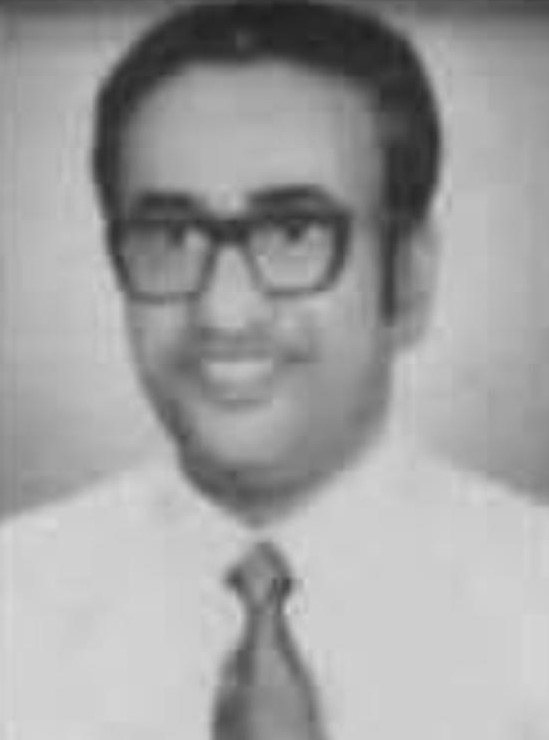
who lost his life protecting patients and colleagues
during the 1987 tragedy.
The soil of Jaffna still carries voices from the hospital wards of 1987. The question is whether the world will listen or look away.
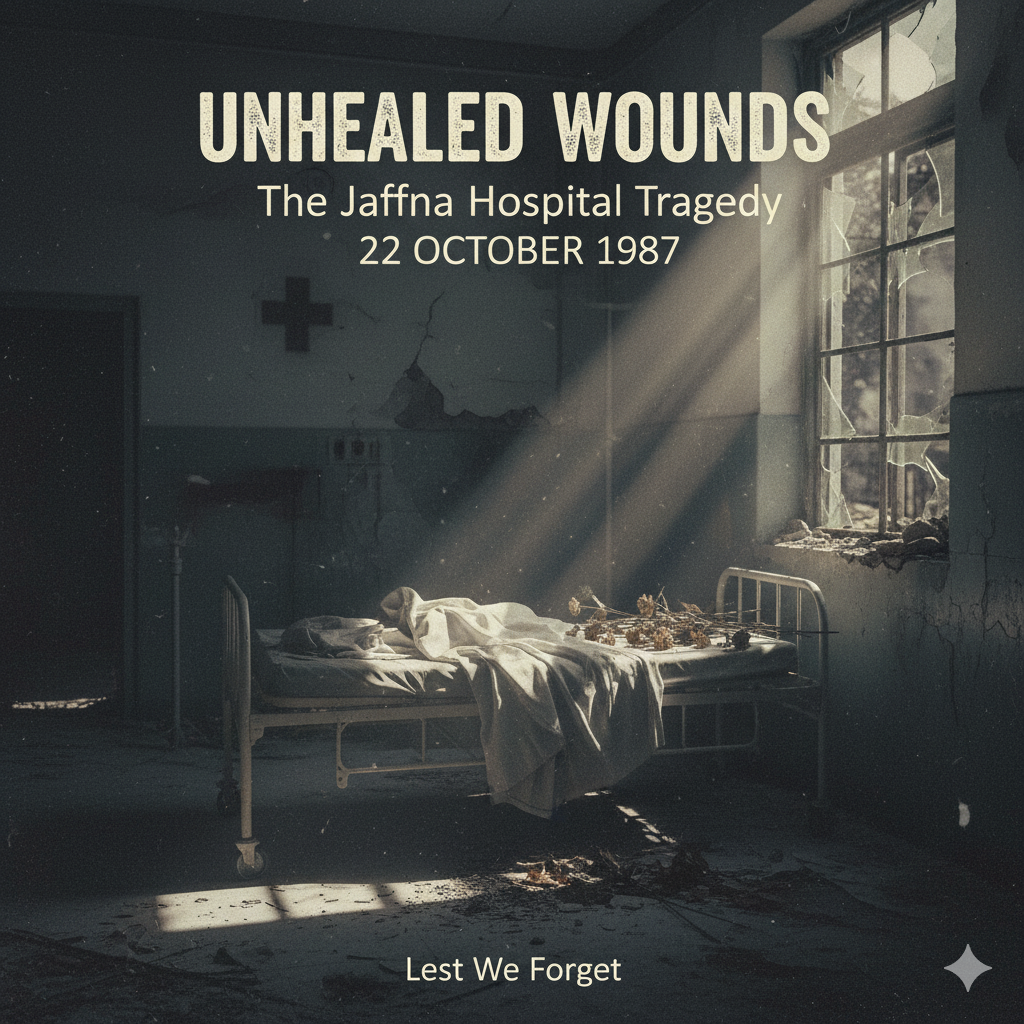
The Tamil people of Sri Lanka’s Northern Province continue to live with memories of unhealed wounds. Among the most haunting is the Jaffna Hospital tragedy of October 1987, when a symbol of care and compassion became the scene of one of the most distressing wartime incidents in modern Sri Lankan history.
A Hospital Caught Between Two Fires
On 21–22 October 1987, during heavy fighting in Jaffna, the Indian Peace Keeping Force (IPKF) advanced towards the Jaffna Teaching Hospital, believing LTTE rebels were using the facility as cover. The hospital, meant to be a protected civilian zone under international humanitarian law, became trapped between advancing troops and armed resistance.
Eyewitnesses described chaos and panic. Medical staff pleaded for safety as bullets ripped through the wards. Patients, already weak and wounded, became unintended victims.
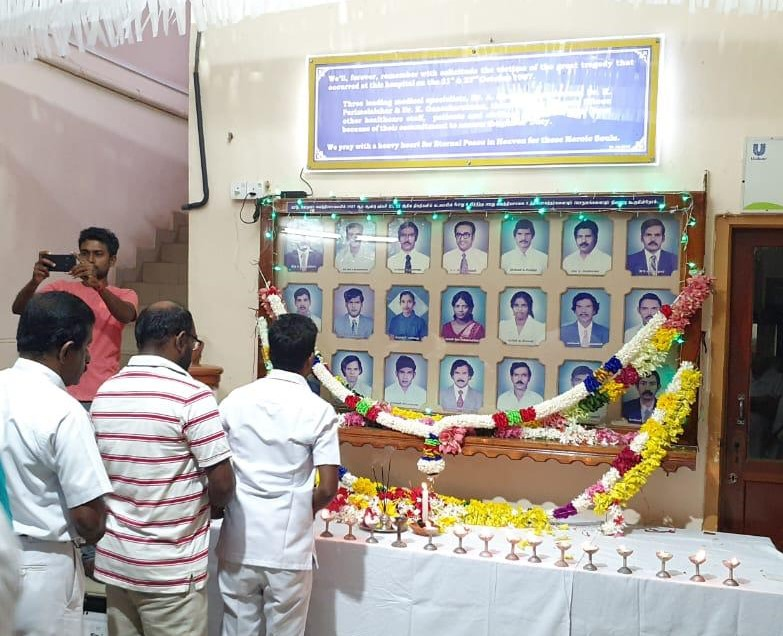
Among those killed was Dr. Arunasalam Sivapathasundaram, a respected paediatrician remembered for his courage in shielding patients and colleagues before being fatally shot. Two other senior doctors and many civilians also perished in the crossfire.
A Tragedy Born of Misjudgment and Desperation
The tragedy at Jaffna Hospital was not the result of a single deliberate act, but rather a culmination of confusion, misjudgement, and desperation amid the fog of war. The IPKF faced the near-impossible task of distinguishing combatants from civilians, while the LTTE’s use of civilian areas for tactical advantage exposed non-combatants to grave danger.
When humanitarian principles are set aside—whether through military haste or militant concealment—the first victims are always civilians.
A Wound Without Closure
No independent inquiry was ever held to establish the full facts or to determine responsibility. For the families of victims and the broader Tamil community, this silence deepened grief and mistrust.
The Jaffna Hospital tragedy remains one of the most painful reminders of how easily humanitarian boundaries collapse in conflict—and how the innocent bear the burden of decisions made by others.
A Call for Reflection and Responsibility
Decades later, Jaffna still remembers the hospital tragedy not with hatred, but with sorrow. It calls for truth and remembrance, not revenge. It reminds all parties—governments, militaries, and movements—that hospitals, schools, and places of refuge must remain sacred, even in war.
The legacy of Dr. Sivapathasundaram endures as a moral reminder of courage amid chaos. His life and sacrifice stand as a plea for accountability and a warning of what happens when compassion is overrun by conflict.
A Personal Reflection
Dr. Arunasalam Sivapathasundaram was my wife’s uncle, whom I had the privilege of meeting in the 1980s in London. He was a gentle, compassionate professional—a paediatrician deeply dedicated to both his community and his family. Even today, he is remembered with great affection and respect. His wife and children, along with all of us who knew him, continue to feel his absence profoundly.
Many families, like his, lost their loved ones in the Jaffna Hospital tragedy. Incidents of such horror—or any act of violence driven by political or ethnic divisions—should never again occur in Sri Lanka.
As a nation, we have lost far too many lives across all communities and backgrounds, compared to most other countries. It is time for us to move beyond our painful past.
The current government and the President’s stance of “no war and no racism” is a most welcome and hopeful message. Let us all, as Sri Lankans, pray and work together for a peaceful and united future.
“The soil of Jaffna still carries voices from the hospital wards of 1987. Will the world listen or look away?”










The author of the article highlights what occurs during a conflict. The best course of action for all parties is to avoid conflict. The 1987 Jaffna Hospital tragedy underscores the breach of humanitarian boundaries in conflict, as well as the immense destruction and the loss of life, including that of a renowned paediatrician, caused due to the crossfire. The tragedy was a result of confusion, misjudgement, and desperation. So far, there has been no independent investigation, which has made people even more sad and suspicious. The tragedy calls for truth and remembrance, and reminds everyone that hospitals and refuges must remain sacred.
Conflicts and wars consistently result in widespread tragedy. The 30-year war in Sri Lanka created a tragedy of our own. Sudan, Gaza, and Ukraine war are some massive tragedies we witness today, caused by conflicts and wars. People are believed to be distinct from other animals due to their capacity to resolve disputes through diplomacy, dialogue, and consensus-building. Even though humans are not yet very skilled at it, it will undoubtedly be a better option for survival.
Sri Lanka is a pluralist society, which means that everyone needs to understand each other’s points of view and work together. Consultations and building consensus are the best ways for the government and other interested parties to find solutions. Such solutions will be more sustainable than those that are enforced through violence. What happens in Mannar is a developing conflict. NPP government, which has been in power for more than a year, needs to pay attention to this because their actions don’t seem to be guided by such processes. Consensus-building is not an easy task, but that is the best way to focus on addressing and resolving the underlying issues that lead to conflicts. Such an approach may prevent future violence.
MY MOTHER WAS FROM KODIGAMAM AND MY FATHER WAS FROM THISAYANVILAI IN TAMIL NADU, I LOST MY COUSINS AUNT IN THE IPKF OPERATIONS AND MY OWN BROTHER AN OFFICER IN THE IPKF, OPERATIONS IN KOKUVIL. I CAN ONLY RECOLLECT PREMADASA SAYING” BECAUSE MY CHILDREN ARE MISCHIEVOUS, I CANNOT SEND THEM TO A NEIGHBOUR OR CALL HIM TO CORRECT THEM. THEY ARE STILL MY CHILDREN. Mrs. GANDHI HAD ATLEAST A CLEAR STAND RAJIV GOT SUCKED IN, V.P. SINGH REALISED AND WITHDREW, THE TAMILS BLUNDER WAS DESCRIBING INDIA AS THAYAGAM, THEIR THAYAGAM WAS SRI LANKA NOT INDIA, AS INDIA IS TO ME.
IT IS BECAUSE OF THE TAMIL MIND TO BECOME EMOTIONAL.
THE FUTURE OFCOURSE AKD, HE IS DOING A SINCERE EFFORT ATLEAST TO SHAKE HANDS, BUT REAL PEACE CAN COMEONLY WHEN TAMILS ARE PERMITTED INTO THE ARMY, LIKE THE MIZOS WERE AFTER THE ACCORD IN INDIA.