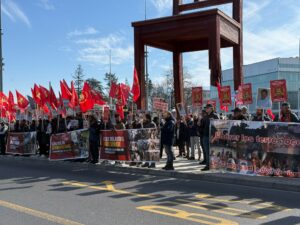

Despite the worst calamity after 2004 Tsunami in which the whole of Sri Lanka has been devastated by nature’s fury, last week’s Maveerar Week in the North and East was observed with unprecedented fervor with the participation of thousands of people. Some media outlets, which reported on the huge turnout at the main commemorative events on the final day, November 27, said that even during the time of the Liberation Tigers of Tamil Ealam (LTTE), the event had never been seen as so grand.
Though the LTTE continues to be a banned movement, celebrations also marked the 71st birth anniversary of its leader Velupillai Prabhakaran on Wednesday, November 26, with portraits of him being put up at various places in the north and east. Although the government initially warned that it could not allow events to glorify the LTTE in the name of remembering of the war dead, neither the police nor the armed forces took any action to prevent the celebrations of Prabhakaran’s birth anniversary.
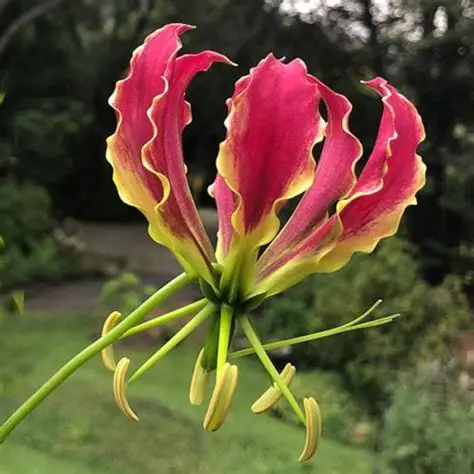
This is the second time that Maveerar week has been celebrated since the coming to power of the National People’s Power (NPP). Two Members of Parliament of the Ilankai Thamizharasu Katchi ( ITAK) from the eastern province lit candles in front of the ‘Karthigai poo’ ( Gloriosa Superba ), the symbol for Maveerar Day which blooms during November ) in a room in the Parliament complex, and posted pictures on social media.
We saw that when members of the Tamil parties from the North and East participated in the budget debate in Parliament, they made it a point to begin their speeches paying tribute to ‘fallen Tamil heroes ‘ and wished Prabhakaran on his birthday. But no one from the government or the opposition objected to it.
Last year too, the NPP government allowed peaceful celebrations of Maveerar Day. But this year’s event was even more exciting than last year’s. Tamil political parties in the North and East, particularly the Tamil National People’s Front (TNPF ) and the ITAK ) earnestly took part in the commemorations. Politicians like former Member of Parliament and general secretary of the ITAK M.A. Sumanthiran who previously did not show much interest in the commemorations also actively participated in the celebrations at various places last week.
Ramalingam Chandrasekhar, one of the key ministers in the government, also paid tribute to those who sacrificed their lives in the Tamil struggle. But, the leader of the TNPF Gajendrakumar Ponnambalam, critically observed in the House during the budget debate that members of the Janatha Vimukthi Peramuna (JVP), served as the ideological guide for President Mahinda Rajapaksa’s government to carry out the war in full swing had no moral right to commemorate the heroes who sacrificed their lives for the liberation of the Tamil people.
In any case, it is certainly a welcome move that the NPP government led by President Anura Kumara Dissanayake allowed the Tamil people to freely commemorate those who lost lives during the civil war without any hindrance, unlike previous governments did.
It seems that the government leaders, who have been annually commemorating their former leaders including the founder leader of the JVP Rohana Wijeweera who were killed by the state forces and the members of the movement who perished in the two armed uprisings in the south, were themselves forced to allow the Maveerar Week to be held freely on the basis of the logic that it was not at all fair to prevent the commemoration of the Tamil militants and the victims of the civil war.
JVPers has been celebrating ‘November Heroes Day ‘ since 1994 when they rejoined the democratic mainstream politics during President Chandrika Bandaranaike Kumaratunga’s regime. Since Wijeweera was assassinated on November 13, 1989 in Colombo, JVP selected that date for their annual commemorative event. As of late, two weeks ago on November 14, the November Heroes Day was observed at a grand event at Viharamaha Devi Park in Colombo under the leadership of President Anura Kumara Dissanayake who is the leader of the JVP.
The LTTE started observing the Maveerar Day in1989. It was held each year on 27 November, the date in which the first LTTE cadre , Shankar ( Sathiyanathan alias Suresh) died in the combat in 1982. Prabhakaran’s birthday falls on November 26.
When the first Maveerar Day was observed in the jungles of Mullaitivu, Indian soldiers were stationed in the north and east. After their complete withdrawal in March 1990, the LTTE expanded the commemorations to the areas they brought under their control. It was also customary for Prabhakaran to deliver his annual speech explaining his movement’s policies on that day.
Since the end of the civil war in May 2009, during the Rajapaksa regimes Tamils were unable to hold commemorative events publicly. However, with the help of few civil society organisations, ‘fallen heroes ‘ and the war dead remembered in a simple manner in few places.
After the change of regime, the events were gradually organized in an elaborate manner. Tamil political parties are actively involved in the events of Maveerar Week which are held with the massive participation of the people.
It is natural that victims of war and the families of missing and dead combatants assemble in large numbers at commemoration events to vent their anguish at the lack of justice even after many years have passed since the end of the war.
However, the Tamil parties, who have not been able to take the legitimate struggle for the rights of the Tamils to the next stage in the changed context, in a practical way to suit the current domestic and international situation are hell – bent only on keeping the Tamil people bound to the memories of the past struggles full of sacrifices and destruction, without any meaningful political mobilisation.
For most Tamil parties, commemorations are more important political activities that they participate in or organize apart from contesting elections. Unable to formulate policies on their own and lead the Tamil people, these parties and their only parrot the obsolete emotional political slogans.
It is political truism that no one can continue the struggles from the point where Wijeweera or Prabhakaran left them. With a clear understanding of this political reality, the JVP had prudently joined the democratic political mainstream and eventually captured power through parliamentary politics. Now they don’t talk much about Wijeweera’s policies, except to remember him once a year.
The JVP is ruling the country today with a new avatar as NPP. Its leaders publicly state that they have abandoned many of their previous policies and strategies and adjusted themselves to the present situation warrants.
Wijeweera waged two armed rebellions at different times to seize state power and both of them were crushed cold – bloodedly. But, those who were left behind in his movement had the acumen to device new approach to recover in politics under new political landscape.
Prabhakaran waged war for the formation of a separate state for the Tamils in the northern and eastern provinces. But, as far as his movement was concerned, there was no possibility of such a revival. The LTTE continues to be a banned outfit not only in Sri Lanka, but also in many other countries, including India.
Even though some of the former militants formed a political party and contested the elections separately and in alliance with few other Tamil parties, they had been unable to be elected even to Pradeshya saba.
Against this backdrop, Tamil politicians need to think how far they can take the Tamil people by continuing with the politics of commemoration only.
These remarks need not be interpreted as intended to denigrate the militants who sacrificed their lives for the emancipation of the Tamils. They are directed at the Tamil politicians who are trying to cover their political incompetence by eulogizing the past struggles and those who participated in them, without sacrificing even an iota of their interests.
Finally, the leaders of the NPP Government should not think that they have made great compromise to the Tamil people by allowing celebrations of the Maveerar Day. They say the new constitution will abolish the provincial councils’ system, the only devolutionary provision in the constitution today. The Tamil political leaders should realize the seriousness of the situation. In the end, the Tamil people will get nothing even after unimaginable sacrifices and losses, if their political leaders spend time in imagination.