
The Jaffna Peninsula is facing a silent but accelerating environmental crisis. Each year, average temperatures rise, drought periods lengthen, and once-shaded landscapes are increasingly replaced by exposed concrete, depleted soils, and salinity-stressed land.
The cumulative loss of tree cover since the war years, combined with rapid urbanisation and groundwater depletion, has created a cycle of heat stress, water scarcity, and declining ecological resilience.
Tree replacement in Jaffna is no longer a symbolic environmental gesture. It is a climate necessity. Shade trees reduce surface and ambient temperatures, protect soil moisture, slow wind erosion, and support groundwater recharge. In coastal and island divisions, vegetation buffers and mangroves act as natural defences against erosion and storm surges while storing significant amounts of carbon.
Despite widespread awareness, Jaffna still lacks a peninsula-wide, survival-focused tree replacement framework. Too often, planting initiatives end at the ceremonial stage without structured after-care, monitoring, or integration into local planning. What the peninsula urgently needs are organisations that understand local ecology, community ownership, and long-term survival rather than planting numbers alone.
Within this context, the work of Green Layer stands out as both practical and impactful. Green Layer has emerged as one of the few organisations in the North that approaches tree planting as an ecosystem intervention rather than a publicity exercise.
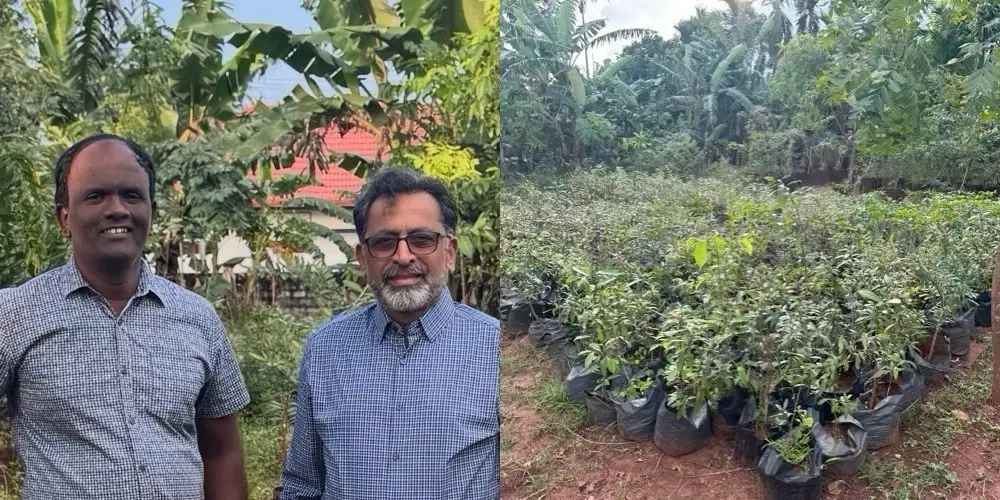
I had the privilege of personally visiting one of Green Layer’s project sites in the Jaffna Peninsula and meeting the team on the ground. The project was led by Sivakumar, whose leadership reflects a deep understanding of both environmental science and community realities.
During the visit, it was clear that the initiative was designed for long-term impact. The site demonstrated careful species selection, attention to soil preparation and mulching, water-use awareness suited to dry-zone conditions, and planning for post-planting maintenance. Community participation was central, ensuring shared responsibility and long-term protection.
Green Layer’s approach aligns closely with the needs of the Jaffna Peninsula: urban shade corridors, institutional planting, Trees Outside Forests, and coastal ecological buffers that directly respond to heat and drought challenges.
The Ministry of Environment has a critical role to play in scaling and sustaining such initiatives. Formal recognition, technical collaboration, and funding mechanisms focused on survival and maintenance would allow Green Layer’s model to expand across all Divisional Secretariat divisions in the peninsula.
Supporting Green Layer also supports green livelihoods. Nursery operations, planting teams, and maintenance crews create local employment while building environmental stewardship among youth and communities.
The environmental challenges of the Jaffna Peninsula cannot be solved by policy alone. They require credible organisations, local leadership, and institutional support working together. Green Layer has demonstrated what is possible on the ground.
With structured backing from the Ministry of Environment and cooperation from provincial and district authorities, their work can form the backbone of a peninsula-wide climate resilience strategy.