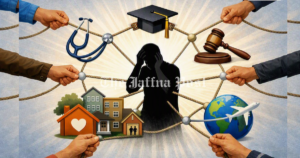
The recent arrest of singer Sangeethsan under the Prevention of Terrorism Act (PTA), followed by the reported withdrawal of PTA-related allegations and the decision to proceed under Section 120 of the Penal Code, has become one of the most widely discussed political and legal controversies during the early months of the National People’s Power (NPP) government.
What initially appeared to be a criminal investigation quickly evolved into a national and international debate about democracy, freedom of expression, reconciliation and the future direction of governance in Sri Lanka.
The incident attracted attention from political parties, civil society organisations, legal experts, the Tamil diaspora and international observers. More importantly, it raised questions that extend far beyond the circumstances of a single case.
For many citizens, the controversy is not simply about one individual. It is about how power is exercised, how laws are applied and whether the promises of reform made during an election campaign can withstand the pressures of governing. In that sense, the Sangeethsan affair has become a symbol of larger debates about accountability, democratic governance and equal treatment under the law.
The First Major Test for the NPP Government
Many observers view this as the first major political controversy involving the use of the PTA under the NPP administration. This perception is significant because the NPP came to power promising democratic reform, transparency and a departure from practices that had generated criticism under previous governments.
The controversy has highlighted an important reality of governance. Governments are judged not only by their policies but also by how they exercise power. Citizens who voted for change expected stronger democratic safeguards, greater respect for civil liberties and a commitment to accountability.
The reported decision to remove the PTA component and proceed under ordinary criminal law may have reduced immediate tensions. However, the fundamental question remains: if ordinary criminal law was sufficient, why was the PTA invoked in the first place? That question will likely continue to be debated long after the legal proceedings conclude.
Supporters of the government may argue that institutions reviewed the case and corrected the course. Critics may argue that the incident demonstrates the continuing influence of old habits within the state system. Regardless of which interpretation proves more persuasive, the affair has shown that public scrutiny remains a powerful force in modern Sri Lankan politics.
The NPP government now faces the challenge of demonstrating that its commitment to reform is reflected not only in election promises but also in the actions of state institutions. Public confidence depends on the perception that laws are applied fairly, proportionately and without political influence.
Why This Incident Created Worldwide Attention
The speed with which this issue gained international attention illustrates how much Sri Lanka has changed since the end of the civil war. Information now travels instantly through social media, online media platforms and diaspora networks.
For many members of the Tamil diaspora, the PTA remains a highly sensitive subject because of its historical association with arrests, detentions and allegations of abuse. As a result, any new controversy involving the legislation immediately attracts global interest.
The reaction to the Sangeethsan affair demonstrates that Sri Lanka’s international image is increasingly shaped not only by economic reforms and diplomatic relations but also by perceptions of justice, accountability and respect for democratic freedoms.
The controversy also serves as a reminder that post-war reconciliation remains incomplete. Events that may appear isolated within Sri Lanka often resonate internationally because they are viewed through the broader lens of historical experience and unresolved grievances.
The global response should not necessarily be viewed as interference. Rather, it reflects the reality that Sri Lanka’s future is closely observed by a worldwide community that remains invested in the country’s democratic development and long-term stability.
The PTA Debate and the Future of Democratic Reform
The Sangeethsan case has reignited a debate that has existed for decades. Successive governments have promised to review, reform or replace the PTA, yet the legislation remains in force.
Supporters argue that special security laws remain necessary to address national security concerns. Critics argue that extraordinary powers should be used only in exceptional circumstances and that ordinary criminal law should be sufficient in most situations.
Regardless of where one stands in this debate, the controversy demonstrates the need for clarity and consistency. If Sri Lanka wishes to strengthen democratic institutions and improve public trust, there must be confidence that exceptional legal provisions will not be used unnecessarily.
For the NPP government, this issue presents both a challenge and an opportunity. It can either become another administration that manages the PTA debate without resolving it, or it can initiate a broader national discussion regarding the future of security legislation in a democratic society.
The manner in which the government responds may significantly influence its credibility among minority communities, civil society organisations and international partners. The case has therefore become larger than a legal dispute; it has become a referendum on the direction of democratic reform.
A Wake-Up Call for Tamil Political Leadership
The Sangeethsan affair also exposes a continuing weakness within Tamil politics: the inability to consistently present a united position on issues of common concern.
For years, Tamil political parties have been divided by competing strategies, ideological differences and leadership rivalries. While political diversity is healthy in a democracy, fragmentation can weaken the collective influence of the community.
The differing approaches associated with leaders such as Sumanthiran and Shritharan reflect broader debates within Tamil society. One approach emphasises constitutional engagement and negotiation within existing institutions. Another emphasises stronger political mobilisation and public advocacy.
Both approaches have merit and both have limitations. However, ordinary people are increasingly less interested in political rivalries and more interested in practical outcomes. They want economic development, educational opportunities, employment, equality and meaningful political representation.
The younger generation in particular is evaluating leaders based on results rather than rhetoric. They expect cooperation on major issues affecting the Tamil community and are increasingly frustrated when internal divisions overshadow broader community interests.
The lesson from this incident is clear. The NPP government must demonstrate that democratic reform is more than a slogan, while Tamil political leaders must demonstrate that unity is possible when fundamental rights and community interests are at stake.
Conclusion
Ultimately, the significance of the Sangeethsan affair lies not only in its legal outcome but also in the larger questions it has raised about governance, accountability, reconciliation and political leadership.
The controversy will eventually fade from public attention. However, the issues it has exposed will remain central to Sri Lanka’s future. Trust in institutions, confidence in the rule of law and belief in democratic reform cannot be built through promises alone. They require consistent actions and transparent decision-making.
For the NPP government, the affair serves as an early test of its ability to balance national security concerns with democratic freedoms. For Tamil political leaders, it is a reminder that unity on fundamental issues is often more valuable than internal competition. For Sri Lanka as a whole, it is an opportunity to reflect on the type of society it wishes to become.
How these questions are addressed in the coming years may well determine whether the country moves closer to genuine reconciliation, democratic maturity and lasting national unity.