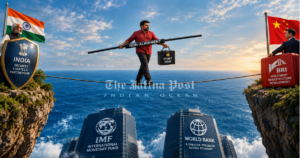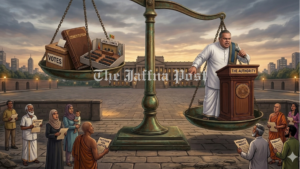

The government has to balance two seemingly contradictory political trajectories. One is that many thousands of Sri Lankan citizens work in Israel, and the Israeli tourists visit Sri Lanka, both of which significantly contribute to the island’s economic recovery. The other is the NPP government’s commitment to the sovereignty of the Palestinians in the context of the growing worldwide movement that many Sri Lankans are also part of.
Part One –Introduction
I read an article Creeping Rise of Anti-Semitism is Dangerous for Sri Lanka, by Dr. Punsara Amarasinghe, based in Italy, which compelled me to write this article.
The central tenet of his argument is as follows:
The current situation in Sri Lanka is a stark example of explicit anti-Semitism, encouraging people to boycott Israeli products and ostracise Israeli tourists. Activists in these solidarity movements remain adamant in not admitting that the current situation in Gaza was triggered by the gruesome events of October 7. They deny discussing Israel’s right to return its hostages from Hamas captivity and do not tolerate dissent that attempts to explain the full situation in Gaza or how Hamas has hindered any possible avenue for a ceasefire agreement. The solidarity movement in Sri Lanka propagates a one-sided narrative, spreading seeds of hatred without acknowledging the long-standing causes of the turmoil in the Middle East.
Incidents related to anti-Semitism in Sri Lanka have seen a robust rise parallel to protests led by the Palestinian solidarity movement, which is a clear indicator of how cancel culture functions. The government in Colombo finds itself in a difficult position, refraining from disclosing its official stance on the Israeli-Palestinian conflict.
The outrage directed at Israeli tourists has mainly derived from Sri Lanka’s Muslim community, driven by an emotional affinity with Palestinians that resembles the Islamic doctrine of “Ummah.” The silence maintained by the government and the mavericks in Sri Lankan society is a dangerous sign, potentially radicalising certain fractions within the Muslim community.
I do not underestimate the role Hamas has played in the recent escalation of the ongoing Israeli campaign for the occupation of the whole of Palestine. However, the full occupation of Palestine appears more imminent than ever.
The viability and feasibility of a two-state solution appear to be minimal, despite several western nations, including Australia, having recently joined the chorus of recognising an independent and sovereign Palestine state as a starting point for working out a two-state solution for the problem created in 1947 by partitioning the then Palestine without consultation or the will of the Arabs, Jews and Christians who had been living there harmoniously. The current Israeli hardline efforts are to undermine the realisation of the proposed “two-state solution”.
Immediately after the Hamas attack on October 7, 2023, most of my colleagues and I accepted the fact that the current round of hostilities began with Hamas attacking Israel and its people, and we condemned Hamas for taking civilians hostage. In the same vein, we also condemned Israel’s indiscriminate bombing of Gaza; the prohibition of food, water, medicine, and electricity into Gaza; and the military lockdown of the West Bank. We questioned how Israel can settle this issue by imposing collective punishment on an entire population.
Sri Lanka’s ambiguity
The disaster unfolding daily in Gaza and the wider Middle East has placed the NPP government in a difficult position, and it continues to refrain from disclosing its official stance on the conflict. Since 1948, Ceylon maintained limited ties with Israel compared to its neighbours, including buying weapons. However, the SLFP governments since 1956 have been hostile towards Israel and preferred closer relations with the Palestine Liberation Organisation (PLO). In 1971, Mrs Sirima Bandaranaike promised to close the Israeli embassy in Sri Lanka in support of the Palestinian cause.
In the late 1970s, President J.R. Jayewardene changed this course and turned towards Israel’s support to combat the Tamil militancy led by the LTTE. His regime established diplomatic ties with Israel. Israel advised the government on the Mahaweli project development and also funded certain international projects.
Diplomatic ties were suspended in 1992 under President Ranasinghe Premadasa, but relations were restored in 2000. Israel was a key source of weapons and training for the Sri Lankan armed forces during the civil war. For this reason, the current government maintains an ambiguous position towards the genocidal Israeli campaign against the Gazans and efforts to keep the Palestinian people under its brutal military occupation.
I would like to revisit the pre-Mahinda Rajapaksa era to disclose some salient facts. Even a cursory look shows that Sri Lanka had a long history of supporting the Palestinian cause, aligning with the Non-Aligned Movement’s stance against colonialism and advocating for the establishment of a Palestinian state. As Prime Minister, Mrs Banadaranaike, to her credit, actively engaged with the Palestinian leadership and voiced Sri Lanka’s support for Palestine on the world stage. Mrs Bandaranaike’s support extended to recognising the PLO as the legitimate representative of the Palestinian people.
Dr Amerasinghe states:
“Most activists involved in these solidarity movements remain adamant in not admitting that the current situation in Gaza was triggered by the gruesome events of October 7. Their reluctance is even more evident when they ferociously deny discussing Israel’s right to return its hostages from Hamas captivity. They also do not tolerate dissent that attempts to explain the full situation in Gaza or how Hamas has hindered any possible avenue for a ceasefire agreement. Overall, the solidarity movement in Sri Lanka propagates a one-sided narrative, spreading seeds of hatred without acknowledging the long-standing causes of the turmoil in the Middle East.”
Statements like the above, I believe, are a one-sided view of the whole issue. It is the Israeli military occupation of Palestinian land that has led to a 55-year escalation and 75 years of oppression.
In 1947, the UN adopted Resolution 181, dividing Great Britain’s former Palestinian mandate into Jewish and Arab states. The violent mass expulsion of Palestinian Arabs, known as the ‘Catastrophe’ or ‘Nakba’, destroyed over 400 Palestinian cities, towns, and villages, and converted 78% of Palestinian land into Israel. Most Palestinians were ethnically cleansed, forcing them to become refugees in neighbouring countries.
In 1967, Israel expanded its occupation by annexing East Jerusalem, the West Bank, and Gaza. Since 2015, the UN General Assembly has adopted 140 resolutions critical of Israel’s treatment of Palestinians. But Israel has remained, disregarding the rule of law.
To understand the current conflict, it is essential to consider the following.
The Concept of ‘Right to Self-Determination’
Self-determination is the principle that a community has the freedom to choose its political destiny. It originated in the 1700s in the United States and France, and guided Woodrow Wilson in remapping Europe after World War I.
After World War II, the UN Charter established self-determination as a legal right. This principle has evolved to include internal struggles within states, where groups seek freedom or autonomy, often driven by ethno-nationalist claims or responses to oppression. The interpretation of the principle varies, focusing on whether self-determination is limited to specific groups or implies independent statehood.
In Sri Lanka, the Janatha Vimukthi Peramuna, under its founding leader, the late Comrade Rohana Wijeweera, reversed its accepted policy of the Right to Self-Determination in July 1983. This policy reversal was done under the pretext that Lenin had entirely omitted the formulation – the Right to Self-Determination of Nations and Nationalities since he came back to Russia in April 1917, and particularly, when he wholly omitted the principle after the Eighth Congress of the Russian Communist Party (Bolshevik) held from March 18-23, 1919.
In 1986, on this basis, comrade Wijeweera published a thesis titled “What is the Solution to the Tamil Eelam Struggle?”
At the same time, access to the booklet I had written in 1973 while behind bars in New Magazine Prison in Colombo, titled “A Marxist Analysis of the National Question”, was also barred.
The Context of Change
One needs to understand the context within which we wrote both these documents. I wrote that booklet from the information I could gather while in prison and relied on the material our friends and comrades could collect and bring from outside. That writing was heavily based on Lenin’s writings and certain history books that Comrade M.B. Ratnayake was able to bring into the prison. The draft was also read and agreed upon by Comrade Wijeweera at the time, who was also detained in the New Magazine Prison.
Similarly, Comrade Wijeweera had to write his thesis under much more difficult repressive circumstances, having gone underground following his own decision. He remained underground despite many attempts to persuade him to carry out the political struggle in the open political arena.
From the information I gathered later, he had to rely totally on the material that Comrade Daya Wanniarachchi made available. Comrade Wanniarachchi had collected that information, translated it into Sinhala, and sent it to Comrade Wijeweera. The English translation of the Wijeweera thesis was available on the JVP Sri Lanka website in the 90s and seems no longer available. When I accessed it while I was in Canberra, it was full of distorted or incorrectly translated quotes from Lenin.
The incorrect and faulty position that the JVP had come to about the principle of the ‘Right of Nations to Self-determination’ was clear from a reading of the speech Lenin had made as part of the reporting he did on March 19, 1919, at the end of the very same 8th Congress of the RCP (Bolshevik).
To quote Lenin:
“We say that account must be taken of the stage reached by the given nation on its way from medievalism to bourgeois democracy, and from bourgeois democracy to proletarian democracy. That is absolutely correct. All nations have the right to self-determination—there is no need to speak specially of the Hottentots and the Bushmen. The vast majority, most likely nine-tenths of the population of the earth, perhaps 95 per cent, come under this description, since all countries are on the way from medievalism to bourgeois democracy or from bourgeois democracy to proletarian democracy. This is an absolutely inevitable course. More cannot be said, because it would be wrong, because it would not be what actually exists. To reject the self-determination of nations and insert the self-determination of the working people would be absolutely wrong, because this manner of settling the question does not reckon with the difficulties, with the zigzag course taken by differentiation within nations.”
If I continue to survive for some time, I hope to write a comprehensive response that I was unable to do while in Canberra due to my many social, professional, and personal commitments. When comrade Wijeweera wrote his thesis, both the south and north of Sri Lanka were under extremist nationalist influences with a total lack of empathy towards the people who suffered as a result of the ongoing conflict.
All attempts at peace among communities were totally disincentivised through psychological warfare operations (PsyOp). At the time, Sinhala nationalist forces, both inside and outside the J. R. Jayawardene regime, were trying to destabilise and win over the social base the JVP had within the Sinhala Buddhist Youth layers of the South. The JVP leadership likely felt compelled to grab the opportunity with both hands.
Since 1984, the JVP has ceased to support the right to self-determination of any oppressed nations or nationalities, as substantiated by the subsequent positions they have taken towards liberation struggles in various regions, including Western Sahara, Eritrea, East Timor, and Palestine, among others.
To be continued...